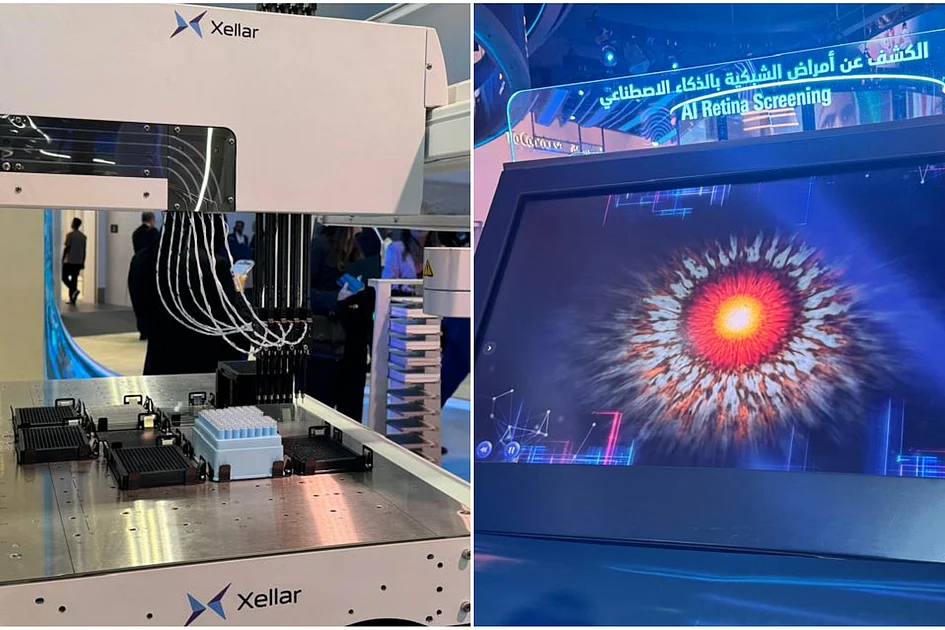
Dubai is currently hosting a groundbreaking exhibition that is redefining the future of healthcare through artificial intelligence and machine learning technologies. The World Health Expo (WHX), formerly known as Arab Health, has brought together 4,300 exhibitors from more than 180 countries at the Dubai Exhibition Centre in Expo City, showcasing medical innovations that seemed like science fiction just years ago.
Among the most remarkable technologies on display is the ‘organ-on-a-chip’ system developed by Chinese company Xellar. This revolutionary approach uses commercially available human tissue components tested in micro-devices, with AI algorithms enhancing diagnostic accuracy to unprecedented levels exceeding 95%. The technology enables researchers to recreate diseases within these miniature chips, facilitating personalized drug testing and potentially transforming pharmaceutical development timelines.
The Emirates Health Services (EHS) has introduced an AI retina scanner that represents a significant leap in predictive medicine. This binocular-shaped device performs comprehensive eye scans in approximately 30 seconds, detecting conditions ranging from glaucoma and cataracts to cardiovascular diseases and liver conditions years before symptoms manifest. Users receive detailed medical reports directly on their mobile devices for future reference and consultation.
Complementing these diagnostic advances, the Dubai Health Authority has unveiled wellness pods designed to promote mental health in public spaces. These compact structures provide guided relaxation experiences through customized lighting and audio environments, offering three distinct modes: calm, grounding, and boosting. Currently in trial phase, these pods may soon appear in government offices and shopping malls across the UAE.
Remote healthcare delivery has been enhanced through robotic intervention systems already operational in Ras Al Khaimah’s coastal settlement of Al Jeer. These remotely controlled robotic arms enable specialists to provide life-saving medical assistance to patients in geographically isolated areas, demonstrating the UAE’s commitment to equitable healthcare access.
Additionally, the EHS has implemented Maitha, an AI-powered hiring assistant that is streamlining nurse recruitment processes. This system automates CV screening, conducts preliminary interviews, and identifies the most qualified candidates, significantly reducing administrative burdens and improving hiring efficiency within the healthcare sector.