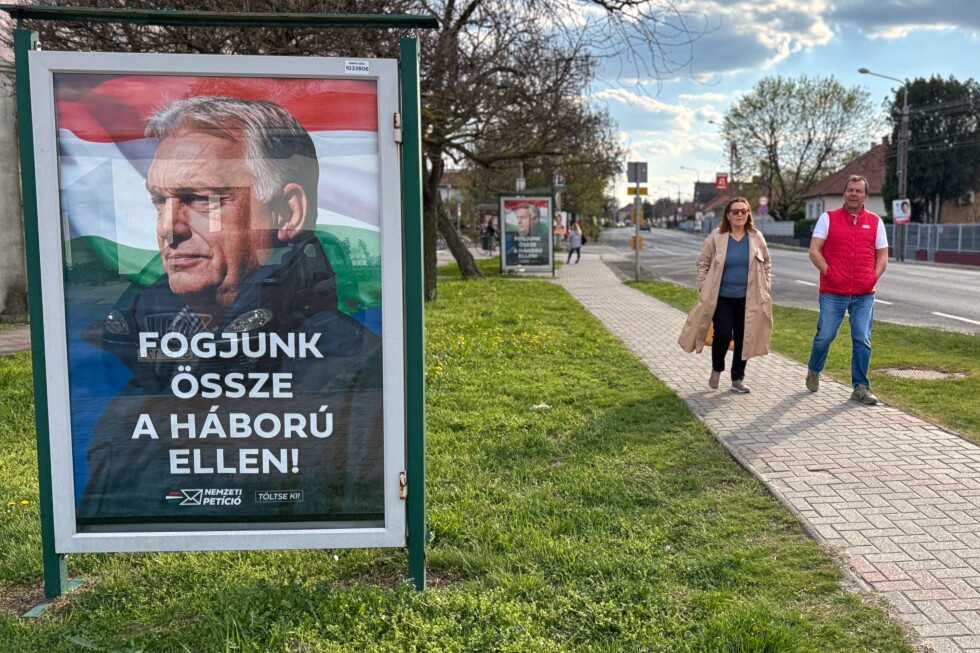
As Hungary prepares for one of its most consequential national elections in recent decades on Sunday, long-serving Prime Minister Viktor Orbán, who has held power for 16 years and secured four consecutive electoral victories, is facing the most significant challenge to his rule from center-right challenger Péter Magyar, leader of the Tisza party. Magyar has spent months crisscrossing Hungary’s rural regions in a bid to erode Orbán’s traditional stronghold of support, but many small-town and older voters remain unwavering in their loyalty to the incumbent.
While most public opinion polls indicate a growing appetite for change among Hungarian voters, with a significant share having walked away from Orbán’s populist-nationalist Fidesz party, the prime minister retains deep popularity in the country’s smallest settlements and among older demographics. A recent Medián poll underscored this divide: among voters over 65, 47% back Fidesz, compared to just 29% who support Magyar’s Tisza. Support for Orbán also grows consistently as community size shrinks, cementing his rural advantage.
In the small central Hungarian city of Cegléd, 63-year-old local entrepreneur István Vároczi, who runs a market stall selling handbags and other goods, says he dismisses all polls that forecast Orbán could lose. Having backed Orbán for nearly four decades, Vároczi plans to cast his vote for the incumbent once again. “I’ve never been disappointed in him. His biggest strength is that he didn’t forget where he came from — he always remained a normal person,” Vároczi said. “I’m sure he has flaws, but who doesn’t? Fidesz is the only party I trust, and his performance as prime minister is unparalleled.” Even with years of stagnant economic growth, Vároczi blames external pressures rather than government mismanagement, arguing the administration “is doing what it can for us, for the people.”
Similar devotion can be found in Albertirsa, a central Hungarian town of roughly 14,000, where retired pipe fitter János Falajtár grew emotional when describing his support for Orbán. Fighting back tears, Falajtár insisted the prime minister has always “acted for the people.” “The decisions don’t matter. Common sense and heart matter,” he said. For Falajtár, Orbán’s greatest achievement has been advancing unity for Hungarians both within the country’s modern borders and across neighboring regions where millions of ethnic Hungarians reside, following the post-World War I territorial changes that stripped Hungary of nearly 72% of its original land. “We are now beginning to unite the Greater Hungary in Vojvodina, Slovakia, Transcarpathia, Transylvania, and even in Austria,” Falajtár said. “They only took a small piece from us, but it’s still ours.”
Magyar and the Tisza party have seen their support surge in recent years, fueled by widespread public frustration over four years of economic stagnation. Much of that economic strain has been tied to the freezing of billions of euros in European Union development funding, which Brussels halted over ongoing concerns about rule of law breakdowns and systemic corruption under Orbán’s administration.
But Orbán has worked aggressively to shore up support ahead of the vote with targeted pre-election policies tailored to his core base. Backed by Hungary’s continued reliance on discounted Russian oil and gas, the prime minister implemented a widely popular utility bill reduction program that keeps household energy costs far below European averages. He has also expanded pension benefits, adding a mandatory 13th month pension payment for retirees and rolling out a new 14th month supplement ahead of the election. Other popular initiatives for small communities include a nationwide program to renovate aging local pubs and historic churches, alongside the elimination of income tax for young mothers with multiple children.
Beyond policy, Orbán’s enduring political charisma, his consistent focus on protecting Hungarian cultural traditions, and his unapologetic push to bolster national pride resonate more deeply with his base than any specific government program. On the campaign trail, Orbán has also framed the election as a battle for national survival, warning voters that a host of external threats — most notably the ongoing war in neighboring Ukraine, which he claims would drag Hungary into direct conflict and bankrupt the nation — await if he does not win a fifth term. For committed supporters like Vároczi and Falajtár, that message, paired with decades of demonstrated loyalty to their communities, is more than enough to secure their vote once again.