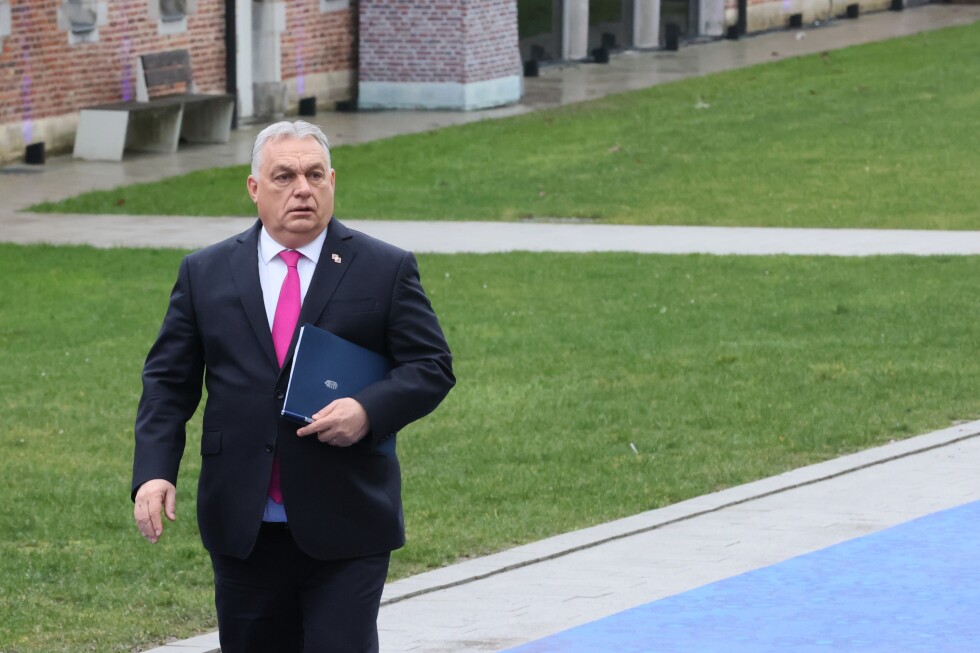
BUDAPEST, Hungary — In a fiery pre-election address to supporters on Saturday, Hungarian Prime Minister Viktor Orbán dramatically repositioned the European Union as Hungary’s principal antagonist, surpassing even Russia in perceived threat level. With critical national elections looming just eight weeks away, Orbán’s nationalist Fidesz party faces its most formidable electoral challenge since returning to power in 2010.
Current independent polling indicates Fidesz trailing behind the emerging center-right Tisza party and its leader Péter Magyar, despite Orbán’s campaign narrative warning that an opposition victory would result in the EU forcibly deploying Hungarian citizens to combat zones in neighboring Ukraine—a claim entirely lacking evidentiary support.
During his Saturday oration, Orbán drew provocative parallels between the contemporary European Union and the historically oppressive Soviet regime that dominated Hungary throughout the Cold War era. He explicitly dismissed widespread concerns among European leadership regarding Russian President Vladimir Putin’s threat to continental security, stating: “We must acclimatize to the reality that freedom-loving citizens should dread Brussels, not Eastern powers.”
The Prime Minister elaborated: “Fear-mongering about Putin represents primitive and unserious rhetoric. Conversely, Brussels constitutes a tangible reality and source of imminent danger. This uncomfortable truth is one we refuse to tolerate.”
Orbán has maintained consistent opposition to military and financial assistance for Kyiv since Russia’s full-scale invasion commenced nearly four years ago. His administration has cultivated unusually cordial relations with Moscow while adopting confrontational stances toward Hungary’s EU and NATO allies, frequently characterizing them as instigators of military conflict.
This geopolitical positioning has generated significant friction with the European Union, resulting in the freezing of billions in EU funds allocated to Budapest. These financial sanctions respond to persistent concerns regarding democratic backsliding, erosion of judicial independence, and systemic corruption under Orbán’s governance.
In retaliation, Orbán has increasingly functioned as an obstructionist within EU policymaking processes, routinely threatening vetoes on crucial initiatives including financial support packages for Ukraine.
As electoral pressures intensify, the Prime Minister has amplified rhetoric portraying the Tisza party as an EU-engineered puppet regime designed to overthrow his government and advance foreign agendas—allegations vehemently denied by opposition leaders. Péter Magyar has committed to restoring Hungary’s deteriorating relationships with Western allies, revitalizing economic stagnation, and reinstating democratic norms.
Orbán additionally accused multinational corporations in banking and energy sectors of capitalizing on the Ukraine conflict while conspiring with political opponents to secure electoral victory. He asserted: “Hungary’s petroleum industry, financial institutions, and Brussels elite are overtly preparing to establish a government. They require Hungarian leadership that will never oppose Brussels’ demands.”
The Prime Minister promised that a fifth consecutive parliamentary majority would enable intensified efforts to eliminate entities he claims compromise national sovereignty. He notably praised former U.S. President Donald Trump—who has endorsed Orbán’s reelection bid—for creating international conditions conducive to expelling “fabricated NGOs and compromised journalists, judiciary members, and politicians.”
Orbán concluded: “The American president’s rebellion against global liberal networks has improved our prospects. We too can eliminate foreign influences and their domestic agents that constrain our sovereignty. Brussels’ repressive apparatus remains operational in Hungary—we will commence its purification this April.”