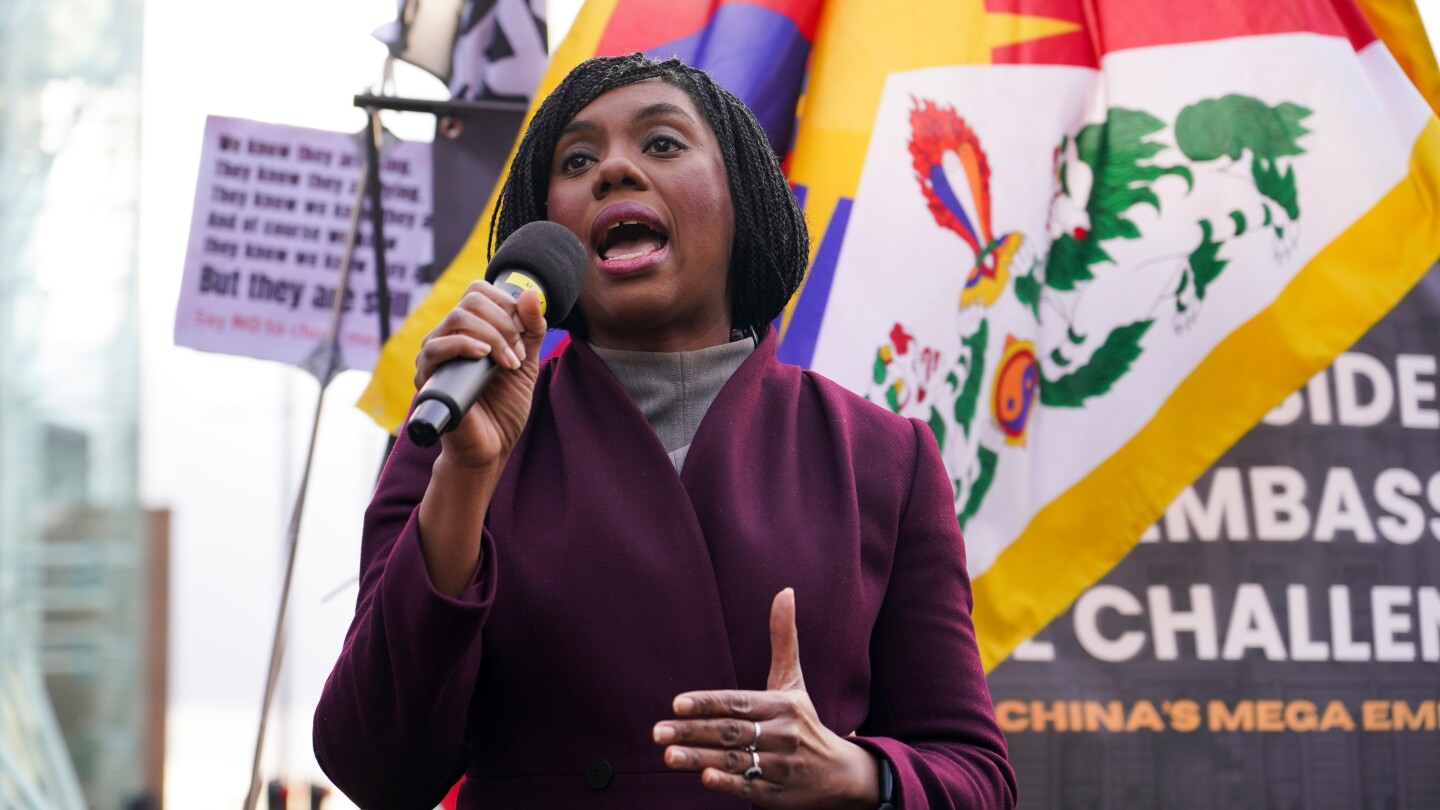
LONDON — Britain’s political landscape has become the stage for a significant diplomatic confrontation as the deadline approaches for the government’s decision on China’s proposed mega-embassy in London. Opposition leader Kemi Badenoch of the Conservative Party joined hundreds of protesters Saturday at the planned construction site near Tower Bridge, delivering a forceful condemnation of Chinese government activities against British citizens and parliamentarians.
The demonstration, featuring chants of ‘no China mega embassy,’ highlighted growing concerns about China’s alleged harassment of UK nationals and espionage activities. Badenoch accused the current Labour government of displaying excessive caution toward China, stating: ‘We know that we have to stand up to the abuses of China. What worries me is that we have a government right now that seems to be scared of China.’
After seven years of delays and legal challenges, the UK government faces a Tuesday deadline to approve or block what would become China’s largest diplomatic compound in Europe. The proposed 20,000 square-meter complex on the former Royal Mint site would consolidate China’s seven current diplomatic premises into a single location near London’s financial district and critical data infrastructure.
Security concerns have been at the forefront of the debate, with opponents warning the embassy could serve as a base for espionage operations and surveillance of Chinese dissidents in exile. Britain’s intelligence services have previously issued alerts about China’s ‘targeted and widespread’ efforts to recruit parliamentarians through professional networks and cover companies.
Despite these concerns, security experts suggest the risks are manageable. Ciaran Martin, former head of Britain’s National Cyber Security Centre, noted that no government would override security services if they deemed the project too risky. ‘Unless we want to sever diplomatic relations with China,’ Martin wrote, ‘the location of their embassy becomes an issue of practicalities, security assessments and counterintelligence operations.’
China has expressed frustration over the prolonged approval process, accusing the UK of ‘constantly complicating and politicizing the matter.’ The decision carries significant diplomatic implications, potentially paving the way for Prime Minister Keir Starmer’s anticipated visit to China and expansion of UK diplomatic facilities in Beijing. Starmer has emphasized the need to balance national security concerns with maintaining diplomatic dialogue and cooperation with China.