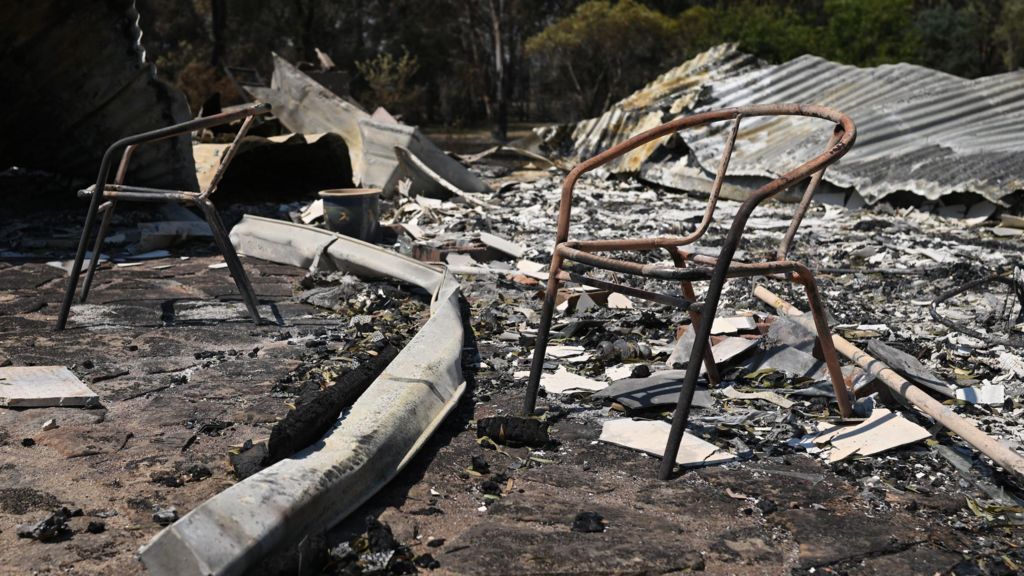
A devastating bushfire crisis has engulfed southeastern Australia, resulting in one confirmed fatality and the destruction of approximately 300 properties across multiple regions. The fires, which have been raging for several days primarily in Victoria state with additional outbreaks in New South Wales, have consumed land areas nearly double the size of Greater London.
Victoria Premier Jacinta Allan confirmed that 30 active fires were burning across the state as of Sunday, with 10 posing particular concern to authorities. The blazes have already scorched approximately 350,000 hectares of land, prompting the declaration of a state of emergency. Thousands of firefighters supported by more than 70 aircraft are battling the infernos amid extremely hot, dry, and windy conditions that officials fear could sustain the fires for several weeks.
Human remains were discovered in the village of Gobur, approximately 110 kilometers north of Melbourne, though the victim has not yet been formally identified. Premier Allan praised emergency workers who recovered the body under difficult circumstances, noting that the Gobur community was experiencing profound grief.
The current fires represent the most severe bushfire event in southeastern Australia since the catastrophic 2019-2020 season that killed 33 people and destroyed an area equivalent to Turkey’s size. Smoke from the current blazes has significantly degraded air quality across Victoria, including metropolitan Melbourne.
In a particularly tragic development, firefighter Tyrone Rice lost his own home in Harcourt while battling fires elsewhere. Describing the experience as “a kick in the guts,” Rice acknowledged he was neither the first nor last to endure such loss. Local fire captain Andrew Wilson characterized the destruction in Harcourt as “gut-wrenching,” with journalists reporting catastrophic damage where only tin roofs remained where houses once stood.
While scientists note that linking individual wildfires directly to climate change remains complex due to land management factors, they emphasize that climate change is making the hot, dry conditions that fuel such fires increasingly common across Australia.