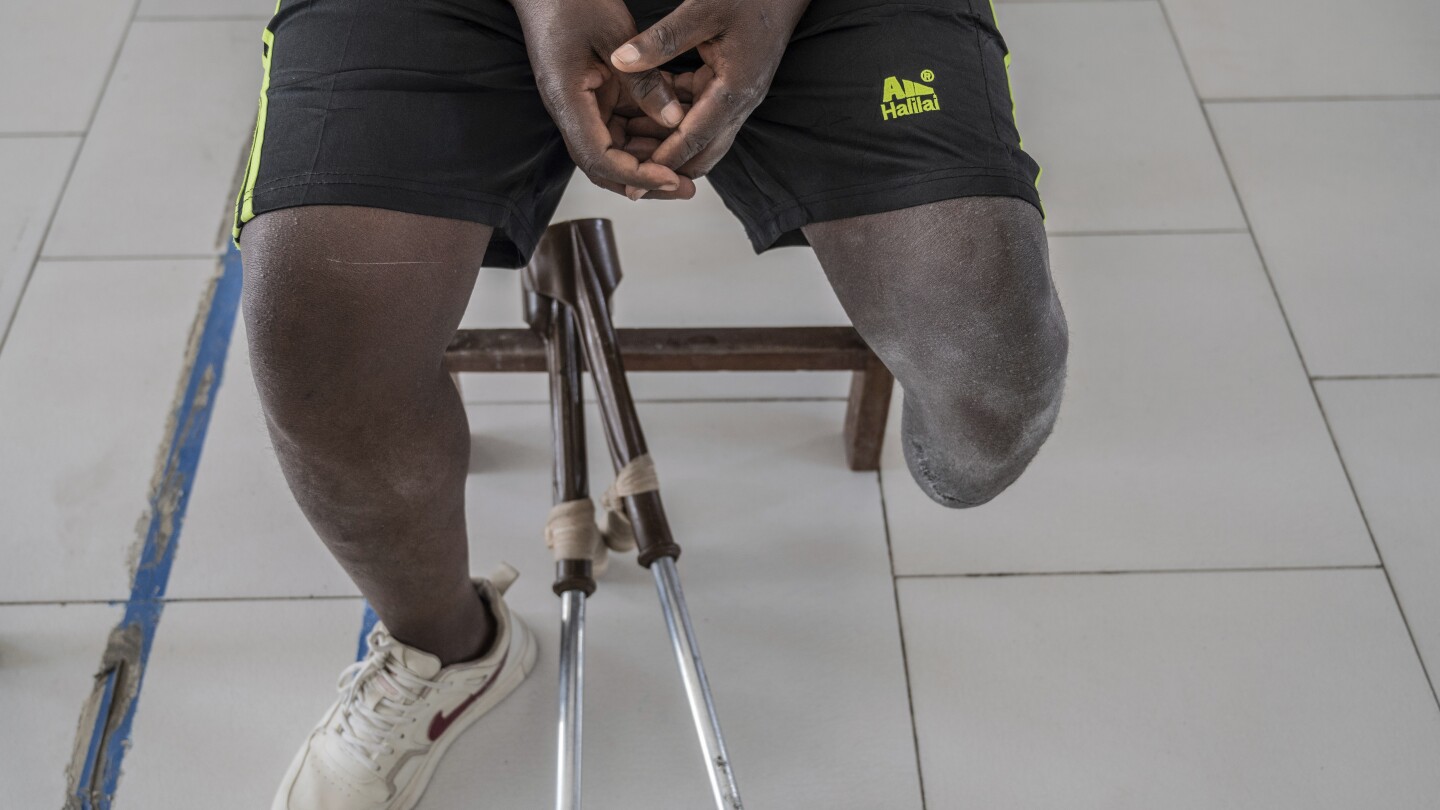
In the heart of Goma, eastern Congo, a sunlit rehabilitation room at Shirika la Umoja orthopedic center becomes a sanctuary for survivors of the region’s relentless conflict. Among them is Jerome Jean Claude Amani, 35, who, after losing his wife and four children in a rebel attack earlier this year, is now learning to walk again with a prosthetic leg. ‘I feel at peace,’ Amani reflects. ‘This leg is not just plastic; it’s a second chance.’ His story is one of resilience in the face of unimaginable loss. The center, supported by the International Committee of the Red Cross since 2005, has seen a surge in demand for prosthetics due to escalating violence. In the first half of 2025 alone, it provided 326 artificial limbs, a stark increase from 422 in all of 2024. The conflict, involving over 100 armed groups, has displaced 7 million people and deepened one of the world’s largest humanitarian crises. Despite peace efforts, sporadic clashes continue to claim lives and limbs. For patients like Melisa Amuli, 30, who survived a bombardment but lost her mobility, the center offers hope. With a custom orthotic brace, she dreams of returning to work. Similarly, Violetta Nyirarukundo, 27, a mother of four, faces the dual trauma of losing a leg and being abandoned by her husband. Yet, she remains determined to rebuild her life. Faustin Amani, 20, a former street vendor, grapples with the emotional toll of losing both legs in a tragic accident. ‘I wonder if I’ll ever have a normal life,’ he says. The center’s workshop, where prosthetics are meticulously crafted by hand, symbolizes a collective effort to restore mobility and dignity. Julienne Paypay, a prosthetic technician and amputee herself, embodies this mission: ‘I know what it means to walk again.’ Despite challenges like material shortages and limited technicians, the center persists, offering a lifeline to those who have lost so much. For Amani, the prosthetic leg is not a reminder of weakness but a testament to survival and hope. ‘I will fight for my children,’ he vows. ‘This is my victory.’
On the front line of Congo’s conflict, a trauma center tells a story of horror and survival