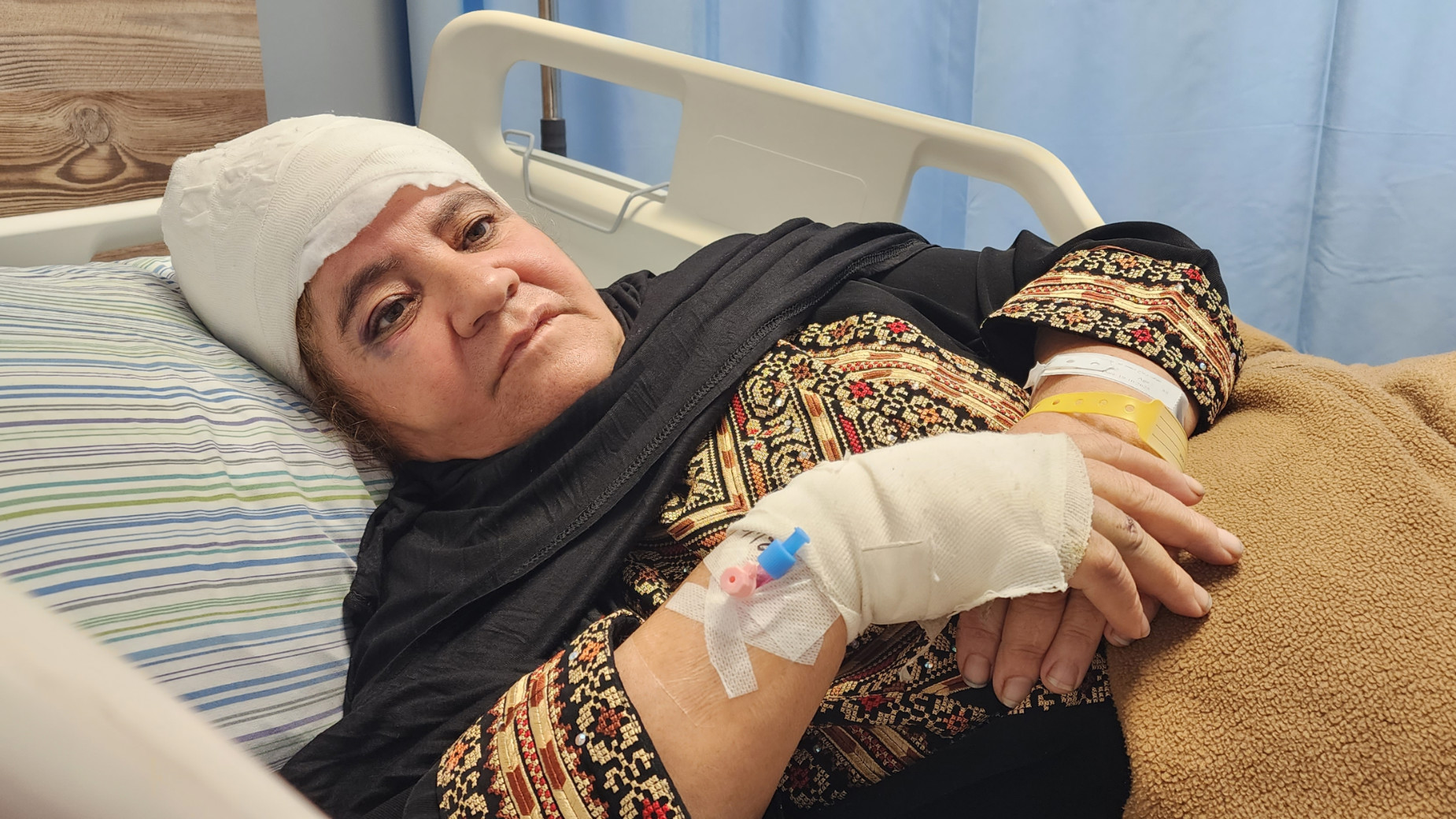
Afaf Abu Alia, a 53-year-old Palestinian woman, described a harrowing experience of being brutally attacked by Israeli settlers while harvesting olives near Ramallah in the occupied West Bank. “I felt like I was dying,” she recounted, detailing how more than 20 settlers beat her with sticks, leaving her with severe injuries, including brain bleeding and extensive bruising. The attack occurred as she and her family worked in Turmus Ayya, a village where settlers from nearby settlements like Maale Levona and Shilo have increasingly targeted Palestinian farmers. Despite fleeing to a safer area, the family returned to find their vehicle destroyed and their harvested olives stolen. Later, an Israeli military patrol intercepted them, firing a gas canister that left Afaf, who suffers from respiratory issues, incapacitated. The settlers returned in greater numbers, forcing the family to flee again, but Afaf, unable to move, endured further violence. This attack is part of a broader pattern of escalating settler violence against Palestinian olive harvesters, often under the protection of Israeli soldiers. The Abu Alia family, who had already been forced to rent land after settlers repeatedly targeted their own olive groves in al-Mughayyir, described the destruction of their olive trees as a devastating loss of heritage. Their great-grandfather had planted these ancient Roman olive trees over 150 years ago, and the family views them as a symbol of their identity and connection to the land. Since the start of the olive harvest season, over 158 settler attacks have been documented, resulting in the destruction of thousands of olive trees and significant economic losses for Palestinian families. The olive harvest, a deeply communal and cultural tradition, has become a battleground in the ongoing conflict, with settlers and Israeli forces systematically targeting Palestinian farmers to sever their ties to the land. Despite these efforts, Palestinians continue to resist, driven by a profound spiritual and ancestral bond with their olive trees.
Olive groves under siege: Palestinian families face Israeli violence during harvest