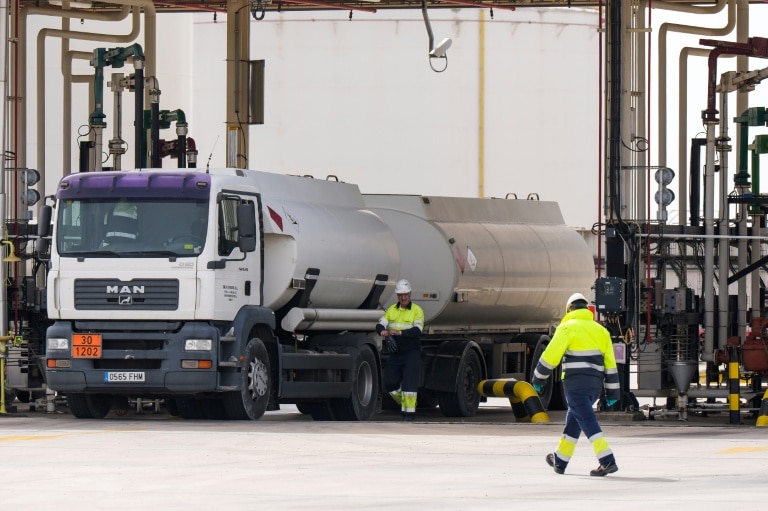
Global financial markets experienced significant turbulence Friday as escalating Middle East tensions triggered a dramatic surge in oil prices while disappointing U.S. employment data sparked equity selloffs worldwide.
Brent North Sea crude, the international benchmark, skyrocketed 8.5% to $92.69 per barrel, marking a nearly 30% weekly increase following President Trump’s declaration that only Iran’s “unconditional surrender” would end the ongoing conflict. The U.S. benchmark West Texas Intermediate crude surged over 12% to exceed $90 per barrel, reaching heights not seen in recent years.
The dramatic price escalation stems from critical supply disruptions in the Strait of Hormuz, where maritime traffic has virtually ceased despite Trump’s pledge to protect shipping routes. This vital waterway typically handles approximately 20% of global crude oil and liquefied natural gas supplies, making its disruption particularly consequential for energy markets.
Market analysts noted that earlier optimism for a rapid resolution has evaporated. “Trump’s comments dashed hopes that the conflict would be averted quickly, and the oil price has continued its push higher,” stated XTB research director Kathleen Brooks.
The energy crisis intensified with reports of attacks on oilfields in southern Iraq and the northern Kurdistan region, forcing a U.S.-operated facility to halt production. Additionally, Kuwait began reducing output due to insufficient petroleum storage capacity, according to Wall Street Journal reports.
Simultaneously, U.S. economic indicators disappointed investors. The Labor Department reported an unexpected loss of 92,000 jobs in February, reversing January’s revised growth of 126,000 positions. Unemployment edged upward while retail sales declined 0.2% in January, painting a concerning picture of economic momentum.
The dual pressures of energy-driven inflation and economic softening created a complex scenario for monetary policy. JPMorgan Chase analysts noted that while Trump’s shipping protection pledge reduced some risk premium, it would have “limited impact unless Iran’s extensive disruption capabilities are first neutralized.”
Wall Street’s major indices closed down approximately 1-1.6%, with European markets following suit despite earlier resilience. The DAX, CAC 40, and FTSE 100 all finished with losses exceeding 0.7%.
Notably, Boeing defied the market trend, climbing 4.1% on reports of impending major sales agreements with Chinese carriers, highlighting how company-specific developments can outweigh broader market pressures.
The prolonged energy price surge has raised concerns about persistent inflationary pressures that could constrain central banks’ ability to implement growth-supporting interest rate cuts, potentially delaying anticipated monetary easing until September according to current market expectations.