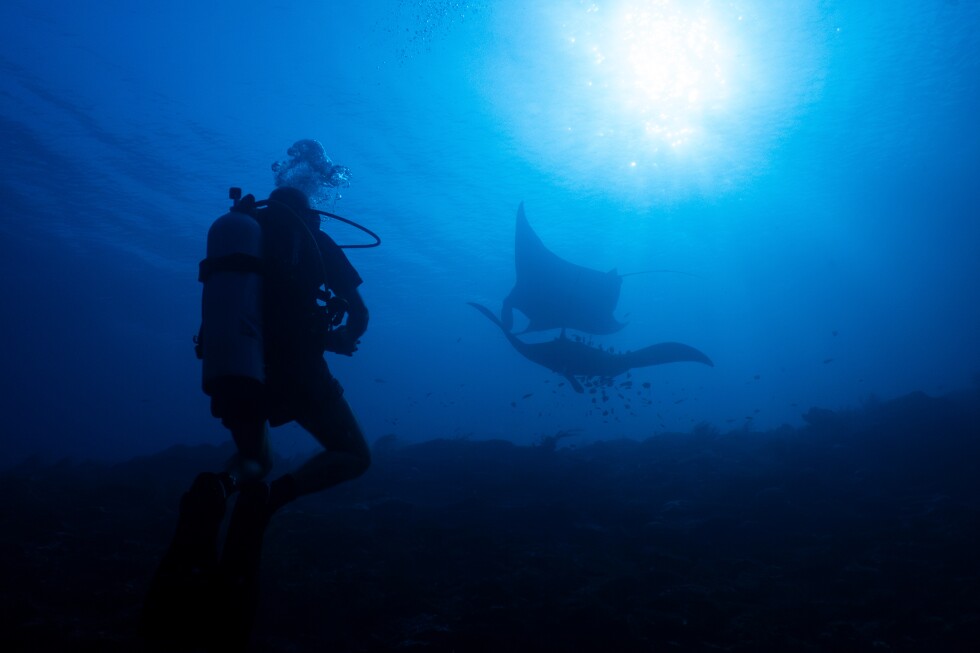
Tucked away in the remote eastern reaches of Indonesia, the Raja Ampat archipelago rises from the Coral Triangle, the global epicenter of marine biodiversity. Powerful, nutrient-rich ocean currents course through its waters, nurturing a kaleidoscopic underwater landscape where sharks, manta rays, and sea turtles glide past ancient sea fan corals—some found nowhere else on the planet. No other place on Earth concentrates such a staggering volume of marine life into such a compact area, according to Mark Erdmann, an American coral reef biologist who has dedicated more than 20 years to studying the region and shaping its landmark conservation framework. Holding 75% of the world’s documented hard coral species and over 1,700 fish species, Raja Ampat is widely recognized as one of the most critical ocean ecosystems on the planet, but its decades-long conservation success is now under growing threat from two overlapping forces: the global push for renewable energy that is driving nickel mining expansion and a post-pandemic surge in international diving tourism.
The archipelago’s journey to conservation success was not always smooth. At the turn of the 21st century, unregulated overfishing by outside fleets left the ecosystem in tatters: fishermen used explosive devices and giant gill nets that shattered fragile coral colonies and decimated local shark populations, forcing native fishing households to travel up to 10 kilometers offshore just to bring in a viable catch. At the time, the regional government relied almost entirely on extractive industries—mining and logging—as its core economic drivers, leaving the reefs with little formal protection. The turning point came when a 2003 marine assessment conducted by Conservation International opened up critical dialogue between local government leaders, Indigenous communities, and environmental groups, centered on one core question: could protecting Raja Ampat’s natural assets deliver more long-term food security and sustained economic revenue than continued extraction? To demonstrate the potential of conservation, conservation organizers brought regional leaders to established ecotourism destinations like Bali and Bunaken, letting them see first-hand the economic and social benefits of thoughtful natural resource management.
Those conversations laid the foundation for a transformative conservation model: by 2007, 10 distinct marine protected areas had been established across Raja Ampat, covering 2 million hectares—roughly 45% of the archipelago’s total reef, seagrass, and mangrove habitats. Today, local community members patrol the protected waters, enforce sustainable fishing rules, and monitor tourism activity, with most operational funding coming directly from tourism revenue, including a $40 entry fee for all international marine park visitors. After 20 years of consistent protection, the results are unprecedented: a 2024 assessment from the Misool Foundation recorded a 109% increase in fish biomass, the key metric for measuring marine ecosystem health, and the archipelago now hosts a stable population of 2,007 documented reef manta rays—a remarkable number for a species classified as vulnerable to extinction across most of the Indo-Pacific.
This conservation success has coincided with the global transition to renewable energy, which has sent demand for nickel soaring. Nickel is a core component of electric vehicle batteries and critical for wind and solar energy infrastructure, and Indonesia controls roughly 43% of the world’s total nickel reserves, making the metal central to the country’s national economic development strategy. In 2025, the Indonesian government granted new nickel mining concessions on three northern islands in Raja Ampat, some located within a designated UNESCO Global Geopark and just kilometers from the archipelago’s most popular diving sites. Public outcry over the concessions led the government to revoke four permits, but one active concession remains on Gag Island, where mining operations first launched in 2017.
Environmental activists warn that the damage from mining is already accumulating, with no clear plan for remediation. “The heavy machinery, excavators, bulldozers—they’re still there (in the islands),” explained Timon Manurung, director of Indonesian environmental advocacy group Auriga Nusantara, adding that no party has taken responsibility for restoring land and waters already degraded by mining activity. The archipelago’s steep terrain and heavy annual rainfall amplify the environmental risk: sediment eroded from cleared mining sites flows directly into nearshore waters, smothering corals and blocking the sunlight they need to survive. “In the end, it will cause coral reefs to die,” said Syafri Tuharea, head of the Raja Ampat Marine Conservation Area. The active mining zone also lies along a critical migration corridor for reef manta rays, the archipelago’s biggest international tourism draw. Beyond its coral reefs, Raja Ampat holds extensive seagrass meadows and mangrove forests—coastal ecosystems that act as some of the world’s most powerful natural carbon sinks, absorbing far more carbon dioxide per hectare than terrestrial forests. A 2026 study from Auriga Nusantara found that mining-related deforestation has already cleared nearly 1,000 hectares of coastal and island habitat, an area Manurung calls significant for the archipelago’s small, fragile landmasses.
Alongside mining pressure, a shifting profile of tourism is placing new strain on the ecosystem. Annual visitor numbers have held steady over the past decade, but the share of international tourists has surged to 95% of the roughly 42,000 annual visitors, while domestic tourism has dropped by more than two-thirds. Most international visitors come for week-long liveaboard diving expeditions, and the number of these vessels has grown rapidly over the past 10 years, according to Kristanto Umbu Kudu, a local dive guide with 25 years of experience working in Raja Ampat. Conservation leaders say the increase in liveaboard traffic has led to widespread coral damage from ship anchors, plus growing volumes of untreated waste and sewage discharged into protected waters. “Our data shows that in 2024, there were 218 tourist ships,” Tuharea said. “Can you imagine how many square meters of coral reef will be destroyed because of the anchors?” Regional authorities are currently discussing the introduction of designated mooring systems and caps on the number of tourist vessels allowed in protected waters, but regulations have not yet been finalized. Even at popular dive sites, visible signs of pollution are growing: at Blue Magic, one of the archipelago’s most iconic dive spots, crystal-clear waters that once drew divers from around the world are now often littered with floating plastic waste, tangled around jellyfish and drifting past reef formations. “That’s something which still breaks my heart every time I see these big rafts of floating plastic,” Erdmann said.
For marine scientists and divers alike, what is at stake extends far beyond the popularity of Raja Ampat as a diving destination. “It is one of the few places in the world, alongside the Amazon, where biodiversity actually increases from year to year,” said Pol Ramos, a Spanish marine biologist and co-founder of Odicean, a non-profit that combines ocean education with research dive expeditions in the region. Beyond the sheer number of species, Raja Ampat holds irreplaceable genetic diversity: every species in its waters carries millions of years of evolutionary adaptation encoded in its DNA, a natural library of solutions that Erdmann says will be critical as the planet adapts to accelerating climate change. “As we go into a more and more uncertain future with climate change,” Erdmann said, “it’s that genetic diversity that’s what we have to work with in terms of how we adapt.”