Despite the official commencement of Phase Two of the US-brokered peace agreement, Gaza residents report no substantive improvement in their daily reality. The coastal territory witnessed over 14 fatalities on January 14th alone, according to Gaza civil defense authorities, highlighting the persistent violence that continues to plague the region.
From his makeshift shelter in Gaza City, Mahmoud Abdel Aal expressed the collective frustration of Palestinians: “There is no distinction between wartime and the ceasefire, nor between the initial and subsequent phases of this agreement—aerial assaults persist daily.”
The announcement of Phase Two by US Middle East envoy Steve Witkoff, representing President Donald Trump’s peace initiative, has failed to translate into tangible security improvements. Both Israeli forces and Hamas continue trading accusations of violating the ceasefire terms established in October 2025.
An AFP correspondent documented the aftermath of a recent airstrike in Deir al-Balah that claimed five members of the Houli family. Israel’s military identified the target as a Hamas military operative, while neighbors like Ahmad Suleiman questioned the ceasefire’s validity: “Media broadcasts proclaim the ceasefire, but the actual situation tells a different story.”
Deep skepticism prevails regarding newly proposed governance structures, including the Trump-chaired “Board of Peace” and an associated technocratic committee intended to oversee reconstruction efforts. “The international community convenes in Cairo to discuss Gaza’s future while unable to even access the territory,” noted Hossam Majed, residing amidst his destroyed home in Gaza City.
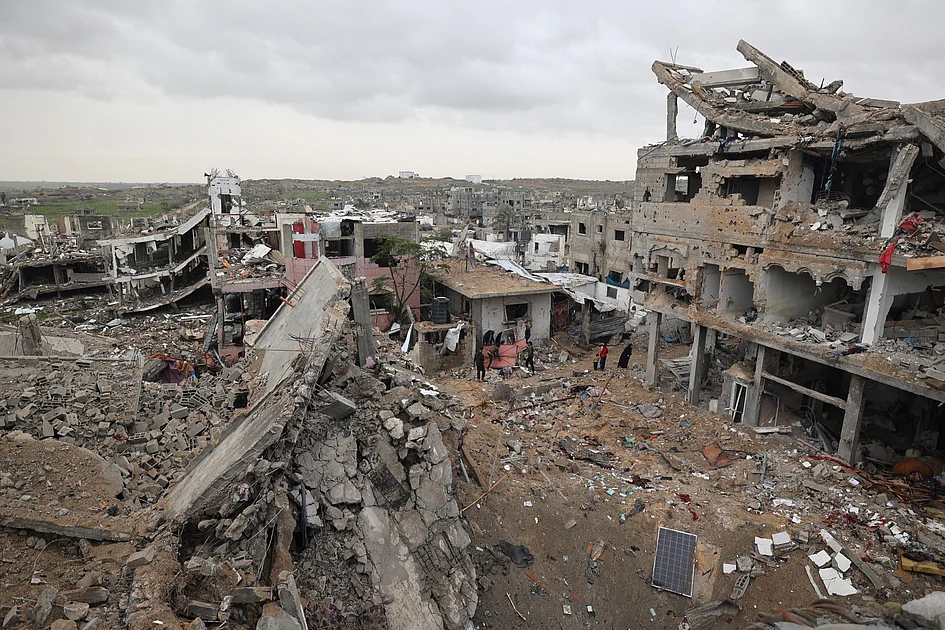
The humanitarian situation remains catastrophic with UN assessments indicating over 80% of infrastructure destroyed. Essential services including water, electricity, and waste management remain non-functional. Medical facilities operate at minimal capacity, educational institutions have largely ceased to exist, and UNICEF reports all Gaza children require psychological support after more than two years of conflict.
While humanitarian workers acknowledge some logistical improvements since the initial ceasefire, they emphasize that Israeli access restrictions continue to hamper adequate relief efforts—a claim Israeli authorities dispute.
For displaced residents like Nivine Ahmad in Al-Mawasi’s camps, the promise of peace remains abstract: “We anticipate returning to something resembling normal life—perhaps prefabricated housing with basic utilities where our homes once stood. Only then will we believe the war truly ended.” Until then, she notes, Gazans survive on “hope and patience alone.”