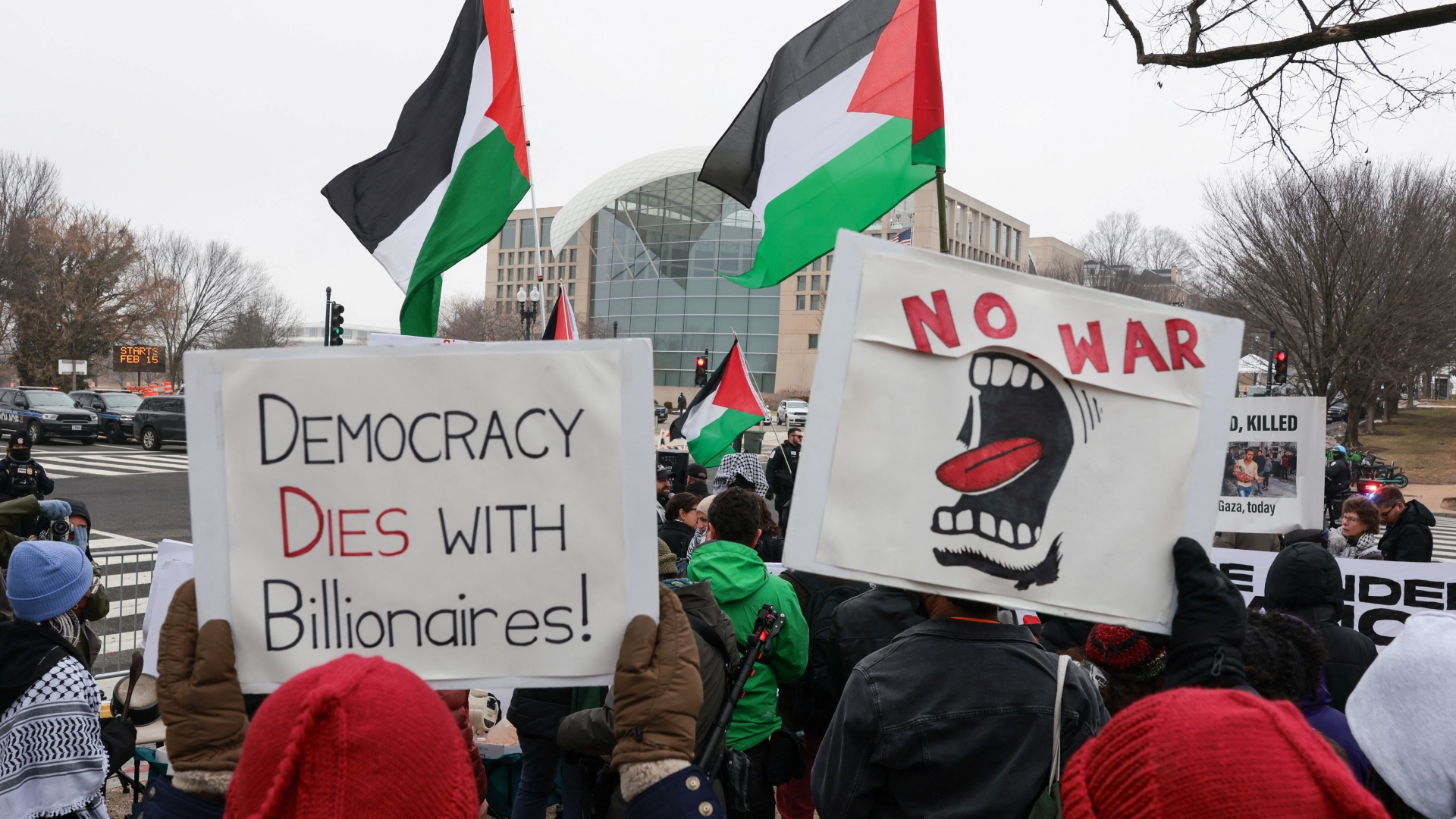
A groundbreaking Gallup survey released Friday reveals a historic reversal in American public opinion: for the first time in nearly a quarter-century of tracking, U.S. citizens now express greater sympathy for Palestinians than Israelis. The findings indicate this shift transcends generational divides and carries significant political implications.
The comprehensive poll shows 41% of Americans now sympathize more with Palestinians, compared to 36% who favor Israelis—a five-point margin that, while statistically narrow, marks a dramatic departure from Israel’s consistent 24-year advantage. Ten percent of respondents expressed no opinion, while 9% sympathized with neither side and 4% supported both equally.
The most pronounced divergence appears along partisan lines. Democratic voters demonstrate overwhelming support for Palestinians at 65%, contrasted with merely 17% backing Israelis—the widest gap recorded among demographic groups. This trend accelerated following Hamas’s 2023 attacks on southern Israel and Israel’s subsequent military campaign in Gaza, which has resulted in over 72,000 Palestinian fatalities according to documented figures that experts consider undercounted.
Reed Brody, a veteran war crimes prosecutor and Counsel for Human Rights Watch, characterized the findings as a ‘wake-up call for Democratic leaders,’ warning that their ‘unwavering support for—and complicity in—Israel’s atrocities in Gaza is alienating their own voters.’ This assessment aligns with a leaked autopsy of the 2024 presidential election concluding that Kamala Harris lost meaningful support due to the Biden administration’s unconditional backing of Israel’s actions.
Independent voters emerged as the critical drivers of this sentiment shift, with 41% now favoring Palestinians compared to prior years when they consistently supported Israelis. Academic analysts attribute the change not only to Gaza’s humanitarian crisis but also to strategic alliances built by Palestinian advocates with organizations including the American Civil Liberties Union, Black Lives Matter, and Jewish Voice for Peace over the past two decades.
Nizar Farzakh, former adviser to Palestinian leadership and George Washington University lecturer, notes these connections ‘helped associate Palestinians with the working class while Israel is perceived as the elites.’ The Boycott, Divestment, Sanctions movement’s rights-based framework, he argues, facilitated broader recognition of Israeli practices regarding ‘suppression of speech [and] racism.’
Even among traditionally pro-Israel Republicans, sympathy for Israelis has declined to 70%—a 10-point drop from 2004 and the lowest support level in 22 years. Only 13% of Republicans expressed Palestinian sympathy.
The generational divide remains stark: 53% of 18-34-year-olds favor Palestinians versus 23% supporting Israelis (a record low for this demographic). Most dramatically, Americans aged 35-54 show a ‘near-reversal’ from 2025, with 46% now supporting Palestinians versus 28% backing Israelis.
Bishara Bahbah, a Palestinian-American academic and former Democrat who joined Trump’s administration, observes that Americans are ‘seeing an ugly face of Israel they’ve not perceived before.’ This sentiment manifests politically through candidates rejecting funding from AIPAC (the American Israel Public Affairs Committee), despite the organization spending tens of millions to counter this trend in the upcoming 2026 midterms.
However, Tariq Kenney-Shawa, US policy fellow at Al-Shabaka, cautions that while significant, these attitude shifts haven’t translated into policy changes regarding US aid to Israel. ‘Advocates must now focus on converting passive sympathies into active opposition,’ he notes.
Concurrently, Israel’s favorability rating has plummeted to 45%—approaching its historical low of 1989—while Palestinian territories achieved their highest rating at 37%. Support for the two-state solution remains steady at 57%, though implementation grows increasingly impractical due to Israeli settlement expansion and moves toward annexing the entire West Bank.
The survey, conducted via 1,001 telephone interviews with U.S. adults from February 2-16, 2026, carries a ±4% margin of error at 95% confidence level.