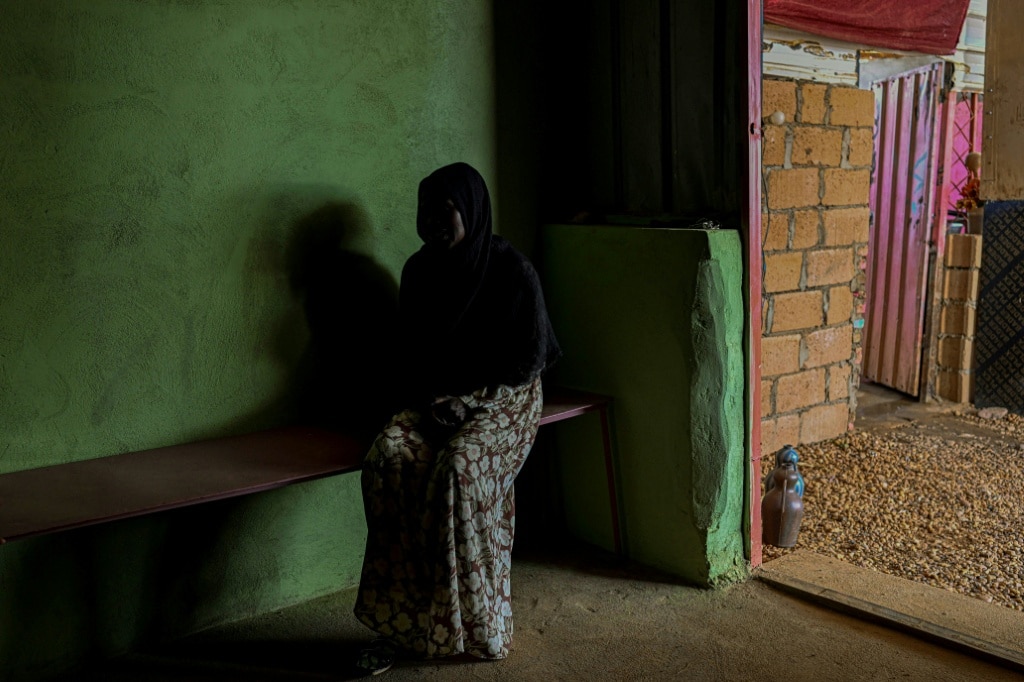
Two years after a brutal gang rape at the hands of Rapid Support Forces (RSF) paramilitaries in Sudan’s capital Khartoum, 26-year-old university graduate Nesma watches 13-month-old Yasser bounce on her lap. The toddler bears his mother’s smile and curious eyes, no trace visible of the three fighters who attacked her, and Nesma says he bears no blame for the violence that brought him into the world. “It’s not my son’s fault, just like it is not mine,” she says. “I couldn’t handle the thought of him going through pain, or ending up in a bad home.”
Nesma’s story is far from unique. Yasser is one of thousands of children born to survivors of systematic sexual violence amid three years of brutal civil conflict between Sudan’s national army and the RSF. The fighting, which broke out in April 2023, has seen sexual violence deployed as a deliberate weapon of war, according to United Nations officials and rights experts.
Nesma had fled Khartoum with her family early in the conflict, but returned a year in to recover critical identity documents the family needed to restart their lives in exile. RSF fighters stopped her bus in an industrial district of Khartoum North, separated passengers by gender, and gang-raped her. She passed out during the attack, and woke at dawn to find a male fellow passenger shot dead beside the road. Only five months after the assault did she realize she was pregnant, and she debated aborting or putting Yasser up for adoption until the eve of her caesarean section. Ultimately, she could not bring herself to let him go.
UN experts have long documented the RSF’s systematic use of sexual violence as a tool to subjugate, displace, and ethnically dominate communities across Sudan. “Rape is being used as a weapon of war, dominance, destruction and genocide in Sudan to destroy the fabric of society and change its makeup,” Reem Alsalem, the UN special rapporteur on violence against women and girls, told AFP.
UN officials estimate thousands of sexual assault cases across the country, with the vast majority never reported due to deep social stigma in Sudan’s conservative communities. In just one town in Darfur, hundreds of raped girls have never accessed medical care, and most are carrying pregnancies resulting from assault, said Denise Brown, the UN’s top humanitarian official in Sudan. Many survivors face double injustice: they are abandoned by their families, divorced by husbands, and even accused of colluding with the RSF, effectively revictimizing women who bear no responsibility for their attacks.
In the Tawila refugee camp in Darfur, 20-year-old Hayat shares her own story, rocking her four-month-old son to sleep in a straw shelter. She was raped while fleeing the RSF’s 2024 capture of the larger Zamzam refugee camp, where the paramilitary group killed more than 1,000 displaced people and carried out a systematic ethnic campaign of rape targeting non-Arab communities. RSF fighters have even publicly posted videos claiming that raping women from rival ethnic groups “honours” their own bloodline.
The use of sexual violence in Sudan has deep roots: decades ago, the Janjaweed militias that preceded the RSF carried out mass rape as part of their ethnic cleansing campaign in Darfur in the 2000s, a strategy the RSF has revived and expanded in the current war. Twenty-three-year-old Halima, a survivor of three separate rapes since 2000s, was only able to avoid a third pregnancy from assault thanks to emergency contraception provided by camp medical workers. In Tawila, AFP met dozens of survivors who fell pregnant while fleeing the RSF’s October 2024 capture of El Fasher, the capital of North Darfur, where the paramilitary killed at least 6,000 civilians in three days. Seventeen-year-old Rawia watched fighters kill half of her fleeing group before she was gang-raped, and is now five months pregnant. Twenty-five-year-old Alia was held captive for six weeks before escaping, and suffered a miscarriage after her assault. Twenty-two-year-old Magda lost her husband to a rocket attack and her brother to an execution on the road to Tawila, and has chosen to carry her pregnancy to term: “If I lose this baby, it will be another thing for me to grieve. But if he lives, it’s fate, I’ll raise him.”
Not all survivors can or will carry their pregnancies to term. Many attempt unsafe, unregulated abortions to end pregnancies from rape, leading to life-threatening complications. Gloria Endreo, a midwife working with Doctors Without Borders in Tawila, says she has treated hundreds of survivors in just two months, many pregnant after assault. “Some of them who gave birth, in spite of themselves, have that resentment and disconnection. They can’t show their babies love or attention. And then these women are forced to raise this child, a constant reminder of what happened to her.”
Sexual violence is not limited to the RSF: the UN has warned that assaults on detained women by Sudanese army soldiers are drastically underreported due to fear of retaliation. But observers say the scale and deliberate strategy of the RSF’s campaign is unmatched. “The RSF rapes to subjugate society, to displace and dominate; army soldiers rape because they know they’ll get away with it,” one anonymous activist told AFP.
In Khartoum, 30-year-old Fayha – a survivor of rape by a civilian assisted by an off-duty army soldier – says she now must “be both mother and father” to her five-month-old son. She only discovered her pregnancy in her third trimester, and has struggled with maternal anxiety, though she has recently begun to develop stronger maternal bonds. Like many survivors, Fayha and Nesma face overwhelming bureaucratic barriers: most struggle to obtain birth certificates for their children, a document required to access healthcare, education, and all basic social services. While Sudanese law has emergency procedures in place to issue these documents, the collapse of state bureaucracy and persistent social stigma leave thousands of children effectively stateless.
In Al-Jazira state, southeast of Khartoum, the trauma of RSF sexual violence runs particularly deep. The paramilitary explicitly targeted lighter-skinned girls from non-Arab ethnic groups, treating them as “trophies or spoils of war”, according to the women’s rights coalition SIHA. After the army recaptured most of central Al-Jazira in 2024, the government relaxed abortion restrictions to help survivors, but bureaucratic requirements and stigma meant most women could not access the procedure. One local volunteer says she helped 26 women access unsafe abortions, most after taking unregulated dangerous drugs without medical supervision.
For those forced to carry pregnancies to term, rejection is common. Sudanese social affairs minister Sulaima Ishaq al-Khalifa recalls the case of a 16-year-old survivor in Al-Jazira, whose grandmother snatched the newborn immediately after birth and handed him to aid workers, saying “We’re not taking this RSF baby home.” The teen mother never held her son, who was ultimately placed with a foster family. Dozens of other women are still held captive by retreating RSF forces in Darfur, after being forcibly married to fighters and their families could not pay ransoms to free them.
Still, there are small glimmers of hope. Displacement caused by the war has ironically helped some survivors avoid stigma: many families have been able to pass children born of rape off as adopted war orphans or extra siblings, since they no longer live near neighbours who knew their story. Informal adoption is a longstanding tradition in parts of Sudan, and thousands of abandoned children have been placed with loving families, though UN experts warn that most informal adoptions lack follow-up or vetting to ensure children are safe.
For Nesma, the future remains uncertain, but her focus is fixed firmly on giving Yasser the life he deserves. She is searching for a stable well-paid job that will let her raise him safely, and watches proudly as he takes his first unassisted steps. “He deserves a good life,” she says, holding his small hands as he explores.