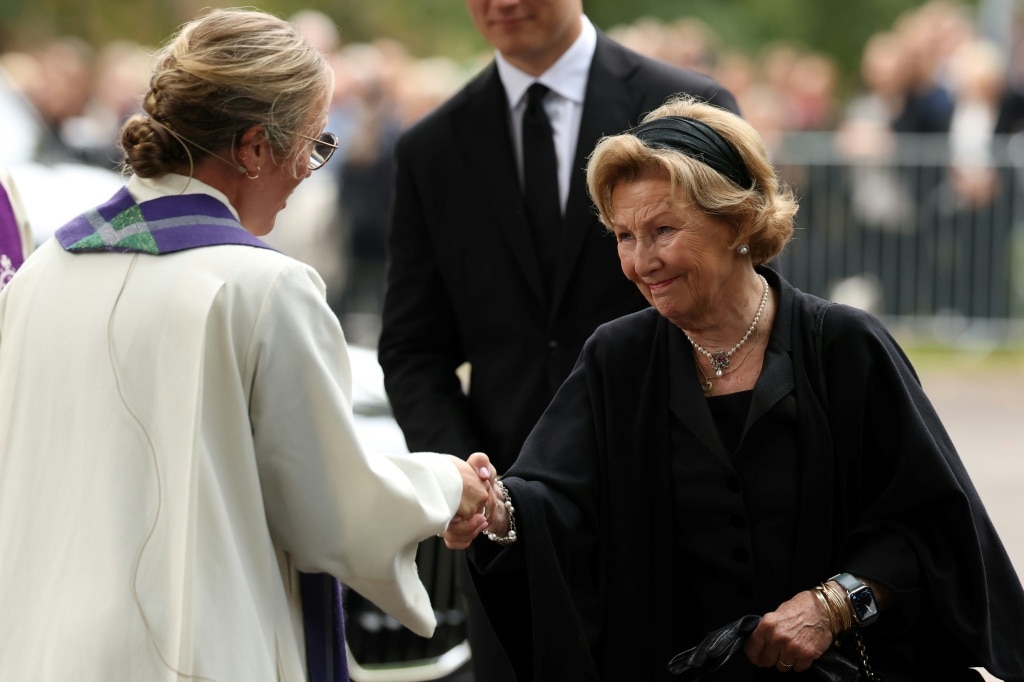
Two days after the passing of former King Harald V of Norway, the Scandinavian nation came together Sunday to honor the late monarch, with memorial services held in churches across the country, led by newly ascended King Haakon VIII.
As Haakon, 53, arrived alongside the extended royal family for the primary service at Asker parish church, located just south of the capital Oslo, hundreds of ordinary Norwegians gathered along the route to catch a glimpse of the new king and pay their respects to his father. Outside Oslo Cathedral, where government officials gathered for a separate commemoration, crowds began forming before sunrise, with many waiting hours for a chance to secure a seat inside to join the national mourning.
Many attendees shared that showing up to honor Harald felt like a natural act of community grief. “I’ve been deeply affected by the fact that King Harald has died. I felt a desire to be part of the community and to share the grief over his passing,” Aud Ragnhild Skar, a lecturer at the University of Oslo, told Agence France-Presse while waiting in line. Fellow mourner Sissel Engedal, a nurse, echoed that sentiment, describing the late monarch as “a very significant and important and beloved king.”
A national period of mourning has been formally declared across Norway, though no official date for Harald’s state funeral has been announced to the public. Next week, Haakon will take the formal oath of allegiance to the Norwegian constitution before the national parliament, marking the official completion of the royal succession. Unlike historical European coronation rituals, Norway abolished formal coronation ceremonies for monarchs in 1908, so Haakon and his wife Queen Mette-Marit will not hold a crowning. Still, following the tradition set by his father and grandfather, Haakon is expected to hold a optional consecration service at Trondheim Cathedral, the historic site of Norwegian royal coronations between 1814 and 1906.
Across his 35-year reign, Harald earned widespread public affection and respect, widely viewed as the living embodiment of Norway’s values of openness, tolerance, and modest governance. He was widely praised for steering the Norwegian monarchy toward a modern, approachable model that aligned with the nation’s egalitarian culture. Even amid a series of high-profile scandals that hit the royal family in the final years of his reign, Harald retained broad public support.
In his first public address as king, broadcast Saturday, Haakon paid tribute to his father’s legacy. “Above all, you were a person who remained committed to your values and dedicated to your duties,” Haakon said. The new monarch added that he had been “deeply moved” by the outpouring of public grief, noting that “it gives us consolation and strength to know that there are so many who are grieving with us” as the royal family processes the loss.
Harald had been hospitalized in Oslo since August 17, receiving treatment for haemolytic anaemia, a blood disorder that causes the premature breakdown of red blood cells and leads to chronic fatigue and breathing difficulties. The late king, 89, had faced a series of declining health issues in his final years, which forced him to gradually reduce his official public duties and engagements.
The past 12 months have been marked by significant turmoil for the entire Norwegian royal household, beyond Harald’s declining health. Queen Sonja, Harald’s wife, also 89, was briefly admitted to a hospital for heart-related care in May. New Queen Mette-Marit has faced ongoing public scrutiny over her past connections to disgraced deceased American sex offender Jeffrey Epstein. In June, Marius Borg Hoiby, Mette-Marit’s son from a previous relationship, was sentenced to four years in prison on two counts of rape, a conviction he is currently appealing. Mette-Marit, who lives with a chronic serious lung disease, underwent a life-saving lung transplant just one month after the verdict in July.