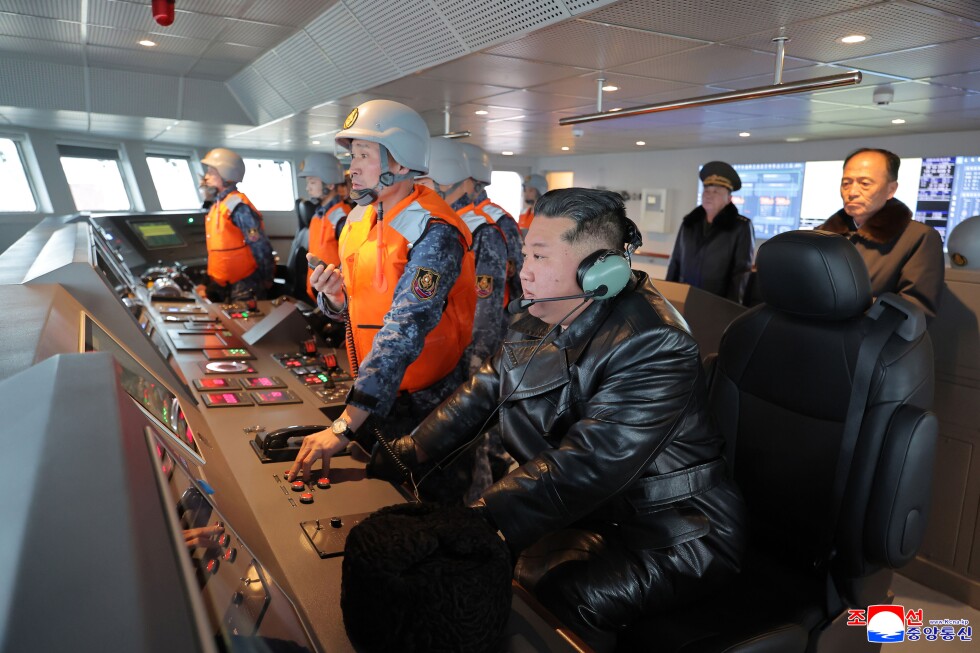
North Korean leader Kim Jong Un has personally overseen a significant naval modernization initiative, conducting two consecutive days of inspections of his country’s newest destroyer and witnessing live-fire cruise missile tests from the warship. According to state media reports released Thursday, Kim visited the Nampo shipyard on Tuesday and Wednesday to evaluate the Choe Hyon, a 5,000-ton destroyer first unveiled in April 2025, which he hailed as a transformative asset for expanding North Korea’s maritime strike capabilities.
During the comprehensive inspection, Kim also examined progress on a third destroyer of the same class currently under construction at the Nampo facility, scheduled for completion by October to coincide with the ruling Workers’ Party founding anniversary. The Choe Hyon represents a technological leap for North Korea’s navy, designed to integrate multiple weapons systems including anti-aircraft defenses, anti-ship weaponry, and nuclear-capable ballistic and cruise missiles.
South Korean military analysts have noted the likely involvement of Russian technical assistance in the destroyer’s development, given deepening military cooperation between Pyongyang and Moscow. However, questions remain about the vessel’s operational readiness despite Kim’s declaration that it has met all sea trial requirements.
The naval demonstration comes amid a strategic pivot in North Korea’s military development priorities. After years of concentrated ballistic missile testing, Kim has increasingly emphasized naval power projection, including ongoing development of nuclear-powered submarines. At last month’s Workers’ Party congress, the leader outlined ambitious five-year goals that include deploying intercontinental ballistic missiles from underwater platforms.
Kim characterized these advancements as representing ‘satisfactory progress’ in nuclear armament of naval forces, claiming they would ‘constitute a radical change in defending our maritime sovereignty.’ Analysts suggest this language may foreshadow a formal declaration of expanded maritime boundaries that could challenge South Korea’s control over disputed waters.
The developments occur against a backdrop of heightened inter-Korean tensions, with Kim repeatedly rejecting the legitimacy of the Northern Limit Line sea boundary established after the Korean War. While maintaining aggressive rhetoric toward South Korea, the North Korean leader has simultaneously left open the possibility of dialogue with the United States, contingent on Washington abandoning its denuclearization prerequisites for negotiations.