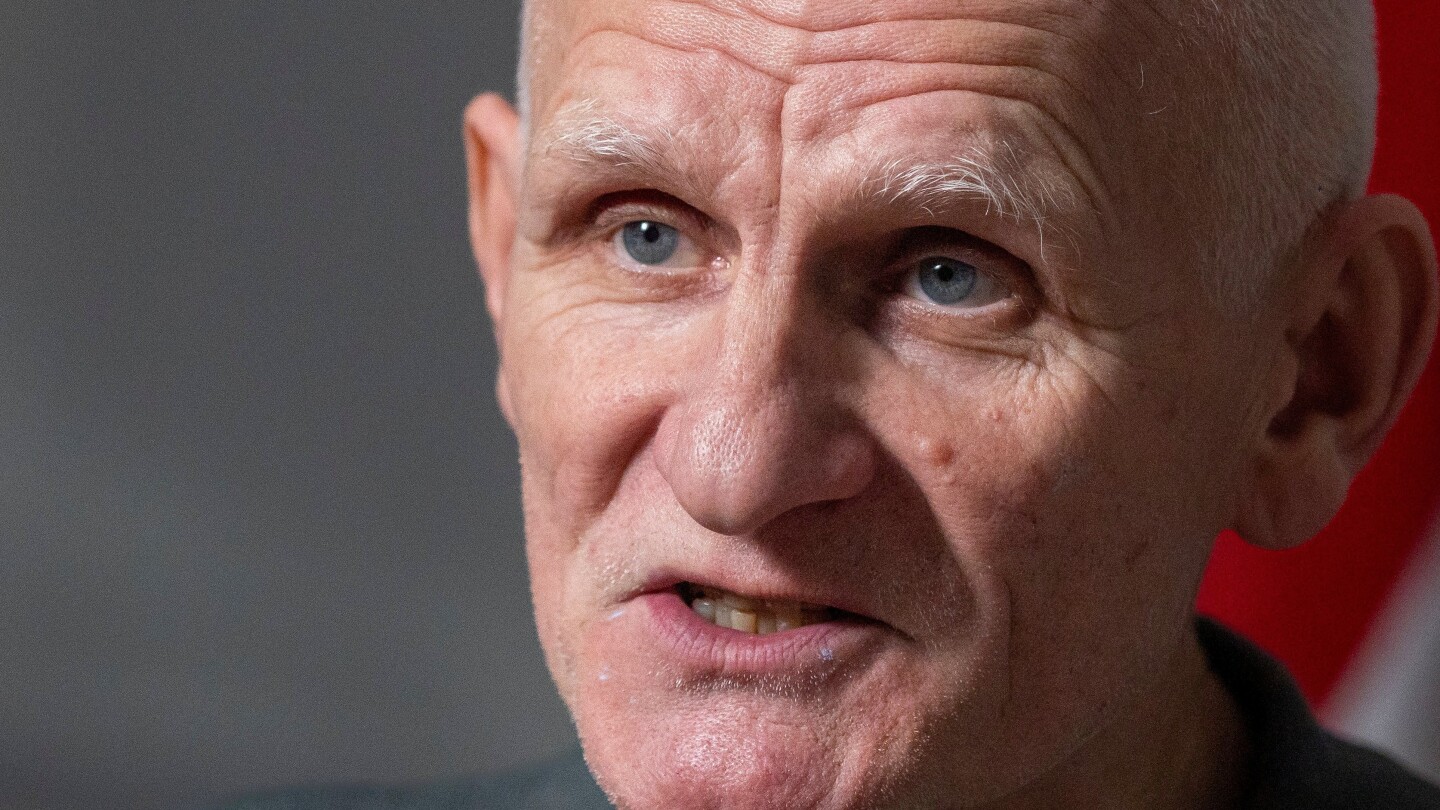
VILNIUS, Lithuania — Nobel Peace Prize recipient Ales Bialiatski provided his first comprehensive account of imprisonment under Belarus’ authoritarian regime during an exclusive interview with The Associated Press on Sunday. The 63-year-old human rights advocate appeared visibly weakened following his sudden release from Penal Colony No. 9, where he had served over four years of a decade-long sentence.
Bialiatski described severely inadequate medical facilities within the penal system, revealing that dental treatment consisted exclusively of tooth extractions. His unexpected liberation occurred Saturday when guards abruptly ordered him to pack his belongings while blindfolded. “When I crossed the border, it was as if I emerged from the bottom of the sea,” Bialiatski recounted, describing the emotional reunion with his wife in Vilnius after years of separation.
The human rights leader was among 123 prisoners released through a diplomatic exchange that prompted the United States to lift sanctions on Belarus’ crucial potash industry. This development occurs amid Belarusian President Alexander Lukashenko’s efforts to ease Western isolation despite maintaining close ties with Russia and permitting Belarusian territory to facilitate Moscow’s invasion of Ukraine.
While acknowledging his Nobel status provided protection from physical violence, Bialiatski detailed systematic psychological pressure including solitary confinement, arbitrary punishments for minor infractions, and restricted communication with family. He was classified as having “extremist tendencies” and forced to wear a yellow identification marker.
The veteran activist expressed particular concern for approximately 1,110 political prisoners remaining in Belarusian detention, including colleagues from his Viasna Human Rights Center. He characterized the government’s approach as “schizophrenic,” noting that new detainees continuously replace those being released.
Bialiatski intends to leverage his Nobel platform to advocate for democratic reforms, emphasizing that the award recognized broader Belarusian civil society rather than his individual achievements. He affirmed his continued work with Viasna, now operating from Vilnius after being forced into exile.
The activist also connected Belarus’s political future to Ukraine’s resistance against Russian aggression, warning that Minsk’s growing dependence on Moscow threatens national sovereignty. Meanwhile, other released dissidents including Viktar Babaryka and Maria Kolesnikova similarly described disorienting transitions to freedom during appearances in Ukraine, where most freed prisoners were relocated.