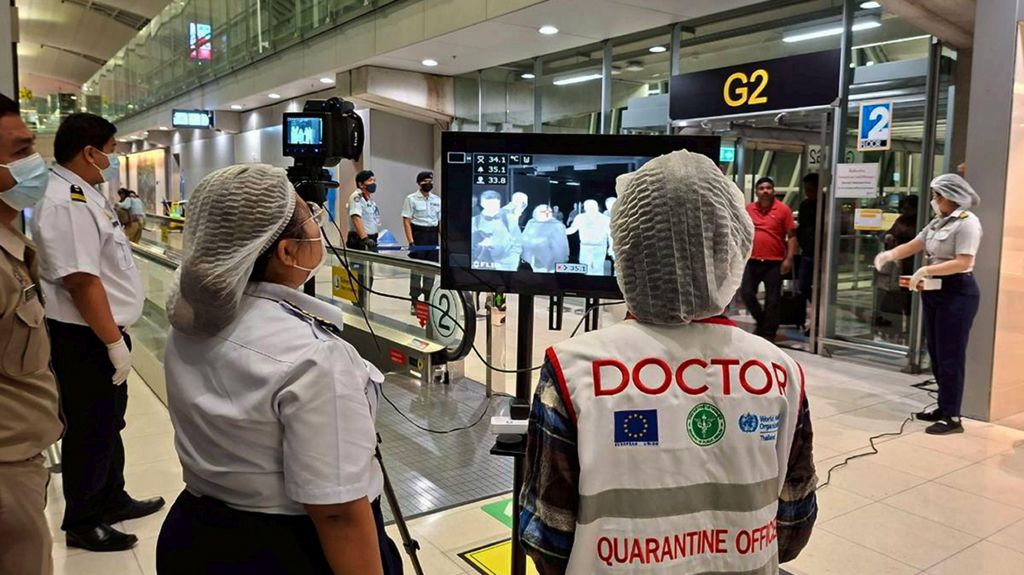
Health authorities across Asia are implementing enhanced screening protocols following the emergence of a Nipah virus outbreak in India’s West Bengal state. The highly lethal pathogen, which boasts a mortality rate ranging from 40% to 75%, has prompted immediate public health responses due to the absence of approved vaccines or treatments.
Thailand has activated screening measures at three major airports receiving flights from West Bengal, while Nepal has instituted similar precautions at Kathmandu’s international airport and land border crossings with India. These preventive actions come as health officials confirm five healthcare workers infected in West Bengal, with one individual in critical condition. Approximately 110 contacts have been quarantined as containment efforts intensify.
The World Health Organization classifies Nipah among its top ten priority diseases alongside COVID-19 and Zika, recognizing its significant epidemic potential. The virus demonstrates zoonotic transmission capabilities, primarily spreading from fruit bats and pigs to humans, with additional person-to-person transmission occurring through contaminated food sources.
Clinical presentation varies considerably among infected individuals, with some remaining asymptomatic while others develop severe neurological complications. Initial symptoms typically include fever, headache, muscle pain, vomiting, and sore throat, potentially progressing to encephalitis—a dangerous brain inflammation—in severe cases. The incubation period ranges from 4 to 14 days.
First identified in 1998 during an outbreak among Malaysian pig farmers, the virus derives its name from the village where it was initially discovered. Historical outbreaks have demonstrated substantial societal impact, including the culling of over one million pigs in Malaysia and significant economic losses across agricultural sectors.
Bangladesh has experienced the heaviest burden in recent years, recording over 100 fatalities since 2001. India’s Kerala state emerged as another hotspot, with outbreaks in 2018 (17 fatalities among 19 cases) and 2023 (2 deaths among 6 confirmed cases). The current cluster in West Bengal appears connected to a private hospital in Barasat, where two nurses remain hospitalized in intensive care.
While no cases have been reported beyond India’s borders, Taiwan’s health authorities have proposed designating Nipah as a ‘Category 5 disease’—a classification reserved for emerging infections with substantial public health risks that mandate immediate reporting and specialized control measures.