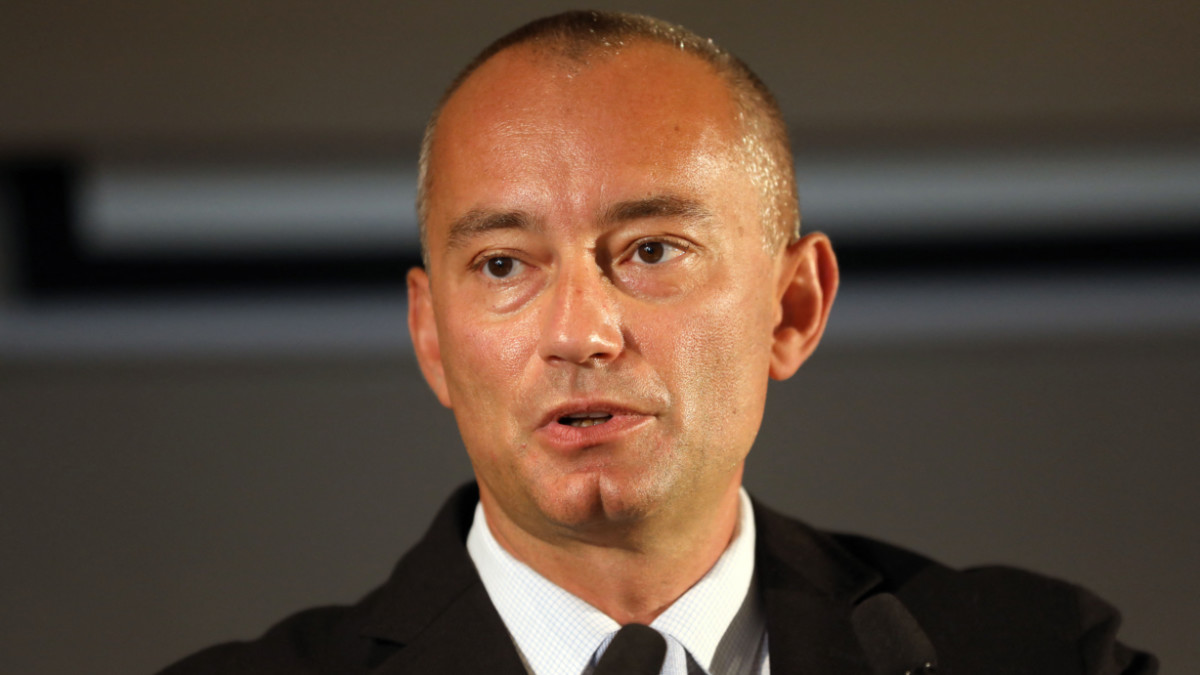
While Bulgaria grappled with anti-government protests over corruption and economic hardship in November, former Bulgarian Foreign Minister Nickolay Mladenov was simultaneously facilitating high-level economic negotiations between the European Union and the United Arab Emirates in Abu Dhabi. This contrast highlights Mladenov’s remarkable transition from European politics to becoming a central figure in Middle Eastern diplomacy.
Mladenov has now emerged as a leading candidate to oversee Gaza’s postwar reconstruction efforts on behalf of former President Donald Trump’s proposed ‘Board of Peace.’ His nomination represents a significant shift from earlier considerations of former UK Prime Minister Tony Blair, whose potential appointment faced substantial opposition.
The Bulgarian diplomat’s journey from his communist-era family background to Middle East peacemaker reflects an unconventional career path. Born in 1972 to a family with ties to Bulgaria’s communist regime—his father served in the country’s KGB equivalent—Mladenov initially advocated for EU integration before serving as Bulgaria’s defense minister (2009-2010) and foreign minister (2010-2013).
His diplomatic credentials were solidified during his nearly six-year tenure as UN Special Coordinator for the Middle East Peace Process, where he earned rare praise from all conflicting parties, including both the Palestinian Authority and Hamas. Senior Hamas official Khalil al-Hayya notably expressed pride in having known him, while Palestinian politicians described him as ‘a hell of a lot better than the alternative.’
Mladenov’s effectiveness stems partly from his Balkan background. As he explained in a 2021 New York Times interview: ‘I come from the Balkans. We’ve changed borders. We’ve fought over holy places, languages, churches. When you carry that baggage, it does help you see things a bit differently.’
The diplomat’s current considerations for the Gaza role follow his successful collaboration with Jared Kushner on the 2020 Abraham Accords, which normalized relations between Israel and several Arab states. Kushner confirmed that the Trump administration ‘confided in’ Mladenov during negotiations and valued his ‘constructive feedback.’
However, Mladenov’s potential appointment comes amid complex regional dynamics. The UAE has emerged as Gaza’s largest donor among Gulf states, while Saudi Arabia and Qatar have expressed reservations about funding reconstruction without political solutions. The UN Security Council’s mandate for an international stabilization force faces challenges as Arab nations hesitate to deploy between Hamas and Israeli forces.
Critics note that Mladenov’s strong ties to the UAE and Israel could influence his approach, with one Western official noting that ‘whoever is picked is going to get it on the neck, but Mladenov is very influenced by the UAE, and by extension Israel.’
The postwar planning itself, currently managed from Tel Aviv by Kushner associates, proposes dividing Gaza into halves with screened Palestinians in Israeli-occupied zones—a controversial framework that would require delicate diplomatic navigation from any appointed envoy.