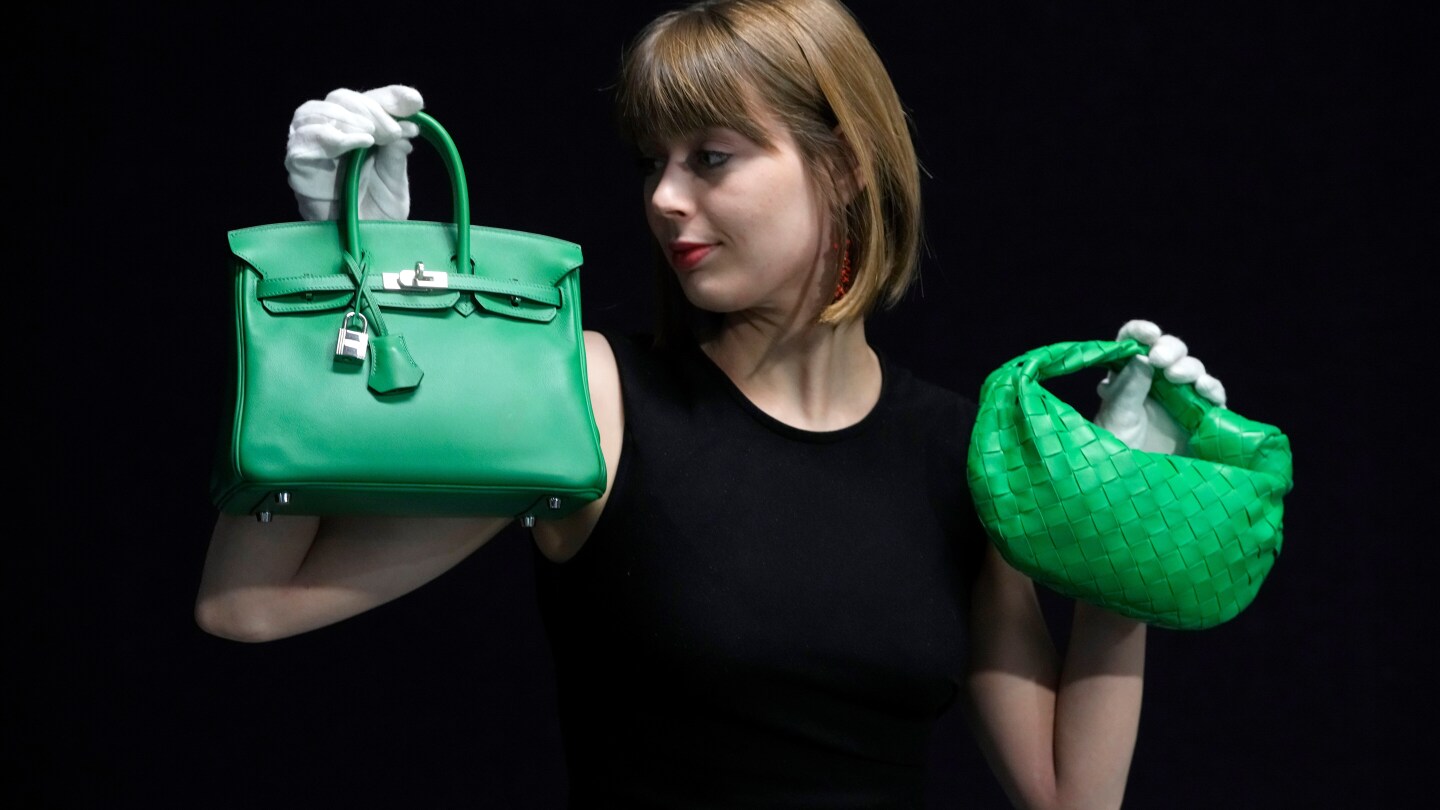
The global luxury goods market is poised for its second consecutive year of contraction, with sales projected to drop by 2% to 358 billion euros ($412 billion) in 2024, according to a recent report by Bain & Co. This decline, the first two-year slowdown since the 2008-09 financial crisis, reflects a growing consumer rebellion against steep price increases and a lack of innovation in high-end products. The report, released on Thursday, highlights a shift in consumer behavior, with affluent buyers opting for more accessible and ethically priced brands rather than traditional luxury labels. Claudia D’Arpizio, a Bain partner and co-author of the study, noted that while the situation is not catastrophic, it underscores a misalignment between price and value in the luxury sector. Post-pandemic sales peaked at 369 billion euros in 2023, but Bain analysts now view this as a bubble. Despite the recent downturn, the market remains 25% larger than in 2019, before the pandemic disrupted sales. Looking ahead, Bain forecasts a modest rebound of 3% to 5% in 2025, driven by strong financial markets in the U.S. and a recovery in China. However, regional disparities persist: the U.S. market is expected to remain flat at around 101 billion euros, while Europe faces slight contraction to 108 billion euros. Mainland China and Japan are projected to slow by up to 8%, while the Middle East, led by Dubai, is anticipated to grow by 4% to 6%. Globally, inflated prices and a creativity crisis have cost luxury brands 60 to 70 million customers over the past two years, reducing the customer base by 18% to 330 million less loyal shoppers. Footwear and handbags, categories hit hardest by price hikes, have suffered the most. The luxury market is also experiencing extreme polarization, with ultra-high-net-worth individuals (those with personal wealth above 30 million euros) proving the most resilient. This group, numbering around 400,000 people, has alienated other consumers, as brands increasingly cater to this elite segment. Social media has further amplified ethical concerns about luxury spending, with many questioning the justification for high prices. D’Arpizio emphasized that luxury brands must redefine their customer focus and reestablish themselves as symbols of self-actualization and social improvement to regain broader consumer trust.
New study shows global luxury shoppers are spurning high-end brands over steep price hikes