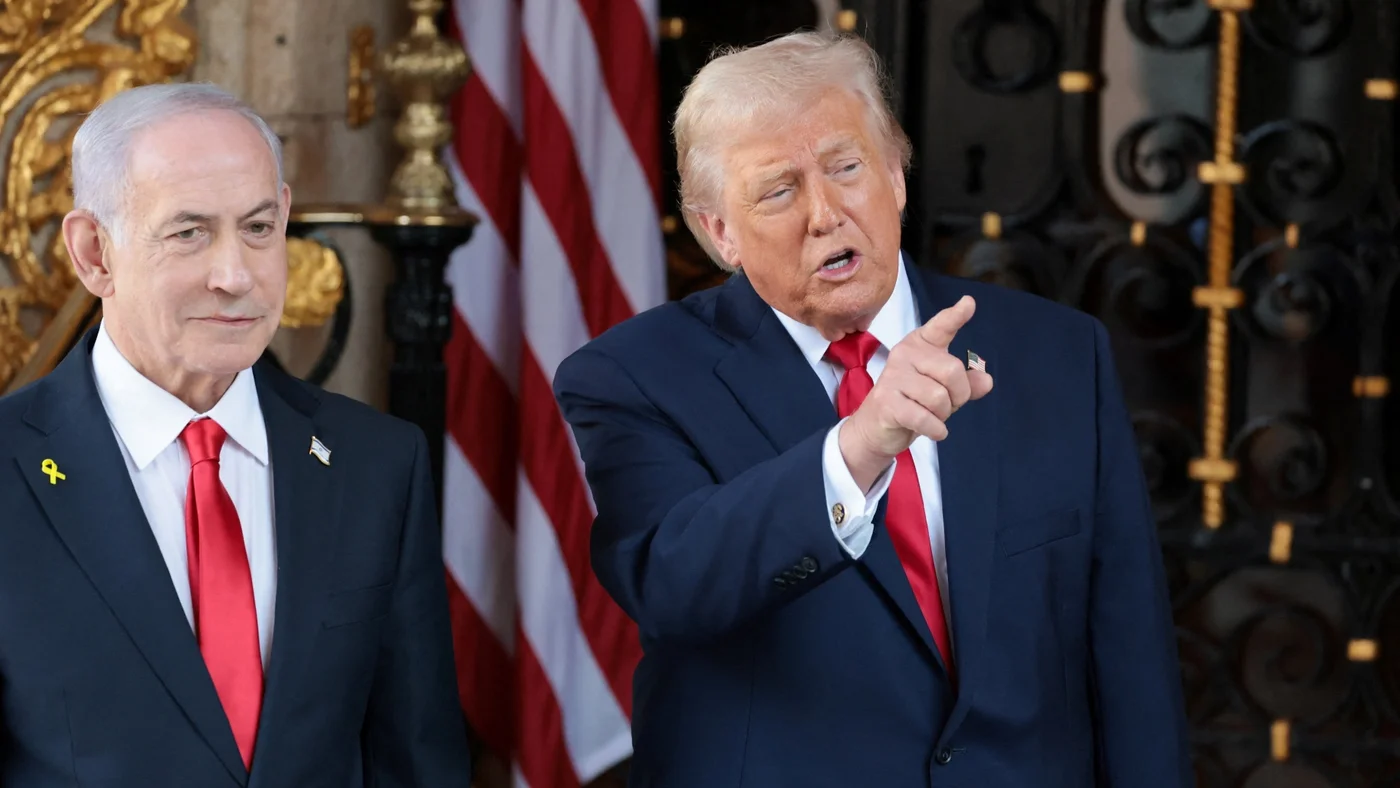
The highly anticipated meeting between U.S. President Donald Trump and Israeli Prime Minister Benjamin Netanyahu at Mar-a-Lago yielded significant symbolic gestures but left the future of the Gaza ceasefire plan shrouded in ambiguity. In an unprecedented move, Netanyahu announced the awarding of Israel’s highest cultural honor, the Israel Prize, to President Trump for his “tremendous contributions to Israel and the Jewish people”—marking the first time the prize has been bestowed upon a non-Israeli citizen.
President Trump reciprocated with effusive praise, repeatedly hailing Netanyahu as a “wartime prime minister at the highest level” and asserting that Israel’s very existence depended on his leadership. “If you had a weak man, you wouldn’t have Israel right now,” Trump declared during their joint appearance.
The central focus of discussions revolved around the stalled Trump-branded ceasefire plan for Gaza, which has remained effectively dormant since its implementation on October 10th. Trump adopted an increasingly assertive posture, warning that Hamas faces a “very short period of time to disarm” or there would be “hell to pay.” While refusing to specify a concrete deadline, the U.S. president suggested unnamed countries outside the Middle East had offered to deploy troops to forcibly disarm Hamas if necessary.
Despite the hardline rhetoric, Trump indicated potential flexibility by considering reconstruction initiatives in Gaza prior to Hamas’s disarmament. A ambitious $112 billion proposal dubbed the “Sunrise Project,” developed by U.S. envoy Steve Witkoff and Jared Kushner, envisions transforming Gaza into a high-tech urban center over a decade. The plan calls for the U.S. to fund 20% of the project costs, though unnamed officials have expressed skepticism about its feasibility given Gaza’s current humanitarian situation.
The meeting also addressed regional geopolitics, with Trump suggesting possible approval of F-35 fighter jet sales to Turkey despite Netanyahu’s historical objections. When questioned about Iranian nuclear capabilities, Trump warned that the U.S. would “knock the hell out of them” if Iran attempts to rebuild its nuclear program, while simultaneously expressing openness to diplomatic negotiations.
Critical challenges remain, as evidenced by a Palestinian Centre for Policy and Survey Research poll indicating 70% of Palestinians oppose Hamas disarmament even if it means renewed Israeli attacks. Hamas has previously offered to “bury” its weapons in exchange for a decade-long truce and Palestinian statehood recognition—a position at odds with the current U.S.-Israel approach that emphasizes total disarmament as a precondition for peace.