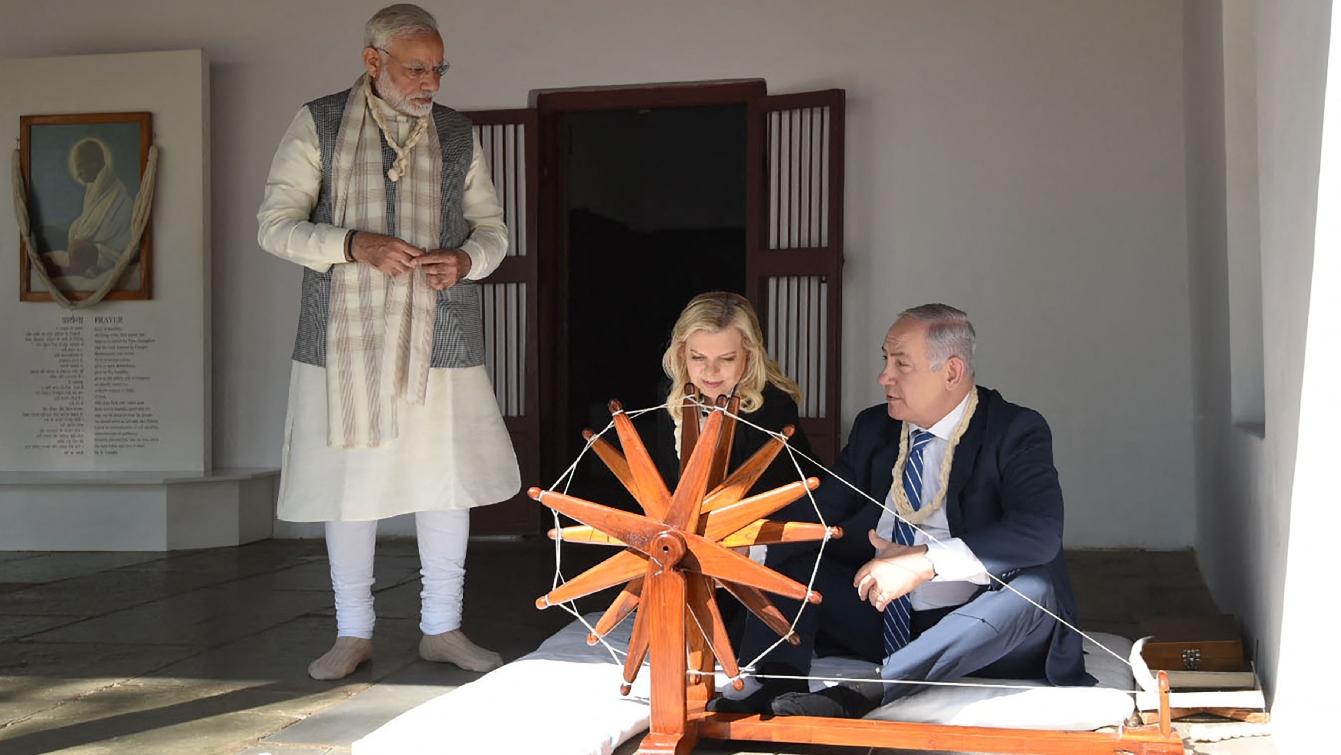
Israeli Prime Minister Benjamin Netanyahu has unveiled a strategic international coalition termed the ‘hexagon of alliances,’ with India positioned as a central partner. This alliance framework, explicitly designed to counter radical axes in the region, was announced ahead of Indian Prime Minister Narendra Modi’s landmark visit to Israel.
Netanyahu articulated the partnership’s foundation on the social media platform X, stating, ‘The bond between Israel and India is a powerful alliance between two global leaders. We are partners in innovation, security, and a shared strategic vision.’ He characterized the coalition as an axis of nations committed to stability and progress, explicitly opposing both ‘the radical Shia axis’ and an ’emerging radical Sunni axis.’ The alliance is reported to include Israel, India, Greece, Cyprus, and other unnamed Arab, African, and Asian states.
Modi’s visit agenda includes addressing the Israeli parliament, a solemn visit to the Yad Vashem Holocaust memorial, and engagements with the Indian-Jewish community. In response to Netanyahu’s remarks, Modi affirmed the ‘deep bond’ and ‘multi-dimensional nature’ of bilateral relations, emphasizing a foundation of ‘mutual trust, innovation, and a shared aspiration for peace and progress.’
Concrete collaborative initiatives were outlined, focusing on infrastructure development in Israel’s Negev region. Netanyahu announced the expedited construction of the Tzklag Airport and a new Israeli settlement, citing a ‘tremendous development momentum.’
This deepening partnership is underpinned by substantial defense and economic ties. India has emerged as the world’s largest purchaser of Israeli weaponry, including drones, missile systems, and surveillance technology, with arms purchases surging 175% between 2015 and 2019. Recent high-level defense meetings have resulted in memoranda of understanding aimed at strengthening long-term cooperation. A September bilateral investment agreement further solidified economic links, which Israeli Finance Minister Bezalel Smotrich claimed would ‘open new doors for investors.’
This strategic pivot marks a significant evolution in India’s foreign policy. Historically a supporter of the Palestinian cause at the United Nations, India has recently abstained from a UN resolution calling for a Gaza ceasefire. Concurrently, it has strengthened ties with Israel’s regional allies, notably signing a $3 billion liquefied natural gas deal and a defense agreement with the United Arab Emirates.
The alliance’s formation occurs against a backdrop of intensified pressure on Iran. Following a U.S. tariff announcement on nations engaging with Iran, India seized three Iranian-linked oil tankers in the Arabian Sea. Subsequently, India issued an advisory urging all its nationals to depart Iran, signaling a potential recalibration of its historically close strategic ties with Tehran and highlighting the complex geopolitical realignments shaping the region.