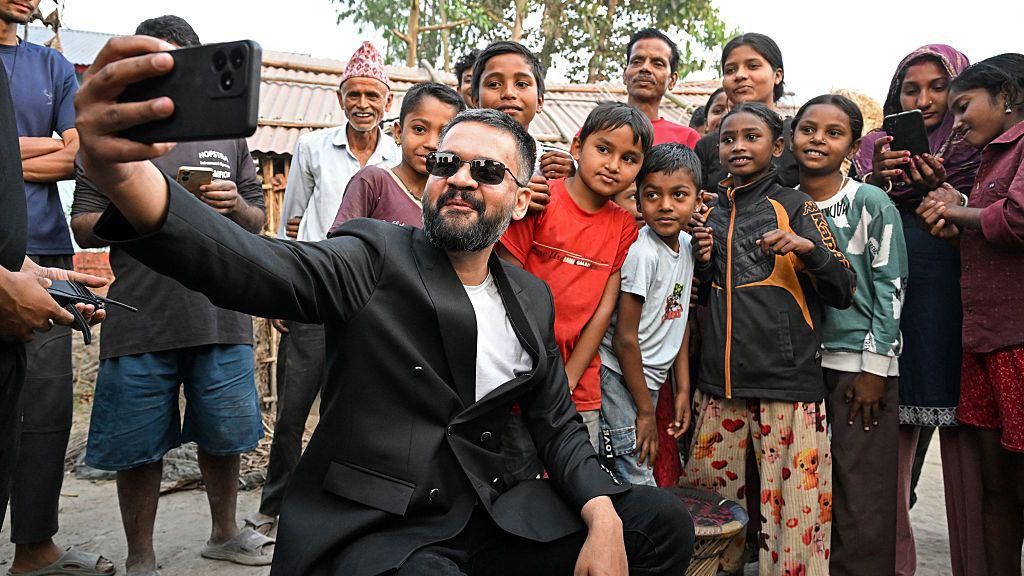
In an unprecedented political transformation, Balendra Shah—the former rapper known as Balen—has ascended to Nepal’s highest office following a landslide electoral victory. The 35-year-old’s rise from underground music sensation to prime minister represents a seismic shift in the nation’s political landscape, signaling a decisive rejection of entrenched corruption and elite dominance.
Shah’s journey from Kathmandu’s Naradevi neighborhood to the prime minister’s office reads like a political fairytale. After earning engineering degrees in Nepal and India, he first captured national attention in 2013 by winning a popular rap battle with verses that articulated the frustrations of a generation feeling marginalized and unheard. His music career flourished with hits like ‘Balidan’ (Sacrifice), which amassed 14 million YouTube views while critiquing systemic corruption and inequality.
Shah’s political ascent began in 2022 when he won Kathmandu’s mayoral race as an independent candidate, defeating established political parties that had dominated for decades. His three-year tenure as mayor was marked by aggressive anti-corruption measures, heritage preservation initiatives, and controversial urban cleanup campaigns that included bulldozing illegal structures—a move that drew both praise and criticism.
The recent general elections saw Shah partner with the four-year-old Rastriya Swatantra Party (RSP) as their prime ministerial candidate. His campaign broke conventional norms by largely avoiding media interviews and instead connecting directly with voters through social media. This strategy proved remarkably effective, with the RSP securing a decisive victory that even unseated former Prime Minister KP Sharma Oli in his long-held constituency.
Shah’s inauguration follows last year’s youth-led protests that resulted in 77 fatalities, during which his song ‘Nepal Haseko’ (Smiling Nepal) became a protest anthem. The unrest, initially triggered by social media restrictions, evolved into a broader movement against corruption, unemployment, and economic stagnation.
Despite widespread enthusiasm for his leadership, questions remain about Shah’s governing approach. Human rights organizations have expressed concerns about his heavy-handed tactics against street vendors during his mayoral term. Additionally, his controversial social media presence—including an expletive-laden post naming global powers and Nepali political parties—has drawn scrutiny.
The new administration faces formidable challenges: managing Nepal’s relations with regional powers India and China, addressing chronic unemployment, revitalizing a struggling economy, and determining how to implement recommendations from the investigation into last year’s deadly uprising. With millions of Nepalis working in conflict zones like the Middle East, foreign policy decisions carry significant economic implications.
As Shah prepares to implement his ambitious agenda—including anti-corruption measures, judicial reform, and creating 1.2 million new jobs—the nation watches to see whether this political outsider can translate his activist rhetoric into effective governance.