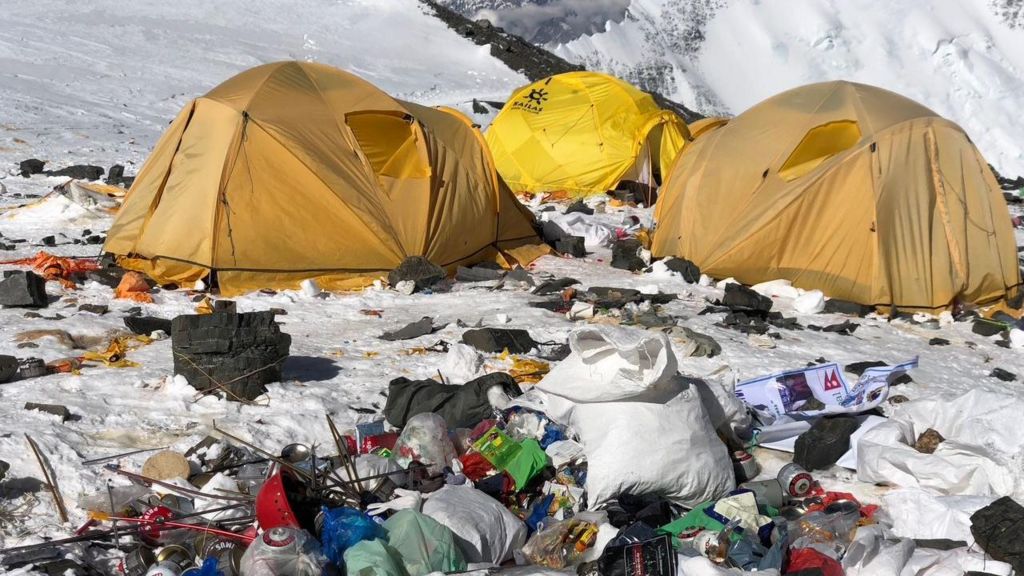
Nepalese authorities have terminated an 11-year-old deposit scheme designed to combat Mount Everest’s worsening waste crisis, declaring the program an outright failure. The controversial system required climbers to pay a $4,000 refundable deposit, reimbursable only if they descended with at least 8kg of trash. Despite most climbers technically complying with the requirement, officials confirmed the initiative failed to address the critical accumulation of waste at higher altitudes where the problem is most severe.
Himal Gautam, director at Nepal’s tourism department, revealed to the BBC that the program had ‘become an administrative burden’ while failing to resolve the garbage issue. The fundamental flaw lay in climbers’ tendency to retrieve easily accessible waste from lower camps rather than tackling the more challenging debris at extreme elevations. Tshering Sherpa, CEO of the Sagarmatha Pollution Control Committee, noted that ‘from higher camps, people tend to bring back oxygen bottles only,’ leaving behind tents, food containers, and packaging that contributes to the estimated 50 tonnes of litter covering the mountain.
A revolutionary approach will replace the discontinued program. Authorities plan to implement a non-refundable $4,000 clean-up fee per climber, creating a dedicated fund for environmental management. This financial reservoir will finance the establishment of a monitoring checkpoint at Camp Two and deploy specialized mountain rangers to ensure proper waste removal from critical high-altitude zones. Mingma Sherpa, chairperson of the Pasang Lhamu rural municipality, emphasized that this structural change responds to long-standing concerns from the Sherpa community about the previous system’s ineffective enforcement mechanisms.
The new fee structure integrates with a comprehensive five-year mountain clean-up action plan designed to immediately address Everest’s ecological crisis. The growing mountaineering industry—averaging 400 climbers annually plus supporting staff—generates approximately 12kg of waste per person during six-week expeditions. Particularly problematic is human excrement, which remains preserved indefinitely in freezing high-altitude conditions. Tourism ministry spokesperson Jaynarayan Acarya stated the revised approach aims to create sustainable mountaineering practices while preserving the world’s highest peak for future generations.