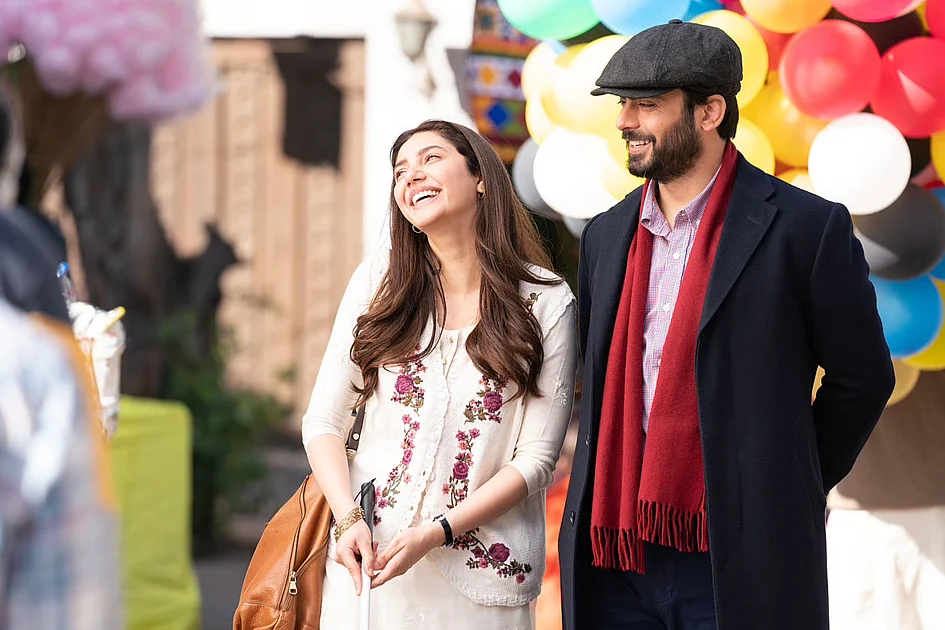
In a significant departure from conventional South Asian cinema, the Pakistani film ‘Neelofar’ presents a refreshingly authentic portrayal of disability through the lens of a gentle love story. Directed with thoughtful sensitivity, the film features Fawad Khan as Mansoor Ali Khan and Mahira Khan as Neelofar, a visually impaired artist who refuses to be defined by her condition.
The narrative unfolds as an evolving relationship between two individuals from different worlds, exploring themes of perception, dignity, and societal expectations. Rather than resorting to the clichéd tropes that often characterize disability narratives in regional cinema, ‘Neelofar’ opts for subtlety and nuance. The film’s strength lies in its quiet moments: a hesitant touch in a cinema hall, a rooftop conversation where Neelofar asks Mansoor to describe her appearance, and the tactile experience of charcoal painting.
Mahira Khan delivers a career-defining performance, meticulously capturing the physical grammar of visual impairment. Her portrayal emphasizes auditory cues and tactile awareness, particularly in standout scenes such as an anxious moment in a car when Mansoor temporarily disappears and the carefree abandon during a dodgem car ride. Fawad Khan equally shines, bringing depth to a character that serves as both romantic lead and societal mirror, with the film subtly addressing themes of public perception and redemption that parallel the actor’s own experiences.
Technically, the film excels in its atmospheric elements. Zeeshan Vicky Haider’s melodic score, particularly the layered renditions of ‘Tu Meri Zindagi,’ effectively mirrors the emotional journey of the characters. The cinematography presents Lahore not merely as backdrop but as a character itself, with authentic locations ranging from humble tea stalls to the majestic Badshahi Mosque providing cultural context.
However, ‘Neelofar’ is not without its imperfections. The second half struggles with narrative consistency, raising logical questions about character decisions and resorting to predictable plot devices. The film occasionally undermines its own progressive messaging, particularly in an on-air episode that reduces Neelofar to conventional tropes and a conclusion that suggests romantic fulfillment might be contingent on restored vision.
Despite these flaws, ‘Neelofar’ represents an important step forward for Pakistani cinema in its treatment of disability with dignity and complexity. The film challenges audience expectations and biases, offering a contemplative viewing experience that rewards patience and emotional investment. While it may not reach the groundbreaking heights of international disability narratives, it establishes a new benchmark for sensitive storytelling in South Asian cinema.