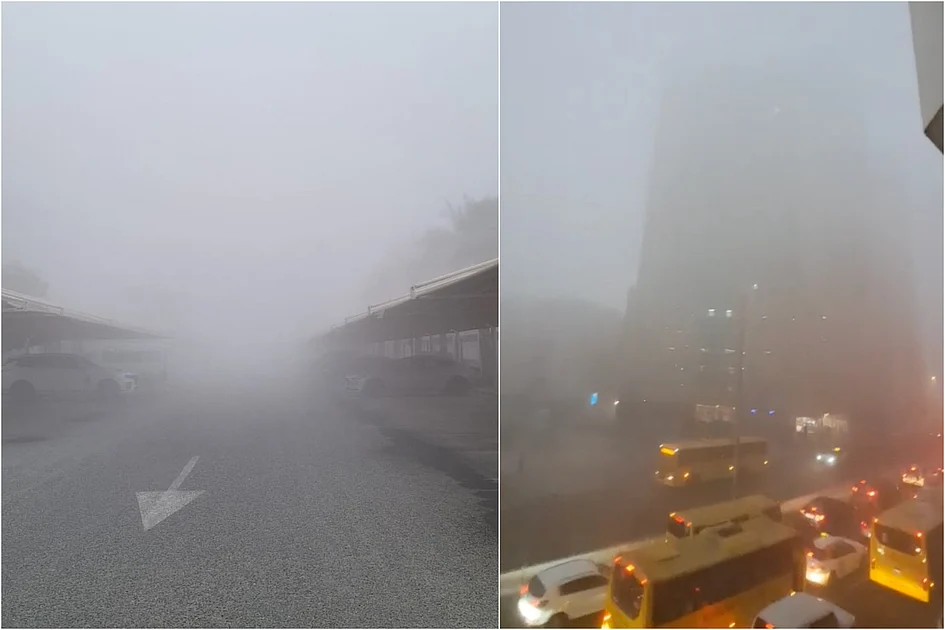
The United Arab Emirates is currently experiencing a prolonged period of intense fog conditions that have significantly reduced visibility across multiple emirates, creating substantial disruptions to daily life and transportation networks. Meteorological experts indicate this weather pattern will persist throughout the week before gradual improvement begins in early March.
On Tuesday morning, Dubai residents awoke to severely obscured skylines as thick fog settled over large sections of the emirate. The phenomenon resulted in dramatically reduced visibility that severely impacted road conditions during peak commuting hours. Major highways witnessed vehicles moving at exceptionally slow speeds, while school transportation and office commuters faced considerable delays. Similar challenging conditions were reported throughout Sharjah, with motorists describing the experience as navigating through dense cloud formations.
The National Centre of Meteorology (NCM) has identified the specific atmospheric conditions responsible for this persistent fog formation. According to Dr. Ahmed Habib, meteorologist at the NCM, the combination of exceptionally calm wind patterns and a stable high-pressure system affecting both surface and upper atmospheric layers has created optimal circumstances for fog development. These conditions have resulted in cooler surface temperatures that, when combined with existing humidity, generate the thick fog banks currently affecting the region.
Meteorological projections indicate the fog will continue beyond Wednesday, with particularly dense formations expected in interior regions including Abu Dhabi, Al Ain, and Dubai. Residents in affected areas should anticipate continued transportation disruptions during morning hours, requiring additional travel time and heightened road safety precautions.
Weather patterns are forecast to undergo modification later this week, beginning with anticipated cloud formation on February 26th. While fog conditions may persist, meteorological models suggest reduced frequency compared to current levels. Afternoon periods may present alternative challenges as northwesterly winds are predicted to create potentially rough sea conditions. These strengthening winds are expected to gradually diminish fog formation likelihood.
Dr. Habib emphasized that such weather patterns represent typical seasonal transition phenomena common during this period. The UAE’s winter season traditionally continues until March 21st, with fog episodes frequently occurring during periods of atmospheric stability. Temperature fluctuations are expected throughout the week, with gradual warming projected from March 1st onward following a brief temperature decrease expected on February 27th due to returning northwesterly winds.