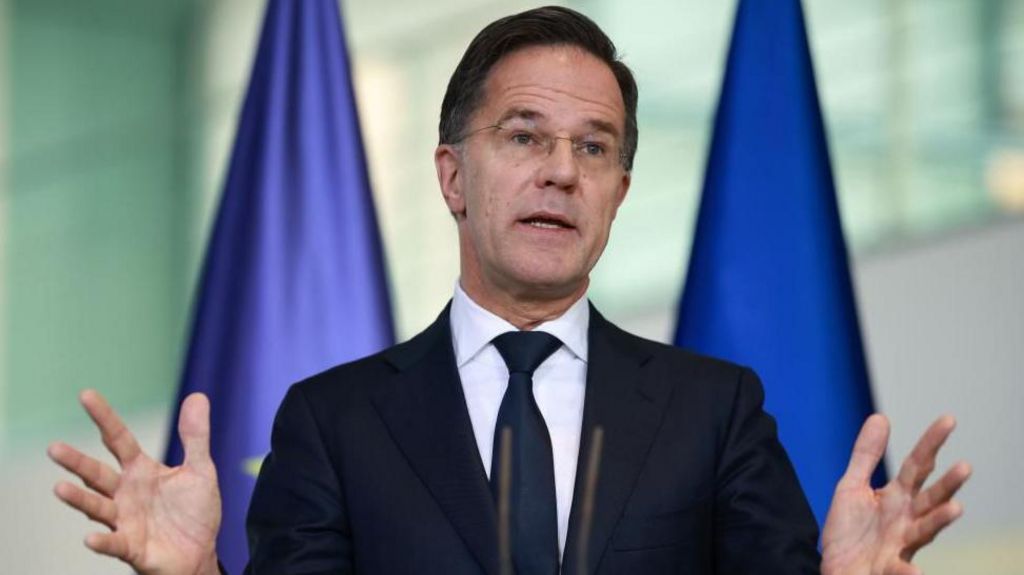
NATO Secretary General Mark Rutte has characterized the alliance’s commitment to allocate 5% of economic output to defense as former President Donald Trump’s most significant foreign policy achievement. In an exclusive BBC Radio 4 interview, Rutte asserted that Trump’s persistent criticism of European allies’ inadequate military spending has ultimately strengthened the alliance, describing it as “stronger than it ever was.”
The declaration follows intense pressure from Trump, who threatened to withdraw U.S. protection unless member nations increased defense contributions. This pressure culminated in the June summit in The Hague, where NATO members committed to reaching the 5% spending target by 2035, citing Russia’s enduring threat and global terrorism concerns.
Meanwhile, Russian President Vladimir Putin dismissed NATO’s warnings about potential Russian aggression against member states within five years as “hysteria” and “pure nonsense.” Speaking to defense officials in Moscow, Putin reiterated his objectives in Ukraine, stating his preference for diplomatic solutions but vowing to achieve “the liberation of its historical lands by military means” if negotiations fail.
Rutte condemned Putin’s pursuit of historical territorial claims, describing the human cost as “insane” with approximately 1.1 million Russian casualties. The NATO chief simultaneously praised Trump’s diplomatic efforts to end the conflict, despite concerns that initial drafts of Trump’s peace plan appeared favorable to Moscow.
The proposed settlement includes ceding eastern Ukrainian territories to Russia and providing security guarantees for Kyiv to prevent future aggression. U.S. officials indicate readiness to offer Ukraine protections modeled on NATO’s Article 5 mutual defense clause, while European allies discuss forming a “multinational force Ukraine” to assist with military regeneration and security.
As Russia maintains its war economy, producing 150 tanks monthly alongside substantial drone and artillery output, Western nations struggle to match this production capacity. France and Germany have recently moved to revive voluntary military service for young adults amid growing recognition of the conventional warfare capabilities gap.