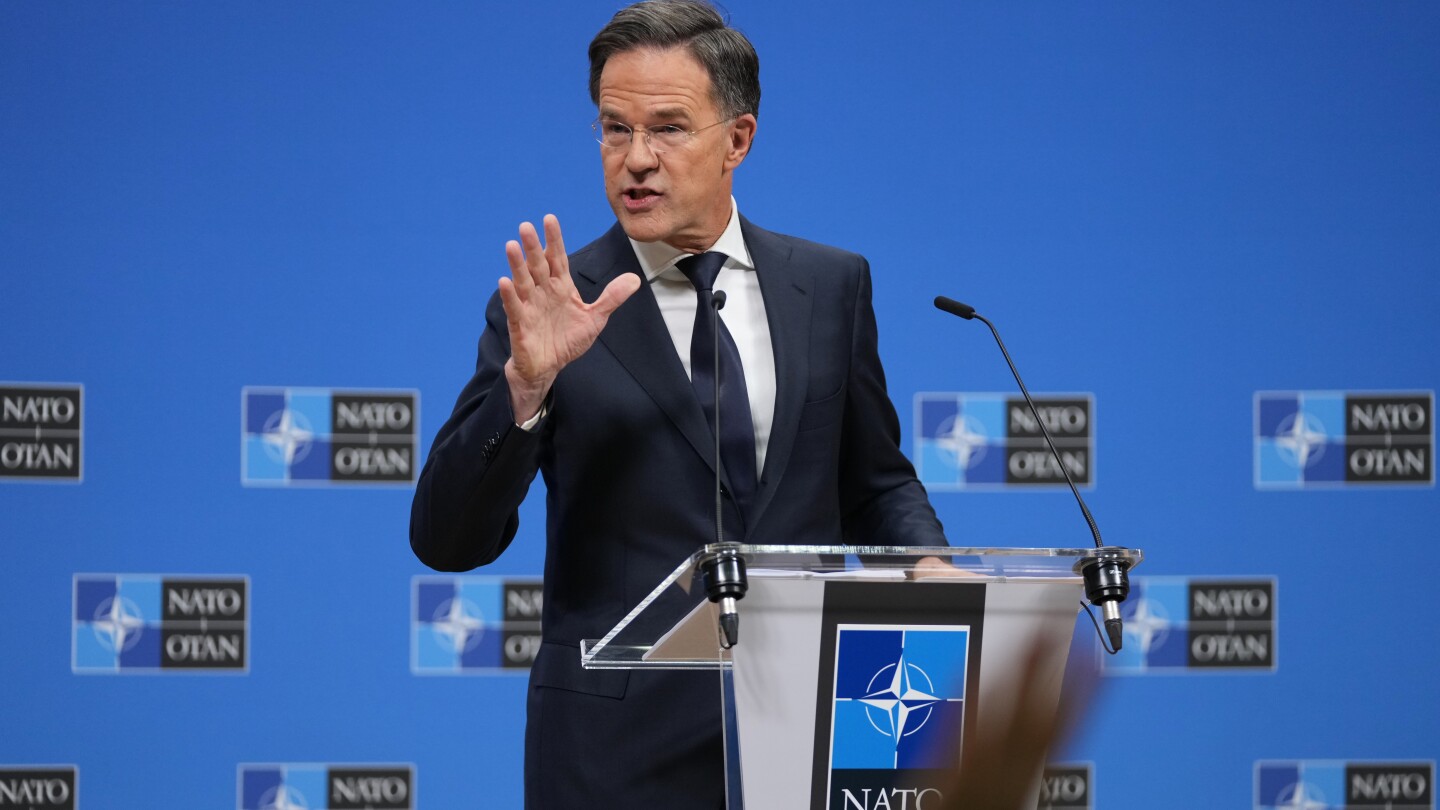
BRUSSELS — NATO Secretary-General Mark Rutte addressed mounting concerns regarding U.S. dedication to the military alliance during a press briefing Tuesday, preceding a crucial meeting of allied foreign ministers centered on Russia’s ongoing aggression against Ukraine.
The absence of U.S. Secretary of State Marco Rubio from Wednesday’s high-stakes negotiations has raised eyebrows among European partners, particularly following the Trump administration’s controversial 28-point peace proposal that alarmed NATO members last month. The draft plan, which suggested halting NATO expansion and denying Ukrainian membership—direct concessions to Russian demands—also proposed U.S.-mediated security talks between Russia and NATO.
Rutte defended Rubio’s non-attendance, stating: ‘He maintains an extraordinarily demanding schedule addressing not only the Ukraine situation but numerous other pressing matters. I fully understand his inability to participate tomorrow and would caution against reading deeper implications into his absence.’
A senior State Department official, speaking anonymously, emphasized that Rubio has participated in dozens of NATO meetings and cannot reasonably attend every gathering. Deputy Secretary of State Christopher Landau will represent U.S. interests instead, urging allies to fulfill their commitment to allocate 5% of GDP to defense spending.
Regarding Trump’s contentious peace framework, Rutte indicated significant revisions have addressed European concerns. ‘All peace processes require starting points and concrete proposals,’ he noted, adding that NATO-related aspects would be handled separately through alliance channels.
The former Dutch prime minister reaffirmed Ukraine’s ‘irreversible path’ to NATO membership despite the proposal’s exclusionary language, acknowledging however that political consensus remains unattainable currently. The Trump administration has explicitly opposed Ukrainian membership, with Hungary and Slovakia similarly positioned.
Rutte referenced Trump’s reaffirmation of Article 5 commitments during The Hague summit, though recent presidential remarks have seemingly distanced the U.S. from its traditional leadership role. Concerns intensify regarding potential troop reductions in Europe, with Romania announcing a planned withdrawal of up to 3,000 U.S. personnel as Washington shifts focus to Asian security threats. Formal troop movement announcements are anticipated in early 2026.