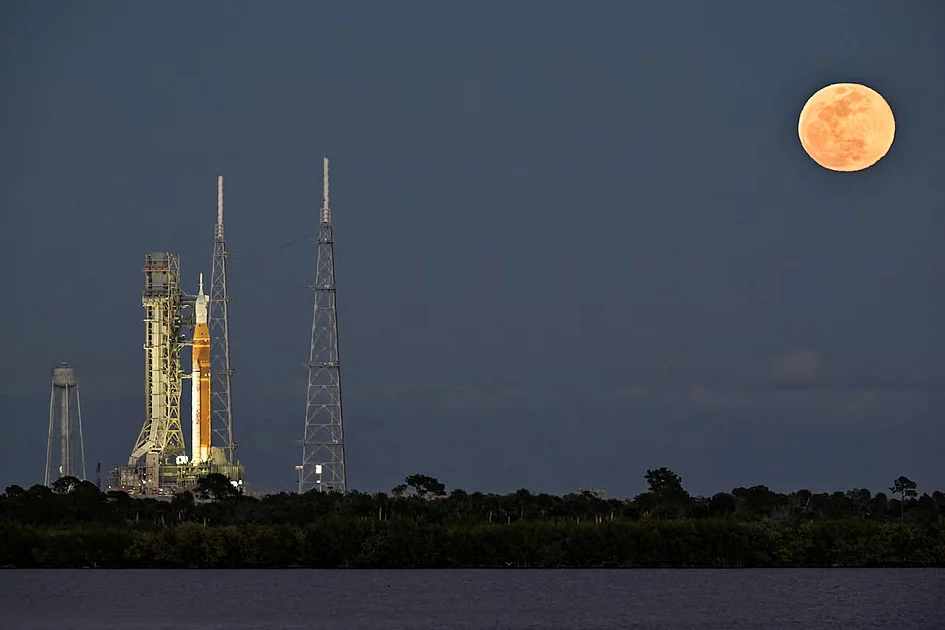
NASA Administrator Jared Isaacman announced on Saturday, February 21, 2026, that the highly anticipated Artemis 2 mission—the first crewed lunar flyby in over five decades—will not launch in March as previously planned. The decision comes after engineers identified significant technical complications involving the spacecraft’s propulsion system.
Technical analysis revealed an anomaly in the helium flow mechanism within the massive Space Launch System (SLS) rocket. This critical issue, detected during pre-launch assessments, directly impacts the rocket’s pressurization systems and necessitates comprehensive engineering reviews. Administrator Isaacman confirmed the delay via an official statement on social media platform X, noting that the complication “will take the March launch window out of consideration.”
The Artemis program represents humanity’s return to lunar exploration, with Artemis 2 serving as the pioneering crewed mission to orbit the Moon since the Apollo era. This development follows recent advancements in space technology, including SpaceX’s successful Starship test flights and ongoing international efforts in lunar exploration.
NASA engineers are now conducting thorough diagnostics to address the helium flow irregularity while evaluating subsequent launch opportunities. The agency maintains its commitment to mission safety, emphasizing that resolution of technical challenges takes precedence over scheduling timelines. This delay demonstrates the complex nature of deep space missions and the rigorous safety protocols governing human spaceflight.