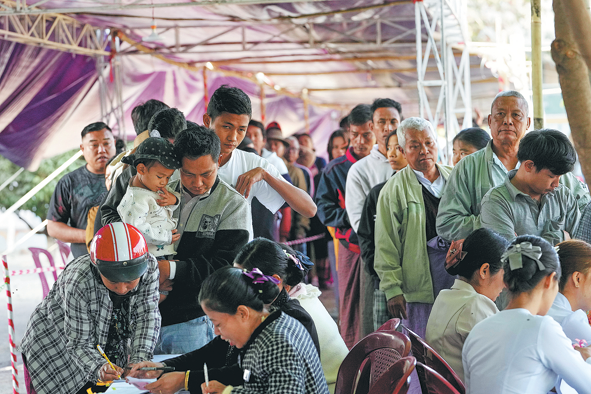
Myanmar’s military government concluded its three-phase general election on Sunday, marking the country’s first electoral process since the 2021 coup that ousted Aung San Suu Kyi’s democratically elected administration. The final voting round occurred across approximately 60 townships, completing a staggered electoral schedule that began December 28 and continued through January 11.
Senior General Min Aung Hlaing, head of the ruling military junta, emphasized domestic validation over international recognition, stating: “The people’s vote is the recognition we need.” In televised remarks, the military leader expressed indifference toward the international community’s stance on the election’s legitimacy, asserting that Myanmar citizens retain the freedom to support their preferred candidates.
Electoral participation metrics revealed modest turnout rates of 52.13% and 55.59% during the initial two phases, with over 24.22 million eligible voters selecting representatives from nearly 5,000 candidates representing 57 political parties. The complex electoral process will determine composition of the Pyithu Hluttaw (lower house), Amyotha Hluttaw (upper house), and various state and regional parliaments.
Preliminary results indicate dominant performance by the military-backed Union Solidarity and Development Party (USDP), which analysts project may secure 80-90% of parliamentary seats. Despite the military government’s plans to establish a new administration through this electoral process in April, experts anticipate continued domestic instability due to escalating conflicts between opposition factions and military forces.
The international response remains divided, with ASEAN preparing to address the Myanmar situation during its upcoming Foreign Ministers’ Retreat in the Philippines. While the regional bloc continues advocating its five-point consensus peace plan, ASEAN special envoy Theresa Lazaro confirmed the organization has not endorsed the electoral process, emphasizing continued engagement with diverse Myanmar stakeholders.