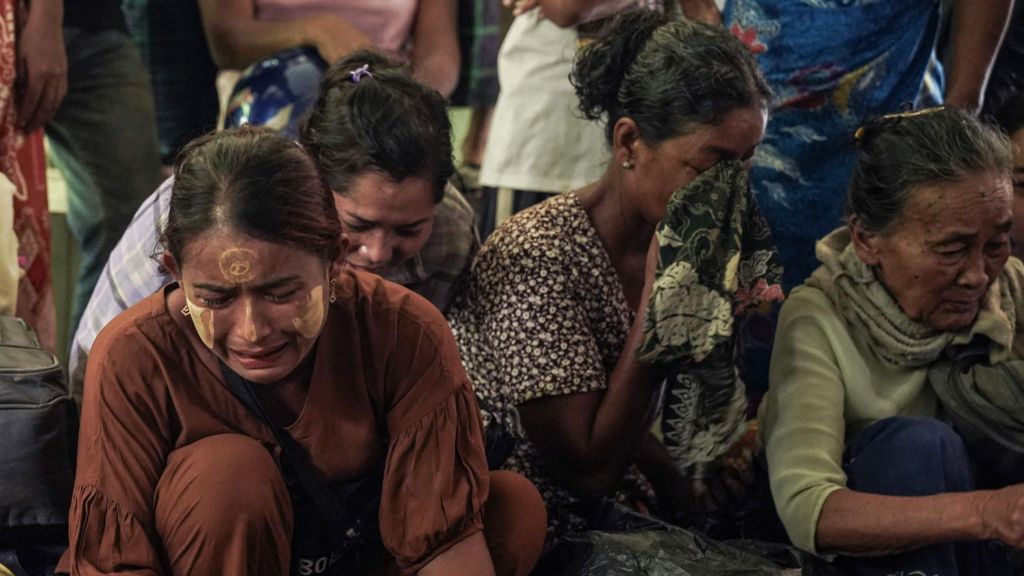
The strategic town of Kyaukme, a vital trade route linking the Chinese border to Myanmar’s interior, has become a microcosm of the nation’s protracted civil war. After months of intense fighting, the Ta’ang National Liberation Army (TNLA) seized control of Kyaukme in late 2023, marking a significant victory for the opposition. However, the junta’s swift recapture of the town in just three weeks this month underscores a dramatic shift in the military balance, favoring the regime. Kyaukme’s devastation, with large areas flattened by relentless air strikes, highlights the heavy toll of the conflict. The junta’s use of advanced drones, motorized paragliders, and Chinese-supplied aircraft has intensified its offensive, causing significant civilian casualties and forcing many to flee. The TNLA’s retreat from Kyaukme and Hsipaw, another key town, signals the junta’s growing dominance, bolstered by China’s support for its plan to hold elections in December. This election, widely criticized for excluding Aung San Suu Kyi’s National League for Democracy, is seen as a bid to legitimize the regime. China’s backing, including technical and financial aid, has been pivotal in the junta’s resurgence. Meanwhile, the fragmented opposition, comprising poorly-armed local militias and ethnic insurgent groups, struggles with internal divisions and lack of central leadership. Despite initial successes, such as Operation 1027 in 2023, the opposition’s momentum has waned. The junta’s forced conscription drive has replenished its ranks, while China’s tightening of border controls and export bans on dual-use products have crippled the resistance’s access to drones and other critical supplies. As the junta regains control of strategic areas, the prospects for a political resolution remain bleak, with the legacy of violence and destruction casting a long shadow over Myanmar’s future.
Myanmar’s army is taking back territory with relentless air strikes – and China’s help