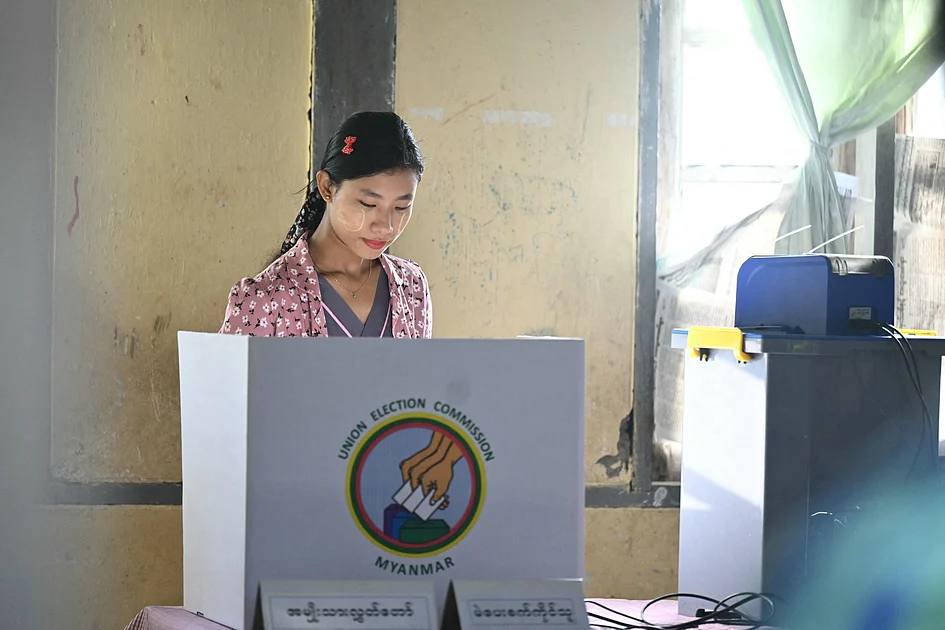
Myanmar’s military regime conducted the second phase of its staged electoral process on Sunday, January 11, 2026, amidst mounting international condemnation and domestic skepticism. The voting included the constituency previously represented by ousted democratic leader Aung San Suu Kyi, whose party was forcibly dissolved following the 2021 coup that abruptly ended Myanmar’s decade of democratic transition.
The State Administration Council, as the junta styles itself, has framed this three-phase electoral exercise as a pathway to restoring civilian governance, with the final phase scheduled for completion by January 25. However, democracy monitoring organizations and international rights experts have uniformly dismissed the process as a carefully orchestrated attempt to cement military dominance under a veneer of electoral legitimacy.
Electoral mathematics already indicate predetermined outcomes. The military-aligned Union Solidarity and Development Party (USDP) secured approximately 90% of lower house seats during the initial voting phase in late December 2025. This overwhelming victory occurred amid reports of severe voter suppression, with turnout estimated at just 50%—a dramatic decline from the 70% participation recorded in the 2020 elections that brought Suu Kyi’s National League for Democracy to power.
The electoral landscape reflects Myanmar’s ongoing civil conflict. Voting has been canceled across extensive territories controlled by ethnic rebel factions and resistance forces, while the military has intensified offensive operations, including aerial bombardments of civilian areas, in contested regions. UN Human Rights Special Rapporteur Tom Andrews characterized the process as ‘engineered polls designed to manufacture a facade of legitimacy while violence and repression continue unabated.’
Myanmar’s political environment remains perilous for dissent. Over 330 individuals face prosecution under junta-enacted laws that criminalize election criticism with penalties up to 10 years imprisonment. The Assistance Association for Political Prisoners documents more than 22,000 political detainees currently held in military prisons, underscoring the repressive context in which this electoral exercise unfolds.