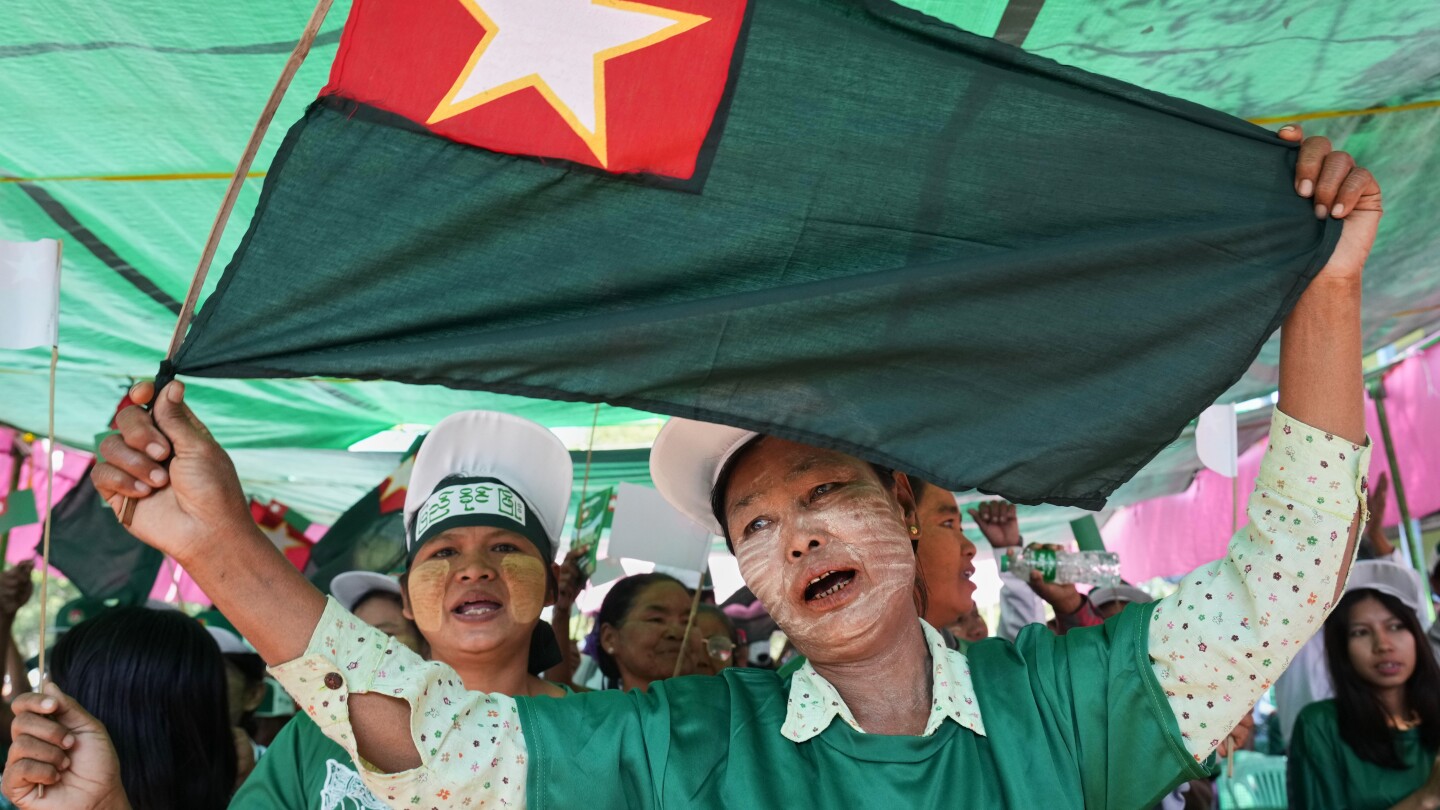
BANGKOK (AP) — Myanmar’s military-aligned Union Solidarity and Development Party (USDP) has significantly advanced toward securing a parliamentary majority following the second phase of the country’s staggered general election, according to official data released Friday by the state election body.
The latest figures, broadcast by state media MRTV, indicate the USDP captured 86 of 100 contested seats in the lower house during Sunday’s voting. Combined with previous results, this brings the party’s total to 182 seats—exceeding the required majority in the 330-member elected lower chamber—with one final voting round scheduled for January 25.
The electoral process has faced intense criticism from human rights organizations and opposition groups who denounce it as neither free nor fair. They contend the military junta, which seized power from Aung San Suu Kyi’s democratically elected government in February 2021, is using the polls to legitimize its authority. The coup triggered widespread civil disobedience that has since escalated into full-scale civil war.
Myanmar’s political structure consists of a bicameral legislature totaling 664 seats, with the military automatically allocated 25% of seats in both houses under the constitution. The party achieving a combined parliamentary majority holds the power to select the president, who subsequently appoints a cabinet and forms the new government.
The election is being conducted in three phases due to ongoing armed conflicts across the country. The initial two rounds occurred on December 28 and January 11 across 202 of Myanmar’s 330 townships. The final phase will include additional townships, though 65 will remain excluded from voting due to security concerns and active combat.
Military government spokesperson Maj. Gen. Zaw Min Tun confirmed Sunday that parliament will convene in March, with the new government assuming duties in April. Over 4,800 candidates from 57 political parties are competing for legislative positions at both national and regional levels.
The electoral process has been marred by suppression of dissent under a new Election Protection Law that imposes severe penalties for public criticism of the polls. Authorities have recently charged more than 330 individuals for leafleting or online activities deemed critical of the election.
Meanwhile, armed resistance groups have conducted attacks against polling stations and government buildings during both completed voting phases, according to military officials. Only six parties are contesting seats nationwide, with one—the People’s Pioneer Party—facing potential dissolution after its leadership encountered legal scrutiny for unauthorized meetings with foreign embassy representatives.
Final results for all national and regional legislative seats are anticipated by late January.