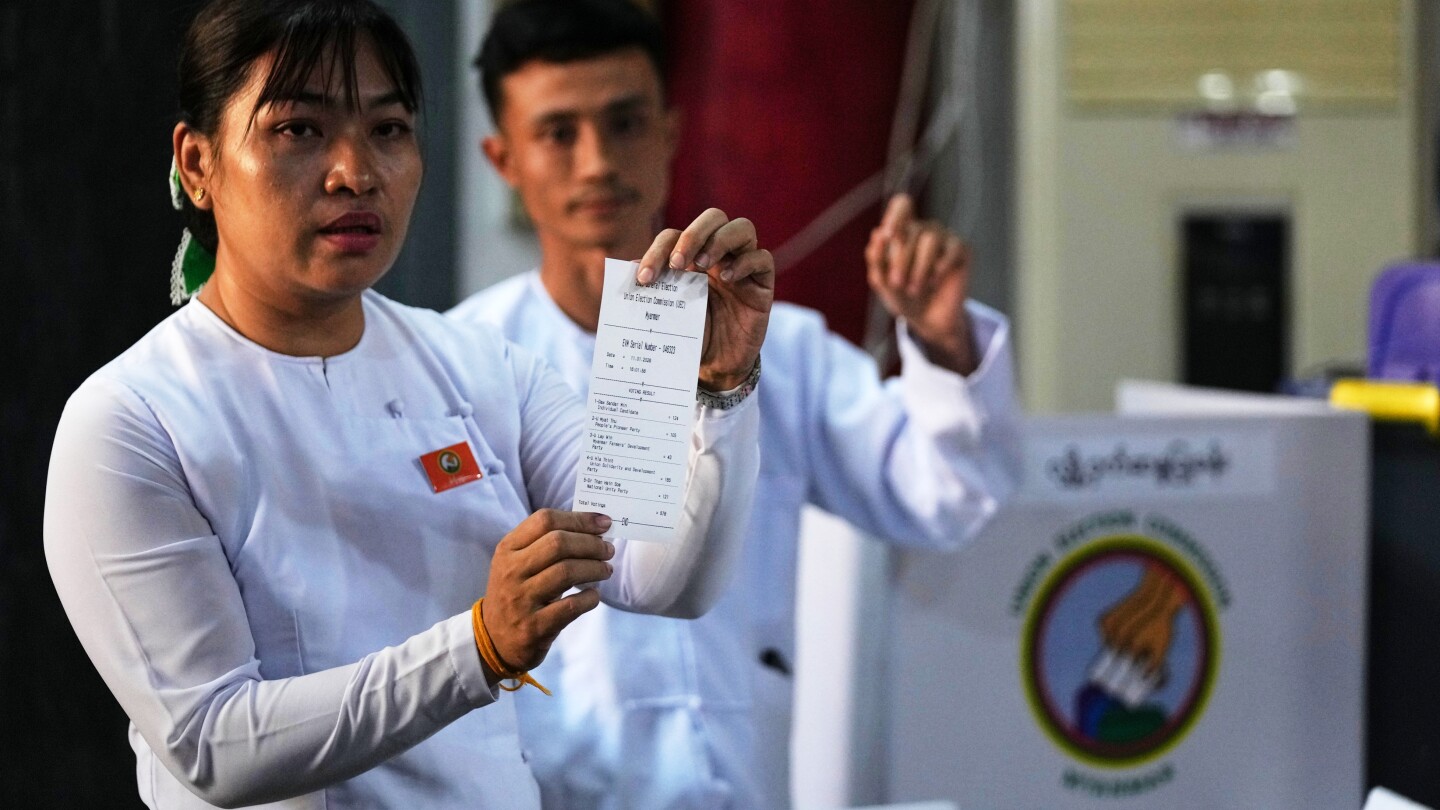
Myanmar conducted the second phase of its controversial general election on Sunday, marking the first electoral process since the military seized power in February 2021. The voting expanded to include 100 additional townships, many situated in conflict-ridden regions where armed resistance against military rule continues to escalate.
International observers and human rights experts have condemned the electoral process as fundamentally flawed. Tom Andrews, UN Special Rapporteur on human rights in Myanmar, characterized the election as a ‘sham’ due to systematic political repression. ‘Fundamental freedoms are crushed when thousands of political prisoners remain behind bars, credible opposition parties face dissolution, and journalists are systematically muzzled,’ Andrews stated.
The electoral landscape reflects the military’s tight control over the political process. According to data from the Assistance Association for Political Prisoners, over 22,000 individuals face detention for political offenses since the coup, while security forces have caused more than 7,600 civilian casualties. A newly enacted Election Protection Law imposes severe penalties for any public criticism of the electoral process, with authorities already charging more than 330 people for leafleting or online activism.
Despite these measures, armed resistance groups attempted to disrupt Sunday’s voting through attacks on polling stations and government buildings in at least four townships, resulting in two administrative officials killed according to independent media reports.
The military-backed Union Solidarity and Development Party (USDP) emerged dominant from the first voting phase in December, securing nearly 90% of contested lower house seats. The absence of Aung San Suu Kyi’s National League for Democracy, which was dissolved in 2023 after refusing to comply with new military regulations, has left the political landscape heavily skewed toward military-aligned parties.
Voter turnout appeared significantly lower than in the 2020 elections, with AP journalists observing sparse attendance at polling stations across Yangon and Mandalay. The military government nevertheless claimed success, reporting approximately 52% participation among eligible voters in the first phase.
The military government plans to convene the new parliament in March, with the transition to a new government scheduled for April, solidifying what critics describe as the institutionalization of military rule through manipulated democratic processes.