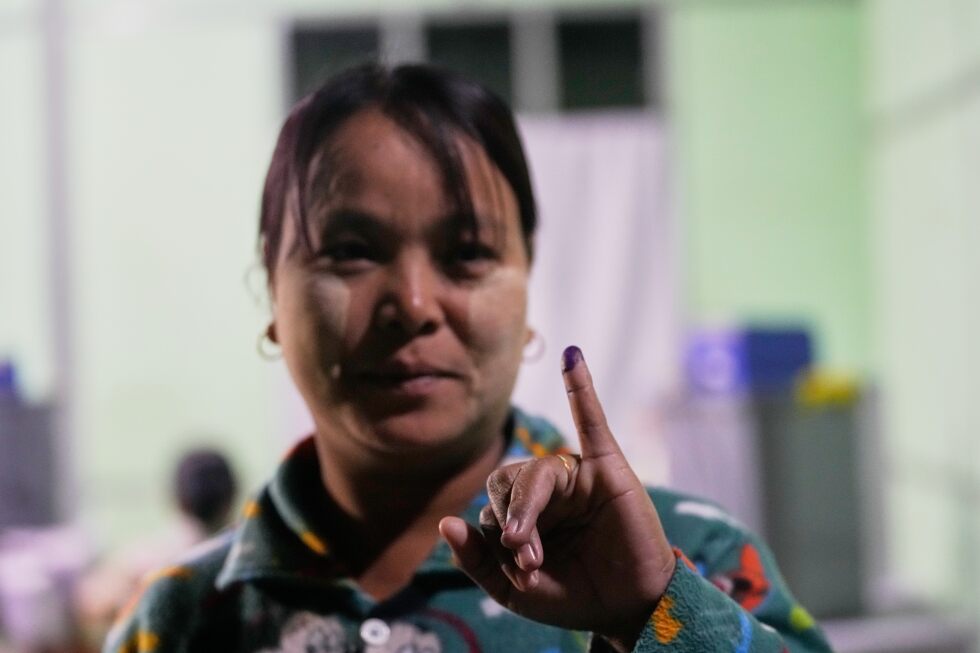
YANGON, Myanmar — Myanmar’s military junta concluded its orchestrated three-phase general election on Sunday, finalizing a political process designed to cement the authority of Senior General Min Aung Hlaing’s regime. The election, conducted over nearly a month, has been universally condemned by international observers and domestic opposition groups as a fraudulent endeavor to legitimize the military’s seizure of power in February 2021.
The electoral framework guaranteed military dominance from the outset. With 25% of parliamentary seats constitutionally reserved for the armed forces, the army-backed Union Solidarity and Development Party (USDP) secured most contested seats during the initial voting phases in December and January. This pre-arranged structure ensures the military and its allies will command the parliamentary majority required to form the next government, with Min Aung Hlaing anticipated to assume the presidency.
Voting occurred under severe restrictions that criminalized public criticism through a new Election Protection Law, which has already resulted in over 400 individuals facing charges for activities such as distributing leaflets or online commentary. The absence of voting in more than one-fifth of Myanmar’s 330 townships—due to both security concerns and active armed conflict—further undermined the process’s legitimacy.
The Association of Southeast Asian Nations (ASEAN) explicitly declined to send observers or recognize the election results, with Malaysian Foreign Minister Mohamad Hasan citing concerns over the lack of inclusive participation. Only nations including Russia, China, Belarus, Kazakhstan, Nicaragua, Vietnam, Cambodia, India, and Japan dispatched observers.
Notably absent from the polls was Aung San Suu Kyi’s National League for Democracy (NLD), which was forcibly dissolved in 2023 after refusing to register under new military regulations. Suu Kyi remains imprisoned on politically motivated charges totaling 27 years. Other opposition parties either boycotted the election or faced severe restrictions, while armed resistance groups disrupted previous voting rounds with attacks on polling stations that resulted in several casualties.
The final phase of voting commenced at 6 a.m. Sunday across 61 townships in six regions and three states, many of which have experienced recent clashes between military forces and opposition groups. The election commission reported turnout between 50-60% in earlier phases, with approximately 35% fewer eligible voters compared to the 2020 election.