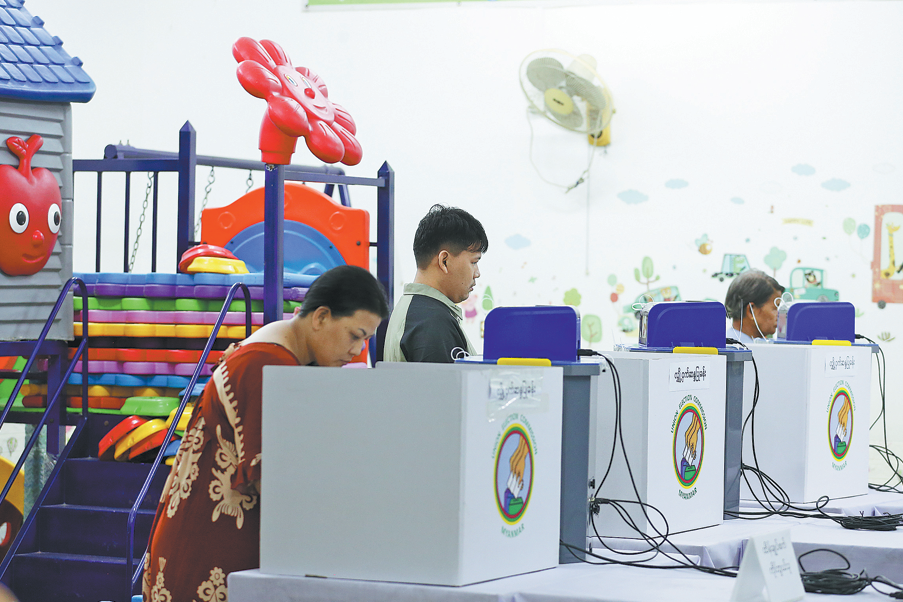
Myanmar commenced the second phase of its multiparty general election on Sunday, with citizens across 100 townships casting ballots in a carefully orchestrated electoral process. This phase represents a critical milestone in the country’s political transition following the conclusion of a four-year state of emergency in July.
The electoral commission reported that over 24.26 million eligible voters participated across 21,517 polling stations nationwide. The voting mechanism incorporates Myanmar’s inaugural digital voting system, utilizing Electronic Voting Machines specifically designed to prevent electoral fraud and enhance procedural integrity.
Acting President Min Aung Hlaing, who also chairs the State Security and Peace Commission, previously urged citizens to participate in the democratic process through state media channels. The electoral framework employs a dual voting methodology: a first-past-the-post system for the lower house (Pyithu Hluttaw) and a mixed-member proportional system for the upper house (Amyotha Hluttaw) and regional parliaments.
This electoral sequence follows the first phase concluded on December 28 across 102 townships, which recorded a 52.13% voter turnout with preliminary results favoring the military-backed Union Solidarity and Development Party. The final phase is scheduled for January 25 covering 63 additional townships.
The political landscape remains complex following the 2021 military intervention that overturned previous election results and dissolved Aung San Suu Kyi’s National League for Democracy government. Her party was subsequently excluded from the current electoral process after failing to complete registration requirements.
International observation continues through ASEAN channels, with Philippine Foreign Secretary Theresa Lazaro recently conducting diplomatic engagements in Nay Pyi Daw. Discussions focused on geopolitical developments, electoral transparency, and implementation of the five-point consensus peace framework for Myanmar’s political resolution.