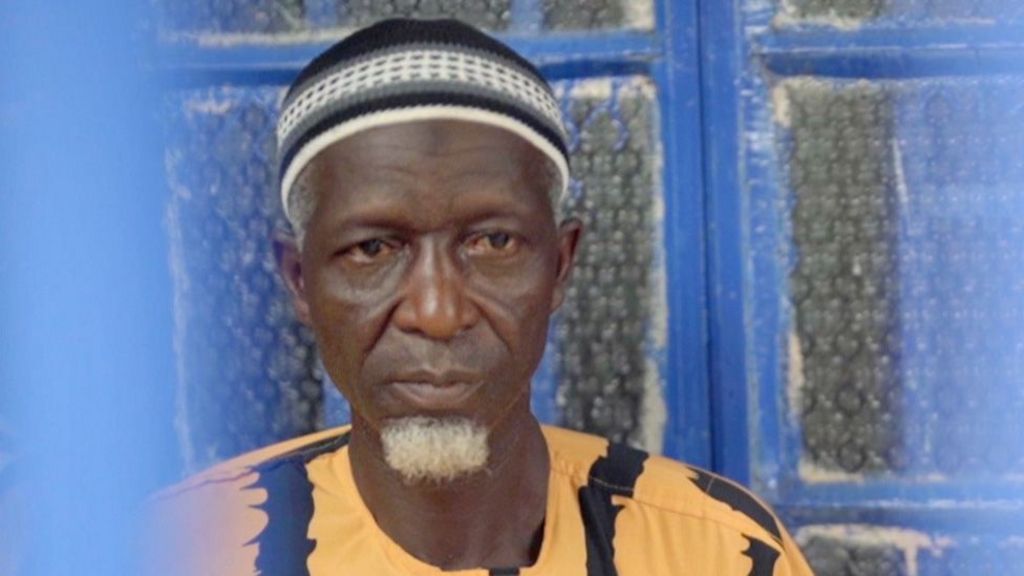
A heartbreaking human trafficking epidemic is devastating families across West Africa, where criminal networks are exploiting desperate job seekers through sophisticated scams operating under the guise of legitimate company QNET. The BBC Africa Eye investigation has uncovered the brutal reality of these operations through the tragic story of Foday Musa, a Guinean father separated from his children for nearly two years.
Musa’s nightmare began in February 2024 when his 22-year-old son and 18-year-old daughter were recruited from their remote village in Guinea’s Faranah region by agents promising overseas employment. Instead of legitimate jobs, the seven recruits found themselves captives of human traffickers who transported them across the border into Sierra Leone.
“My heart is broken. I can’t stop crying. If you look at my eyes, you can see the pain,” Musa told BBC investigators, describing the agony of listening to his son’s desperate 76-second voice message begging for rescue.
The criminal syndicates have weaponized the name of QNET—a legitimate Hong Kong-based wellness and lifestyle company—to lend credibility to their operations. Traffickers target vulnerable individuals with promises of employment in the United States, Canada, Dubai, and Europe, demanding substantial upfront payments for alleged administrative costs.
Victims who pay these fees—often their family’s entire savings—are typically trafficked to neighboring countries and informed they can only proceed abroad after recruiting additional participants. Even when victims successfully enlist friends and family members, the promised jobs never materialize.
INTERPOL’s anti-trafficking unit in Sierra Leone has made combating these networks a priority. “It’s very easy for these traffickers to manoeuvre across each of our borders at these illegal crossing points,” explained Mahmoud Conteh, head of investigations at Sierra Leone’s anti-trafficking unit.
The investigation revealed that traffickers maintain multiple safe houses where victims are held in squalid conditions. During one raid in Makeni, central Sierra Leone, authorities discovered 10-15 people sleeping per room, with some victims as young as 14. Most originated from Guinea, highlighting the transnational nature of the crisis.
The psychological impact on victims is profound. Aminata (pseudonym), a 23-year-old Sierra Leonean woman, described how traffickers forced her into prostitution to survive after her family’s college savings were stolen. Victims are compelled to participate in elaborate deception campaigns, complete with fake passports and staged airport photos to maintain the illusion of international travel.
Despite police conducting over 20 raids in the past year and rescuing hundreds of victims, prosecutions remain scarce. US State Department statistics reveal only four trafficking convictions in Sierra Leone between July 2022 and April 2025, underscoring the challenges under-resourced authorities face.
In a bittersweet development, INTERPOL confirmed that Musa’s children were eventually released by traffickers. His daughter has returned to Guinea but hasn’t contacted her family, reflecting the deep shame experienced by many victims. Musa’s son remains missing, leaving the father’s anguish unresolved.
“After all that has happened, I really just want it all to be over and to see my kids,” Musa expressed, his voice heavy with the weight of nearly two years of uncertainty and heartbreak.