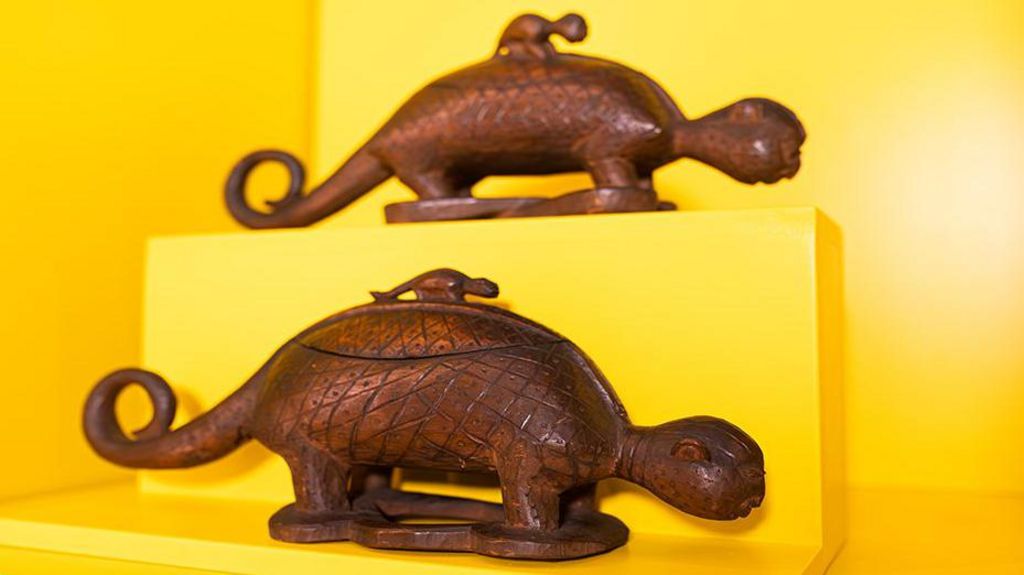
In an unprecedented move confronting Britain’s colonial history, Manchester Museum has launched a groundbreaking exhibition featuring thousands of African artifacts with largely unknown origins—many acquired through questionable means during the Empire’s peak. The institution has deliberately placed these culturally significant objects in its newly established Africa Hub to openly address the substantial gaps in its historical records.
The collection, comprising over 40,000 items from across Africa, reveals troubling acquisition methods including trade, anthropological collection, confiscation, and outright looting during colonial expansion. One particularly telling example is a carved figure depicting a horse with an ibis on its back, whose entire documented history consists only of its 1976 donation by a Mrs M A Bellhouse, with no information regarding its cultural context, place of origin, or traditional significance.
Curator Lucy Edematie describes this exhibition as fundamentally different from traditional museum displays, characterizing it as “the beginning” rather than the culmination of research. “It is a chance to do our thinking in public, with honesty and transparency, and to involve people in that process from the start,” Edematie explained, highlighting the institution’s commitment to ethical reconsideration of colonial collections.
The museum, part of the University of Manchester, acknowledges that this transparent approach may ultimately lead to repatriation decisions or collaborative partnerships with diaspora communities to develop culturally appropriate ways of preserving and celebrating heritage. In a significant co-curation effort, the Africa Hub features displays developed with Igbo Community Greater Manchester (ICM), representing one of West Africa’s largest ethnic groups.
ICM Vice-Chairwoman Sylvia Mgbeahurike emphasized the exhibition’s profound significance: “Some of these objects were given, some were stolen, some were taken forcefully out of conquest. Bringing them together shows inclusiveness, demonstrates strength in diversity, and reaffirms that we are one people regardless of color or origin.”
This bold institutional initiative represents a growing movement among museums to address colonial-era acquisitions honestly while developing new ethical frameworks for handling contested cultural property.