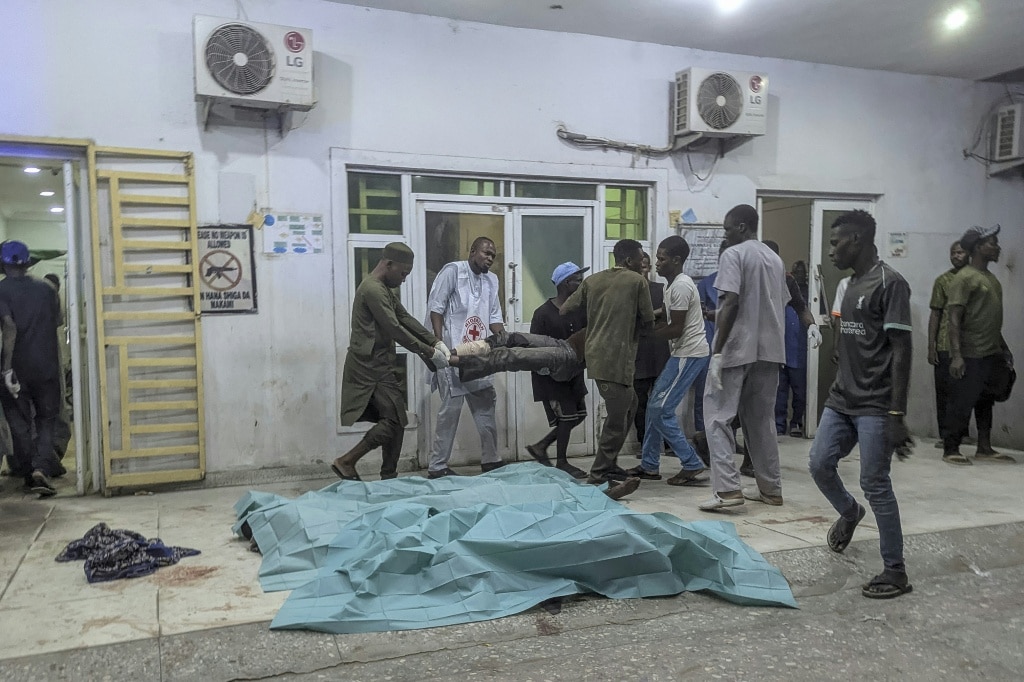
The northeastern Nigerian city of Maiduguri faced a devastating return to violence on Monday evening as multiple suspected suicide bombings ruptured years of relative calm. The coordinated assaults targeted key civilian locations including the city’s main market, the University of Maiduguri Teaching Hospital, and areas near the post office, marking a significant escalation in the region’s security situation.
Emergency services scrambled to respond as hospitals received dozens of wounded victims following the explosions. An AFP correspondent at a city medical facility observed multiple bodies covered with sheets on hospital sidewalks, though official casualty figures remained unconfirmed as authorities worked to assess the full impact.
The attacks occurred against the backdrop of heightened regional tensions, coming just hours after jihadist militants launched separate assaults on a military post in the Ajilari Cross district and in the Damboa local government area south of the city. According to police spokesman Nahum Kenneth Daso, security forces successfully repelled these earlier incursions, with no civilian or military casualties reported from those engagements.
Borno State Governor Babagana Zulum condemned the bombings as ‘barbaric,’ suggesting the surge in violence connects directly to intensified military operations in the Sambisa forest—a known jihadist stronghold. The simultaneous attacks demonstrate the persistent threat posed by Boko Haram and the Islamic State West Africa Province (ISWAP), whose 16-year insurgency has claimed over 40,000 lives and displaced approximately two million people.
The timing appears particularly significant as residents prepare to celebrate Eid al-Fitr, marking the end of Ramadan. Media aide Dauda Iliya emphasized the need for ‘increased vigilance’ during this period of heightened vulnerability.
This devastating breach of security represents the most serious attack on Maiduguri since 2021, when mortar fire killed ten people. The city had experienced a period of relative stability in recent years as the conflict had largely shifted to rural areas, making Monday’s events particularly shocking to residents who had grown accustomed to peace.
The violence occurs amidst increased international engagement, with the United States recently deploying technical and training support to Nigerian forces. However, the persistent security challenges underscore the complex nature of counterinsurgency operations in the region.