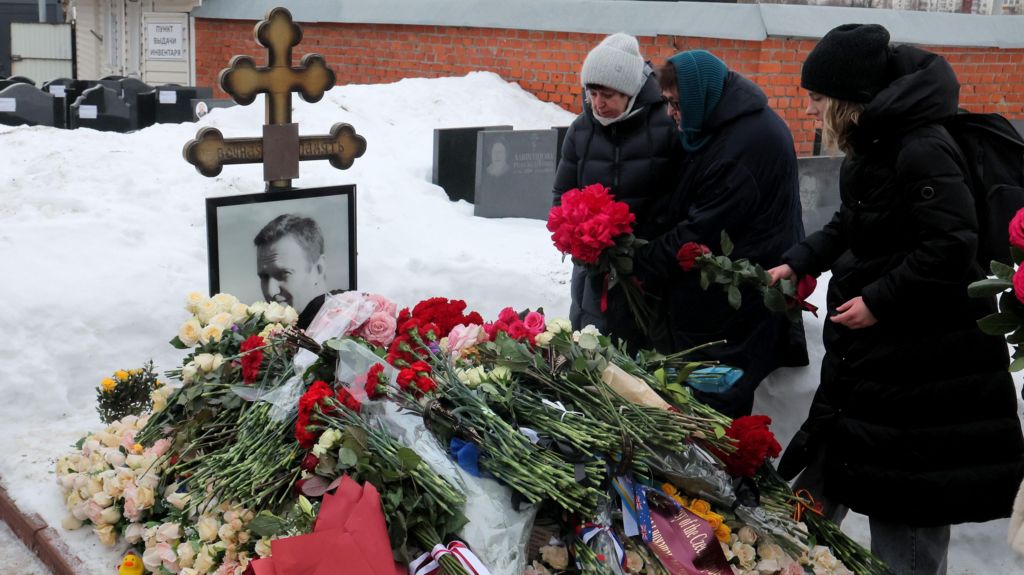
Lyudmila Navalnaya, mother of deceased Russian opposition leader Alexei Navalny, declared that recent international findings confirming her son’s poisoning death have substantiated her long-held conviction that he was assassinated. Her statements came during a Monday visit to his Moscow gravesite, coinciding with the second anniversary of his controversial death in 2024.
The emotional scene at Borisovskoye cemetery saw dozens of Muscovites and foreign diplomats paying respects, covering Navalny’s grave with floral tributes and handwritten notes expressing enduring remembrance. This gathering occurred despite Russia’s intensifying political repression since its 2022 invasion of Ukraine.
On Saturday, the United Kingdom and European allies issued a formal statement asserting that Navalny was killed using a sophisticated poison derived from dart frog toxin, explicitly stating that “only the Russian state had the means, motive and opportunity to deploy this lethal toxin.” This assessment aligns with previous laboratory analyses of smuggled biological samples conducted in two unspecified countries, which Navalny’s widow Yulia had cited as evidence of murder.
The Kremlin has vehemently denied these allegations. Spokesman Dmitry Peskov stated on Monday: “We do not accept such accusations. We consider them biased and unfounded, and we resolutely reject them.” The government maintains that Navalny died of natural causes during his 19-year extremism sentence at the Polar Wolf penal colony above the Arctic Circle.
Navalny’s political legacy remains significant. As Russia’s most prominent opposition figure, he organized massive anti-corruption campaigns that brought hundreds of thousands onto streets and exposed high-level government corruption. His survival of a 2020 Novichok nerve agent poisoning and subsequent return to Russia—where he was immediately arrested—demonstrated his unwavering commitment to challenging President Vladimir Putin’s regime.
Since Navalny’s death, his Anti-Corruption Foundation has continued operations under Yulia Navalnaya’s leadership from abroad, though she faces potential arrest in Russia. The exiled Russian opposition movement has struggled with political fragmentation, while many of Navalny’s associates have been imprisoned or fled the country.