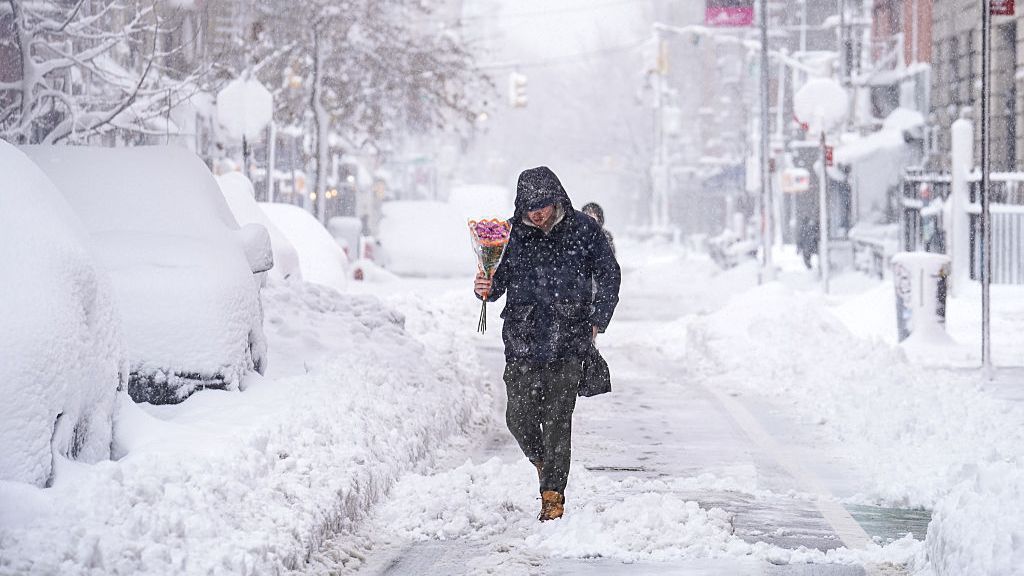
A catastrophic winter storm of historic proportions unleashed its fury upon the US Eastern Seaboard on Monday, establishing unprecedented snowfall records and triggering widespread infrastructural collapse across multiple states. Meteorological data from the National Weather Service confirmed extraordinary accumulations, with Rhode Island and Massachusetts bearing the brunt at nearly 33 inches (83cm), while New York’s Central Park recorded over 19 inches—transforming the densely populated corridor into a landscape of immobilized cities and crippled transportation networks.
The storm’s severity proved particularly devastating for Rhode Island, where Providence shattered its 1978 single-storm record of 28.6 inches with an astonishing 33-inch accumulation. ‘It completely smashed it,’ stated National Weather Service meteorologist Candice Hrencecin, reflecting the astonishment within scientific circles. ‘We were just as shocked as everyone else.’
Governmental response escalated rapidly as conditions deteriorated. Rhode Island, Connecticut, and Massachusetts implemented non-essential travel bans, with Massachusetts Governor Maura Healey imposing reduced speed limits on major highways while warning citizens: ‘Whiteout conditions are making travel extremely dangerous. If you get stuck, help will have a hard time reaching you.’
Critical infrastructure faced severe strain as poweroutage.us reported over 600,000 customers without electricity across the region. Massachusetts experienced particularly severe outages, with Barnstable County—encompassing Cape Cod—suffering 85% customer disruption. Urban centers became logistical nightmares, with Providence officials reporting more than 300 vehicles towed for impeding snow removal operations.
The aviation sector approached complete shutdown, with FlightAware data revealing 5,675 cancelled flights nationwide. New York’s LaGuardia Airport cancelled 98% of flights, JFK Airport 91%, while Boston’s Logan International and New Jersey’s Newark Liberty airports both reached 92% cancellation rates.
Meteorologists maintained winter storm warnings from North Carolina through northern Maine into eastern Canada, projecting additional accumulations of 1-2 feet (61cm) along northeastern coastal areas through Tuesday morning. The event represents not merely a weather incident but a systemic stress test for emergency response capabilities across America’s most densely populated corridor.