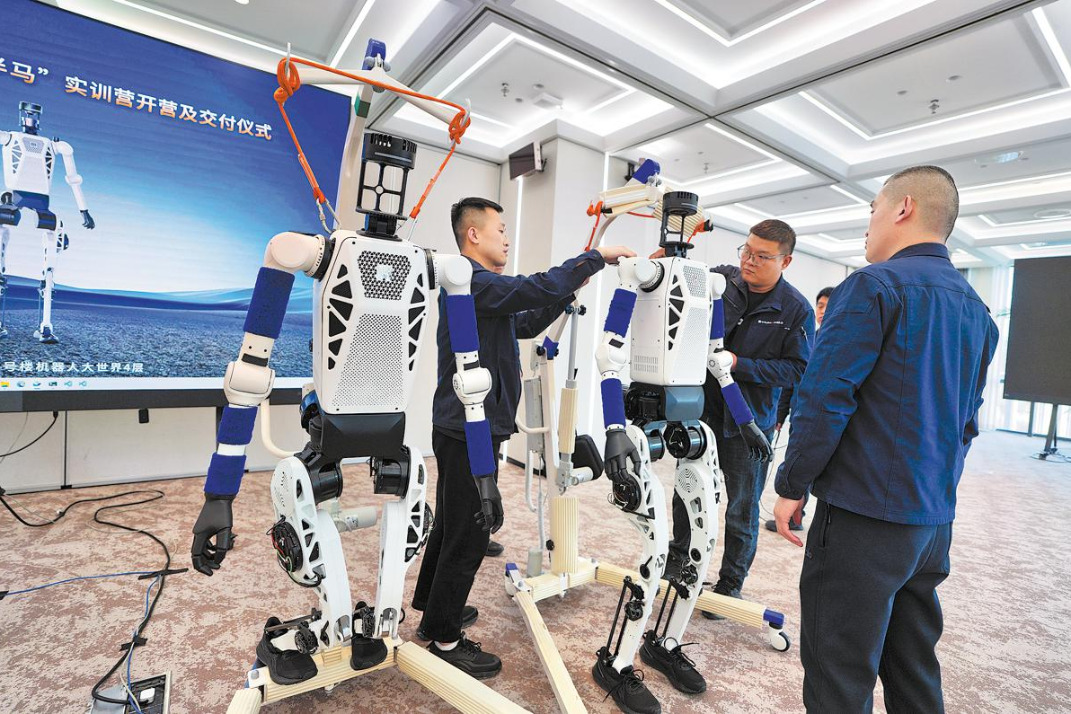
In an unprecedented fusion of athletics and advanced robotics, Beijing is preparing to host a groundbreaking event where over 300 humanoid robots will compete alongside human participants in a half-marathon next month. The 2026 Beijing E-Town Half Marathon and Humanoid Robot Half Marathon, scheduled for April 19, represents a significant milestone in robotics development and real-world application testing.
The event has attracted substantial participation from 76 institutions across 13 provincial-level regions, featuring more than 80 corporate teams and over 20 academic groups from universities and training camps. According to Liu Weiliang, spokesperson and deputy director of the Beijing Municipal Bureau of Economy and Information Technology, this gathering will showcase 26 distinct robot brands, highlighting China’s rapidly expanding robotics sector.
This year’s competition demonstrates remarkable growth compared to previous iterations, with participating teams increasing nearly fivefold and university involvement surging tenfold from just two institutions last year to twenty currently. A particularly significant advancement is that approximately 38% of competing robots will utilize autonomous navigation capabilities, marking substantial progress in real-world mobility applications.
Beyond the spectacle, the marathon serves as a rigorous testing ground for robotic endurance and reliability. Tang Jian, Chief Technology Officer of the Beijing Innovation Center of Humanoid Robotics, emphasizes that the event evaluates stability and consistency under sustained, complex conditions rather than merely assessing speed capabilities.
The competition builds on last year’s successful inaugural event, where the winning robot completed the 21-kilometer course in 2 hours, 40 minutes, and 42 seconds. That event garnered massive public attention, with live broadcasts attracting 128 million viewers according to official data.
Supporting this technological advancement, Beijing has established a substantial government investment fund worth 100 billion yuan ($14.48 billion) specifically targeting future industries including humanoid robotics. The city’s commitment is further demonstrated by the 23 robotics companies that have secured combined financing of 19.24 billion yuan since January 2025, accounting for 41% of national funding in this sector.
The event signifies a crucial transition from demonstration-based robotics to practical implementation, with humanoid robots increasingly moving beyond staged performances into retail solutions and consumer-oriented applications, gradually integrating into everyday life scenarios.