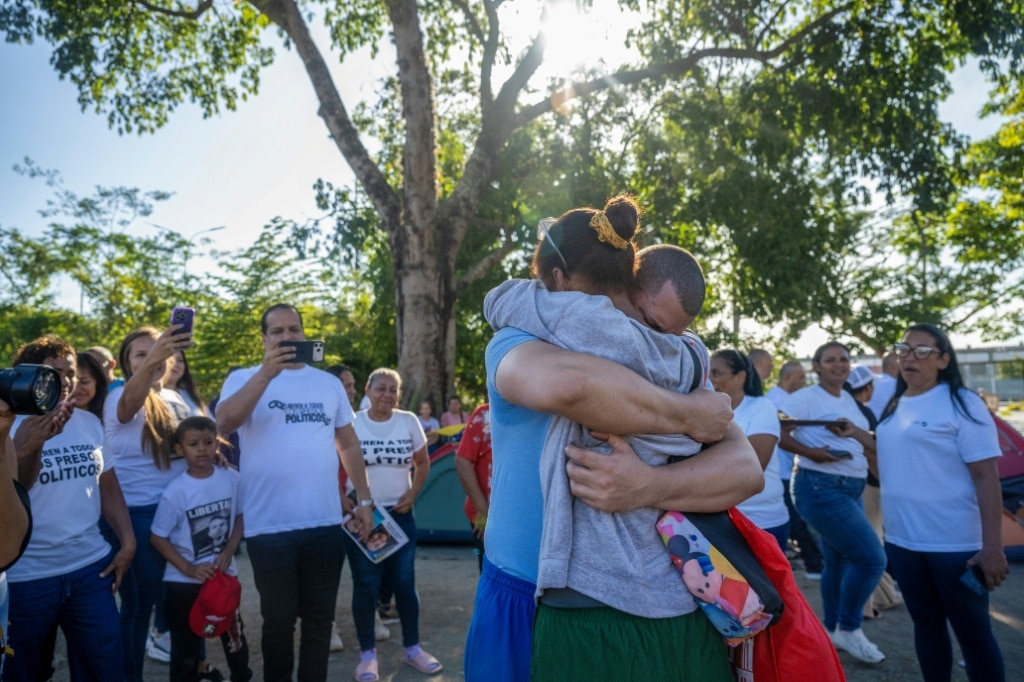
Over 200 political detainees at Venezuela’s Rodeo I prison initiated a hunger strike this weekend, protesting their exclusion from a newly enacted amnesty law. The demonstration, which began Friday night, highlights ongoing tensions within the country’s penal system despite recent political reforms.
The protest emerged just days after Venezuela’s congress approved the amnesty legislation on Thursday, a measure promoted by interim leader Delcy Rodriguez following pressure from Washington. The law specifically excludes cases involving military personnel and terrorism charges—precisely the categories encompassing most inmates at Rodeo I prison, located approximately 40 kilometers east of Caracas.
Relatives of detainees confirmed that 214 individuals, including both Venezuelan and foreign nationals, are participating in the hunger strike. Among those excluded is Argentine police officer Nahuel Agustin Gallo, who faces terrorism allegations. The prisoners’ chants of ‘Freedom!’ and ‘Release us all!’ echoed outside the facility throughout the weekend.
In a significant development, the International Committee of the Red Cross (ICRC) conducted its first-ever visit to Rodeo I prison on Sunday. Filippo Gatti, ICRC’s health coordinator for Venezuela, described the access as ‘a first step’ toward improved conditions.
Meanwhile, the amnesty legislation has generated mixed reactions. While opposition figures criticize its selective application, the government reports that over 1,500 political prisoners have already applied for amnesty. Approximately 23 detainees were released from Rodeo I on Sunday, including police commissioner Armando Fusil, who described the solidarity among prisoners as ‘a beautiful brotherhood.’
The political context remains charged following the January 3rd operation where US commandos captured former president Nicolas Maduro and his wife. Currently in US custody awaiting trial on drug trafficking charges, Maduro has pleaded not guilty and declared himself a prisoner of war. His removal from power after nearly thirteen years of leftist rule marked a dramatic shift in Venezuela’s political landscape.