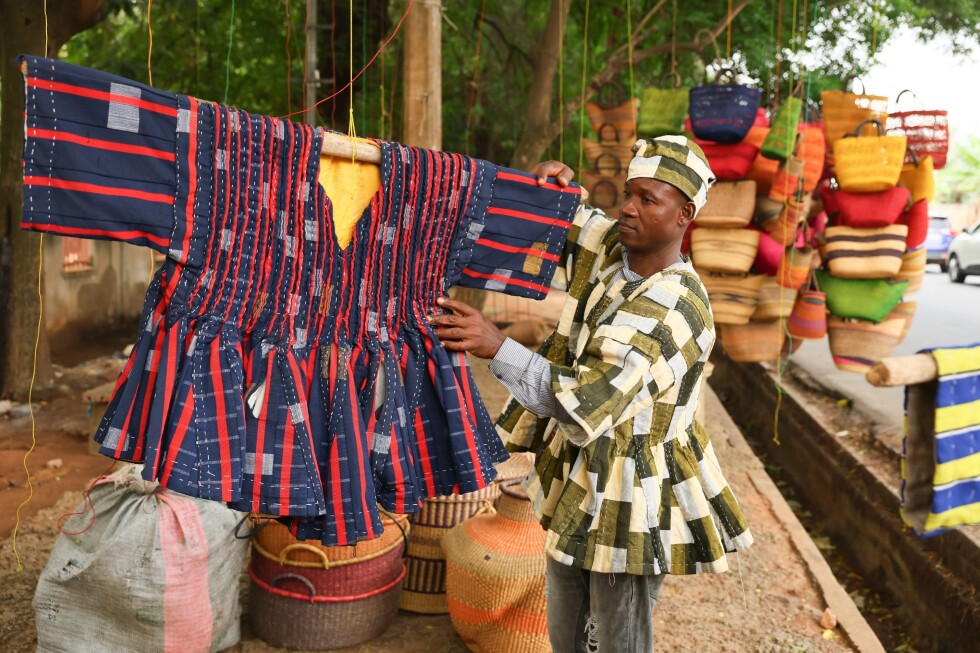
ACCRA, Ghana — A cultural revival is sweeping through Ghana as the traditional fugu garment gains unprecedented popularity, transforming from regional attire into a national symbol of heritage pride. This remarkable resurgence originated from an unexpected source: social media criticism directed at President John Dramani Mahama’s choice to wear the distinctive striped smock during an official visit to Zambia in early February.
The online mockery triggered a powerful counter-movement among Ghanaians determined to defend their cultural legacy. The groundswell of support culminated in Tourism Minister Abla Dzifa Gomashie’s official declaration of Wednesdays as “Fugu Day” on February 10, establishing a weekly celebration of national identity through fashion.
Across central Accra, vendors like Clement Azaabire witness the transformation firsthand as he displays meticulously sewn fugu smocks that dance in the breeze. After fifteen years of dedicated craftsmanship, Azaabire now experiences unprecedented demand, with inventory selling rapidly since the cultural movement gained momentum.
The fugu’s historical significance traces back to Ghana’s independence era when first President Kwame Nkrumah wore the garment during the landmark 1957 ceremony. Traditionally handwoven by northern artisans using narrow looms, the fabric (known locally as batakari) represents generations of weaving expertise passed through families. Scholars attribute its development to West African trade routes and cultural exchanges with Mossi and Hausa communities, with the term ‘fugu’ deriving from the Mossi word for cloth.
Contemporary fashion designers like Perfectual Linnan of Roots by Linnan are reimagining the traditional fabric for modern audiences, creating jackets, trousers and everyday wear that maintains cultural connections while appealing to broader demographics. “We’re demonstrating how northern fabric can adapt to different styles,” Linnan explains. “Even those who prefer contemporary fashion can carry cultural heritage with them.”
This renaissance presents both opportunities and challenges for the artisan community. Moses Adibasa, who has crafted traditional smocks for nearly two decades, expresses optimism about the economic ripple effect benefiting thread sellers, weavers and tailors alike. However, production limitations threaten to constrain growth. Abigail Naki Gabor, secretary of Ghana’s smock weavers and sellers association, notes that many artisans struggle to meet escalating demand due to manual production methods.
The government is responding with broader initiatives including the “Wear Ghana” campaign promoting local fashion through upcoming trade exhibitions, according to Kofi Atta Kakra Kusi of the Ghana Tourism Authority. Yet Linnan cautions against treating the garment purely as commodity: “This represents careful, intentional craftsmanship. If we prioritize commercialization over cultural preservation, we risk losing something profoundly important.”