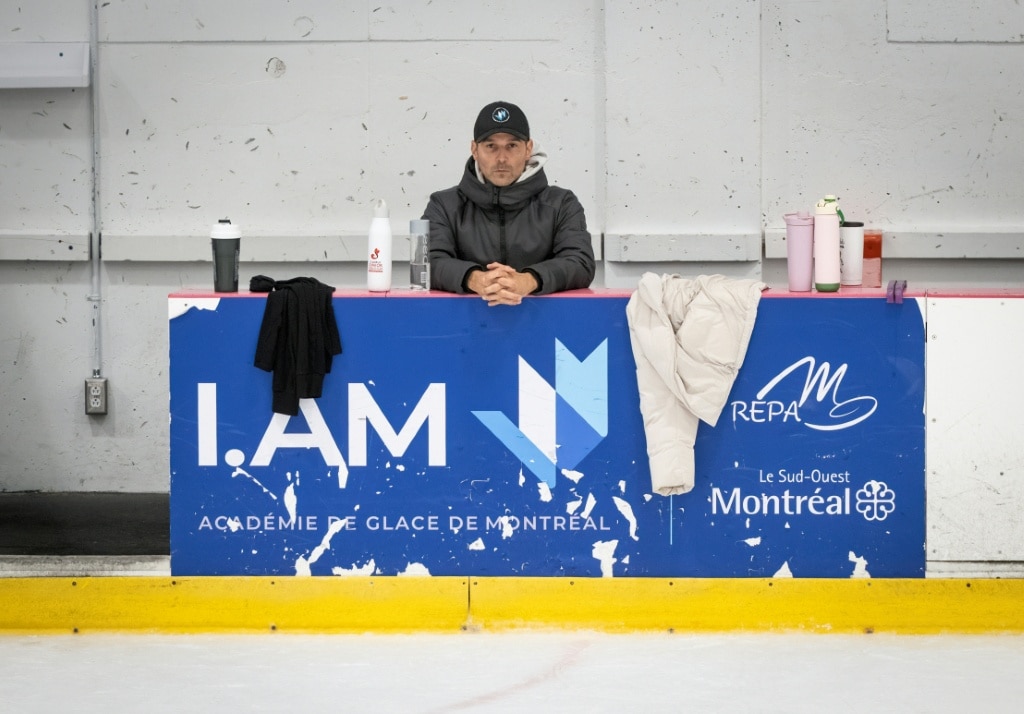
In an unassuming Montreal sports complex, a revolutionary training ground is reshaping the landscape of Olympic ice dancing. The Ice Academy of Montreal (I.AM), nestled within the Gadbois facility in a formerly working-class neighborhood, has become the epicenter for world-class ice dancers who will soon compete as rivals at the upcoming Winter Games in Italy.
Founded in 2014 by head coach Romain Haguenauer, the academy has developed an unprecedented training environment where future Olympic competitors from different nations share coaches, ice surfaces, and training methodologies. The facility’s extraordinary success is demonstrated by its remarkable track record: the last three Olympic champions have all trained at I.AM, and the academy anticipates sending approximately a dozen couples to the 2026 Milan-Cortina Games—a number Haguenauer describes as “unheard-of in skating, and across all sports.”
British skater Lilah Fear, who relocated to Montreal a decade ago with partner Lewis Gibson, attributes their success—including ending Britain’s 40-year medal drought with a World Championship bronze—to the academy’s unique approach. “We came here not really knowing anyone, so everything that we learned is from the people here,” Fear noted, describing the environment as “nurturing and loving.”
The academy’s philosophy represents a deliberate departure from the rigid training structures that traditionally defined elite ice dance. French Olympic champion Guillaume Cizeron, a five-time world champion who has trained at I.AM for over a decade, emphasizes the “healthy” environment that keeps elite athletes returning to the Canadian city. “There’s a skating culture here—figure skating as well as ice hockey—that enables high-level athletes to thrive,” said Cizeron, who is now pursuing another gold medal with new partner Laurence Fournier Beaudry.
The training dynamics at I.AM create a unique paradox: athletes who will soon compete against each other for Olympic medals routinely share coaching expertise and even ice time during critical pre-Games preparation. Fournier Beaudry describes the atmosphere as “a bit like a team sport here, but at the same time, everyone remains an individual,” noting that many athletes socialize together away from the rink.
Despite these off-ice friendships, training sessions remain intensely focused, with athletes maintaining laser concentration during meticulously choreographed routines under coaches’ watchful eyes. The academy’s open-door policy allows enthusiasts like octogenarian Anne Belcourt-Lafleur, who attends practices multiple times weekly, to witness what she describes as “more fascinating than a show.”
The Montreal model has proven so effective that international competitions have occasionally featured entirely I.AM-trained podiums, demonstrating the academy’s dominant position in shaping the future of Olympic ice dancing.