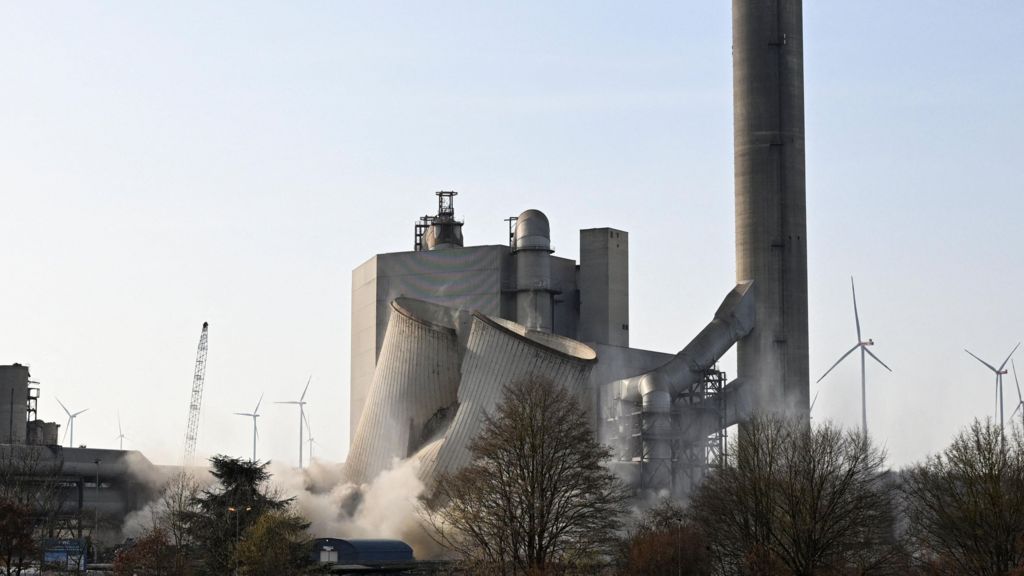
A landmark moment in Germany’s ambitious ‘Energiewende’ energy transition policy unfolded as the massive cooling tower at the decommissioned Frimmersdorf power plant was deliberately demolished. The controlled implosion, witnessed by onlookers, sent a symbolic cloud of dust into the air, marking the physical dismantling of the nation’s coal-fired power infrastructure.
The Frimmersdorf plant, located in North Rhine-Westphalia, was a significant coal-based electricity generator for decades before ceasing operations. Its demolition is part of a broader, government-backed initiative to phase out fossil fuel energy sources and accelerate the shift toward renewable alternatives like wind and solar power.
This event transcends mere structural demolition; it represents a tangible step toward Germany’s climate goals. The removal of such industrial relics facilitates site rehabilitation and underscores a national commitment to reducing carbon emissions. The visual of the collapsing tower serves as a powerful metaphor for the decline of the coal era and the ongoing transformation of Europe’s largest economy’s energy landscape.