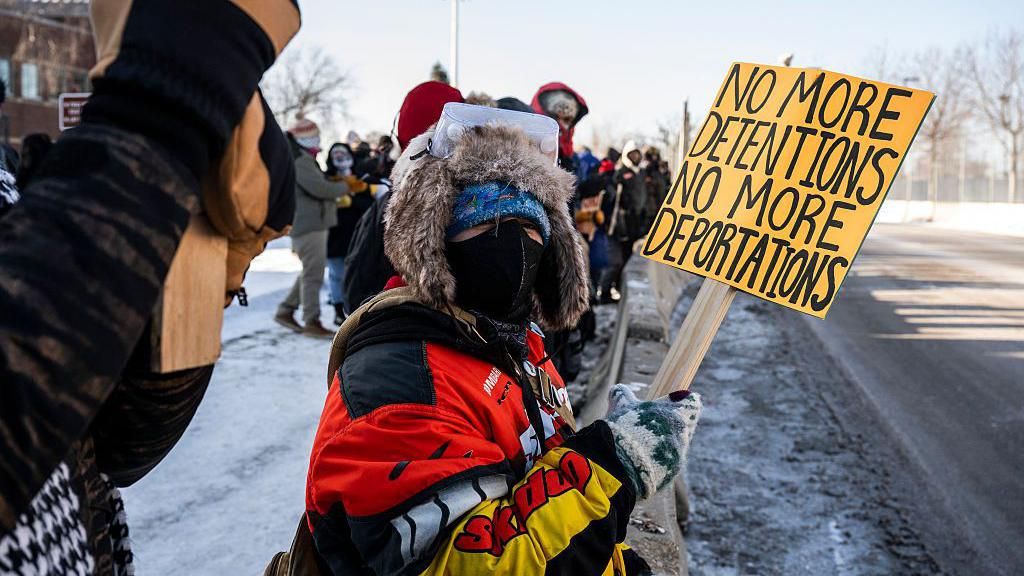
Hundreds of Minnesota enterprises are suspending operations today in a coordinated economic protest against intensified immigration enforcement activities across the state. The widespread shutdown encompasses diverse businesses from restaurants and retail stores to service establishments, representing one of the most significant economic demonstrations against federal immigration policies.
Organizers have urged residents to abstain from work, schooling, and commercial activities in a collective show of opposition to the US Immigration and Customs Enforcement (ICE) operations. Simultaneous rallies are scheduled in both St. Paul and Minneapolis, cities that have experienced particularly aggressive enforcement actions under the Trump administration’s “Operation Metro Surge.”
The federal government characterizes these operations as public safety initiatives targeting undocumented individuals with criminal backgrounds. However, critics maintain that the enforcement has extended beyond its stated parameters, resulting in detentions of migrants without criminal records and even US citizens. According to Department of Homeland Security statements, approximately 10,000 individuals have been apprehended in Minnesota since President Trump’s return to office one year ago.
The movement gained substantial momentum following the tragic death of 37-year-old Minneapolis resident Renee Good earlier this month, which ignited widespread condemnation and protests across the state. While many demonstrations have remained peaceful, some have escalated into violent confrontations between protesters and federal officers.
Bishop Dwayne Royster of Faith in Action articulated the protesters’ demands: “We want ICE out of Minnesota, and we want ICE out of every state, with their extreme overreach. We want Congress to provide oversight to ICE.”
The economic impact is already being felt across the region. Kim Bartmann, owner of six Minneapolis restaurants including Barbette and Gigi’s Café, reported a 30% decline in sales over the past three weeks, compelling her to reduce operating hours even before today’s coordinated closure. “We have employees with proper documentation who are terrified to leave their homes,” Bartmann noted, highlighting the pervasive climate of fear.
The situation has created complex dilemmas for business owners who support the protest’s objectives but face significant financial consequences. Bartmann described the decision to participate as “tricky,” acknowledging that while “everyone is in solidarity, everyone needs to buy groceries and pay their rents.”
Corey Lamb, proprietor of Harriet Grove Botanicals, emphasized the interconnected economic vulnerability: “When individuals are afraid of being detained or disappeared, it affects not only morally but economically what’s happening here and across the greater Midwest.”
The tension has extended into educational institutions, with Columbia Heights school officials confirming the detention of four students aged five to seventeen by ICE this week. This development has further intensified calls for policy review.
Vice President JD Vance addressed the situation on Thursday, urging Minnesota law enforcement to enhance coordination with federal officers and criticizing local “sanctuary” policies that limit cooperation with ICE. “The best way to facilitate reasonable enforcement of the law,” Vance stated, “would be for state and local officials to cooperate.”
The protest represents a critical juncture in the ongoing national debate surrounding immigration enforcement methodologies and their socioeconomic ramifications.