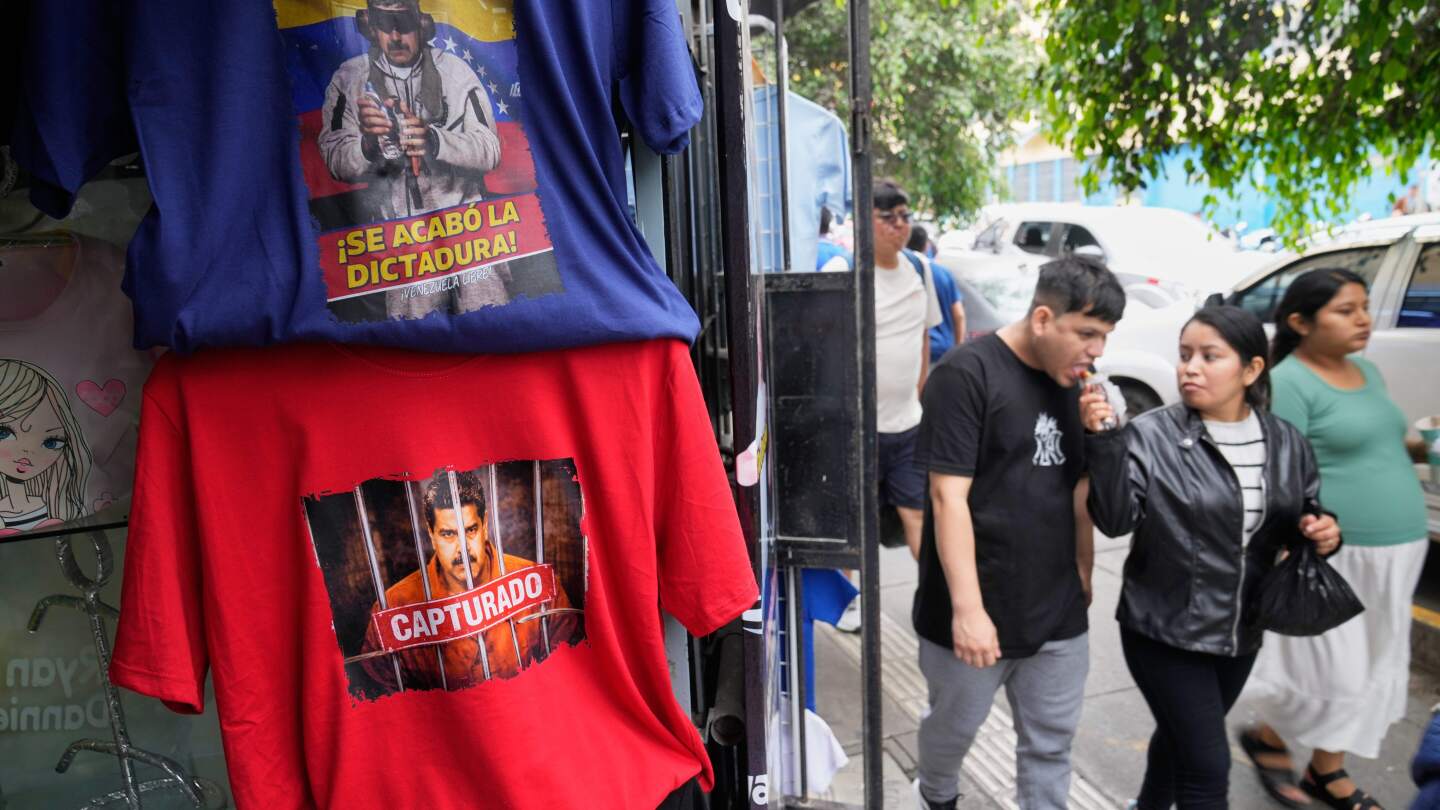
Across Latin America, the Venezuelan diaspora responded to news of Nicolás Maduro’s deposition with measured optimism rather than immediate plans to return home, despite calls from U.S. and regional leaders for repatriation. From textile markets in Lima to migrant shelters in Monterrey, Venezuelan expatriates expressed cautious hope while acknowledging the profound challenges preventing their return.
In Peru’s capital, 22-year-old graphic designer Yanelis Torres capitalized on the political shift by selling T-shirts emblazoned with Maduro’s image and captions like “Game Over.” Despite the enthusiastic response from Peruvian customers, Torres reflected the prevailing sentiment among migrants: “I have a lot of things here. You’ve got to keep an eye on it, know what’s going on, but not lose hope.”
The scale of displacement remains staggering, with nearly 7 million Venezuelan migrants and refugees scattered throughout Latin America. Colombia hosts the largest population at 2.8 million, followed by Peru with 1.5 million, according to United Nations-coordinated data. These numbers represent one of the largest displacement crises globally, driven by complex political and economic collapse that has pushed 80% of Venezuela’s population into poverty despite the nation’s vast oil reserves.
Eduardo Constante’s journey exemplifies the diaspora’s struggles. Having left Venezuela during the 2017 “hunger crisis,” he spent years navigating South America’s precarious migrant trail—from Colombia to Peru, then Chile, and finally to Mexico’s northern border. His optimism about Maduro’s ouster was tempered by concerns about family members still facing food scarcity and government surveillance back home.
The political landscape in host countries presents additional complications. Chile’s ultra-conservative President-elect José Antonio Kast has made deporting undocumented immigrants a central policy, giving thousands “63 days left to leave our country.” Similar immigration-focused elections loom in Peru and Colombia, potentially jeopardizing the protected status of Venezuelan refugees.
Human rights experts warn of a “perfect storm” brewing for vulnerable migrants. Maureen Meyer of the Washington Office on Latin America (WOLA) noted that returning refugees would face exploitation risks from organized crime groups, particularly as smuggling networks have diminished. The organization emphasizes that Venezuela remains far from providing conditions that would ensure safe and sustainable returns.
Despite these challenges, glimpses of hope persist. In Santiago’s “little Caracas” district, initial celebrations have settled into determined resilience. Sixty-six-year-old Alexander Leal, who sells homemade ice cream while dreaming of eventual repatriation, captured the collective aspiration: “It won’t be this year, but maybe it will be next year. That is everyone’s aspiration, that the country is fixed.”