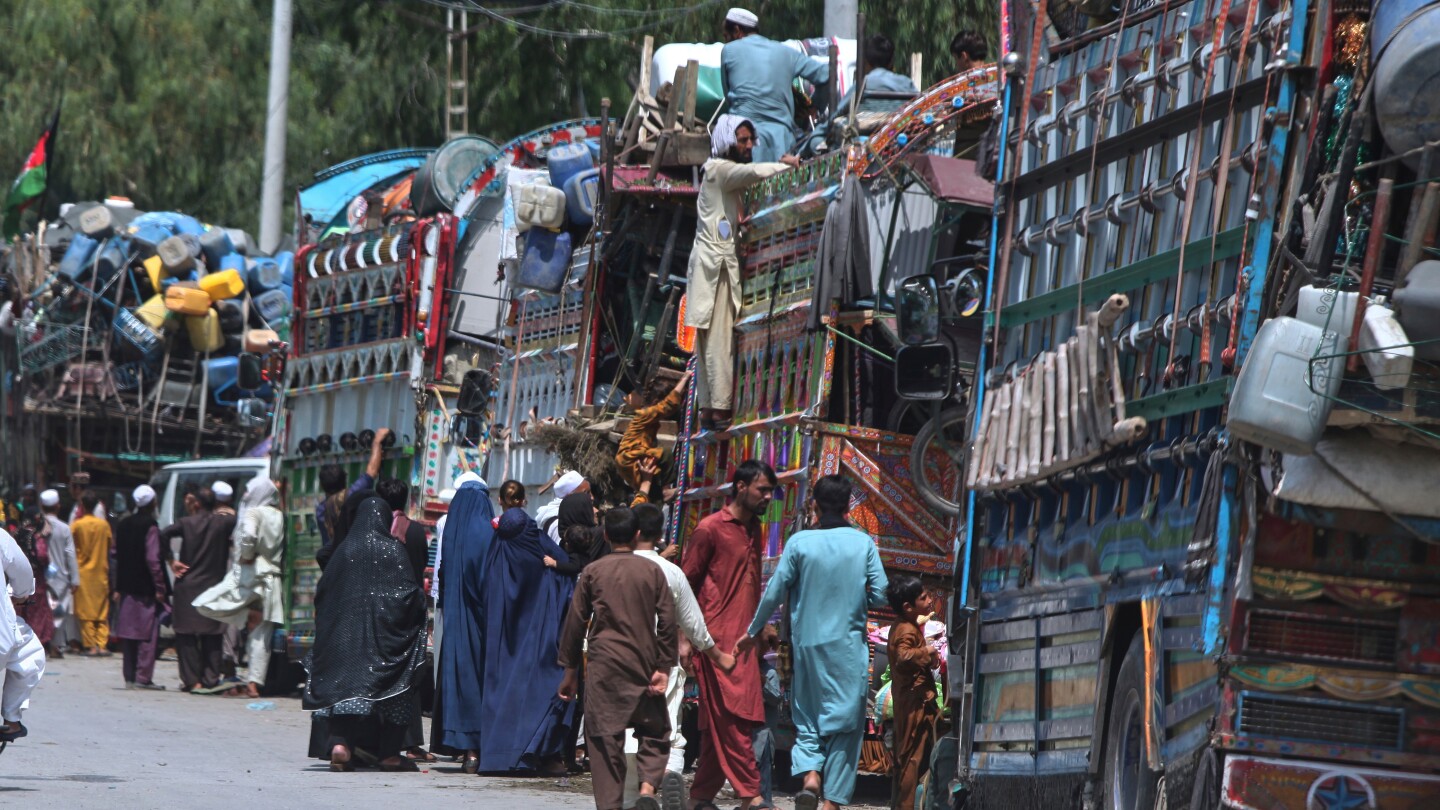
KABUL, Afghanistan — A severe humanitarian catastrophe is unfolding across Afghanistan, where millions of citizens face extreme hunger and destitution following drastic cuts to international aid. The crisis has been exacerbated by a collapsing economy, recurrent natural disasters, and the mass return of refugees, creating a perfect storm of suffering as the harsh winter sets in.
Rahimullah, a 29-year-old former soldier, epitomizes the struggle. After being deported from Pakistan, he now sells socks on the streets of Kabul, earning a meager $4.50 to $6 daily to support his family of five. His situation is precarious. ‘If I were to face a serious illness,’ he lamented, ‘it would be very difficult for me to handle because I don’t have any extra money.’ His plight is shared by an estimated 22.9 million people—nearly half the population—who required humanitarian assistance in 2025, according to the International Committee of the Red Cross.
The World Food Program (WFP) issued a dire warning last week, stating that over 17 million people are now confronting crisis levels of hunger this winter, a staggering increase of 3 million from the previous year. This alarming surge is directly linked to the suspension of critical aid programs, including those previously funded by the United States. Tom Fletcher, the U.N. humanitarian chief, informed the Security Council that this winter marks ‘the first in years with almost no international food distribution.’ Consequently, aid reached only about 1 million of the most vulnerable people during the 2025 lean season, a drastic drop from the 5.6 million assisted the year before.
Compounding the emergency are ‘overlapping shocks,’ as described by Fletcher. Afghanistan has been battered by two deadly earthquakes, severe droughts, and an unprecedented influx of returning refugees. The Ministry of Refugees and Repatriation Affairs reported that 7.1 million Afghan refugees have returned over the past four years. This massive return has strained resources to the breaking point, causing rents to skyrocket and further impoverishing families like Rahimullah’s, who now faces eviction after his rent nearly doubled.
The Taliban government’s draconian restrictions on women have further crippled household economies. Rahimullah’s wife, once a teacher, is now barred from employment. This policy has had a devastating nationwide impact, depriving countless families of a vital source of income and pushing them deeper into poverty.
In the northern province of Badakhshan, the cold winter intensifies the misery. Sherin Gul, a mother of ten, described the desperate situation her family endures. With her husband too weak to work and a ban preventing her from her former job as a cleaner, the family relies solely on her 23-year-old son’s sporadic construction work—which halts entirely in the snow. ‘There have been times when we have nothing to eat at night,’ she revealed. ‘My little children have fallen asleep without food… crying.’
The U.N. appeals for urgent support, warning that with reduced donor contributions, life-saving assistance will contract further in 2026 just when needs are rising most acutely. The convergence of economic collapse, natural disaster, and policy-driven unemployment has created one of the world’s most severe humanitarian emergencies, leaving millions to face the winter with no safety net.