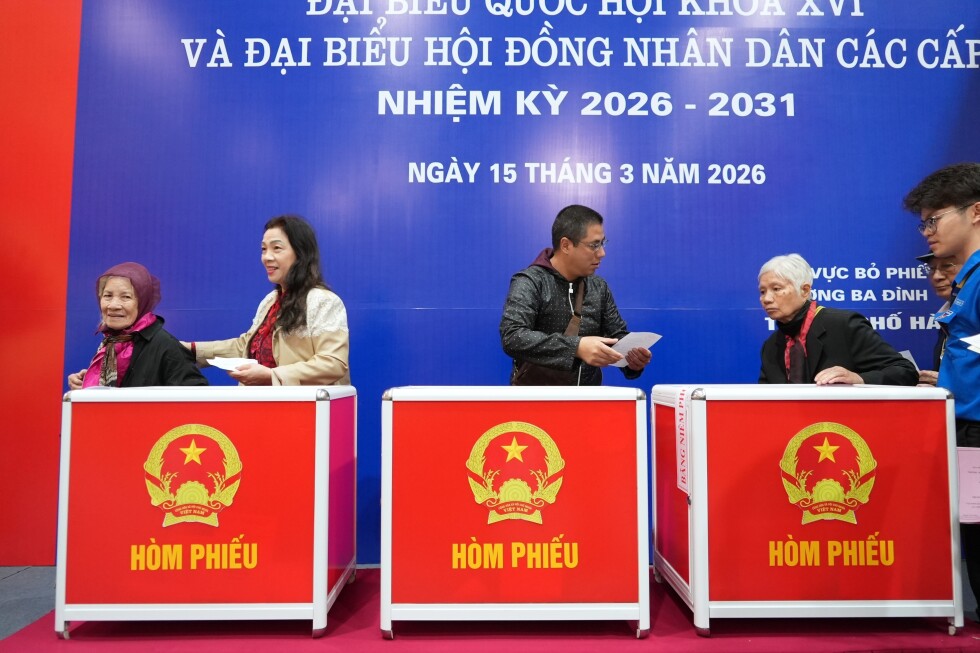
HANOI, Vietnam — Vietnamese citizens participated in nationwide parliamentary elections on Sunday to select 500 representatives for the National Assembly. This electoral process follows the Communist Party’s January congress where To Lam secured reelection as general secretary, the nation’s most influential political position.
Approximately 79 million registered voters were eligible to choose from 864 pre-screened candidates, all vetted and approved by the ruling Communist Party. The electoral system ensures the National Assembly maintains alignment with the party’s political directives and policy objectives.
Following his vote in Hanoi, General Secretary Lam characterized the election as “a national celebration” demonstrating public support for the political process. He emphasized that citizens were selecting representatives committed to national development, sovereignty preservation, and stability maintenance.
The newly constituted Assembly, scheduled to convene its inaugural session in April, will formally endorse key governmental appointments and implement policy priorities established during the party congress. These priorities emphasize sustained economic expansion and political continuity under the Communist Party’s centralized leadership framework.
Vietnam’s remarkable economic transformation over the past decade, fueled by manufacturing exports and foreign investment, provides context for these elections. The country has emerged as a strategic alternative in global supply chains, attracting significant electronics and textile manufacturers diversifying operations beyond China.
The government has established an ambitious target exceeding 10% annual growth through private sector-led development—a notable policy shift for the communist state. This recalibration focuses on advancing higher-value industries, modernized production systems, and broader integration of technology and digital solutions.
Despite economic optimism, challenges persist from global trade tensions and tariff implementations, particularly those initiated by the Trump administration, which affect Vietnam’s export-dependent economy.
Voter participation historically exceeds 90%, with polling facilities established across urban centers, rural communities, and remote regions to facilitate universal access. Retired official Doan Thi Bich expressed typical voter sentiment, stating confidence in selecting “candidates with morals, dedication and competence to serve the country.”