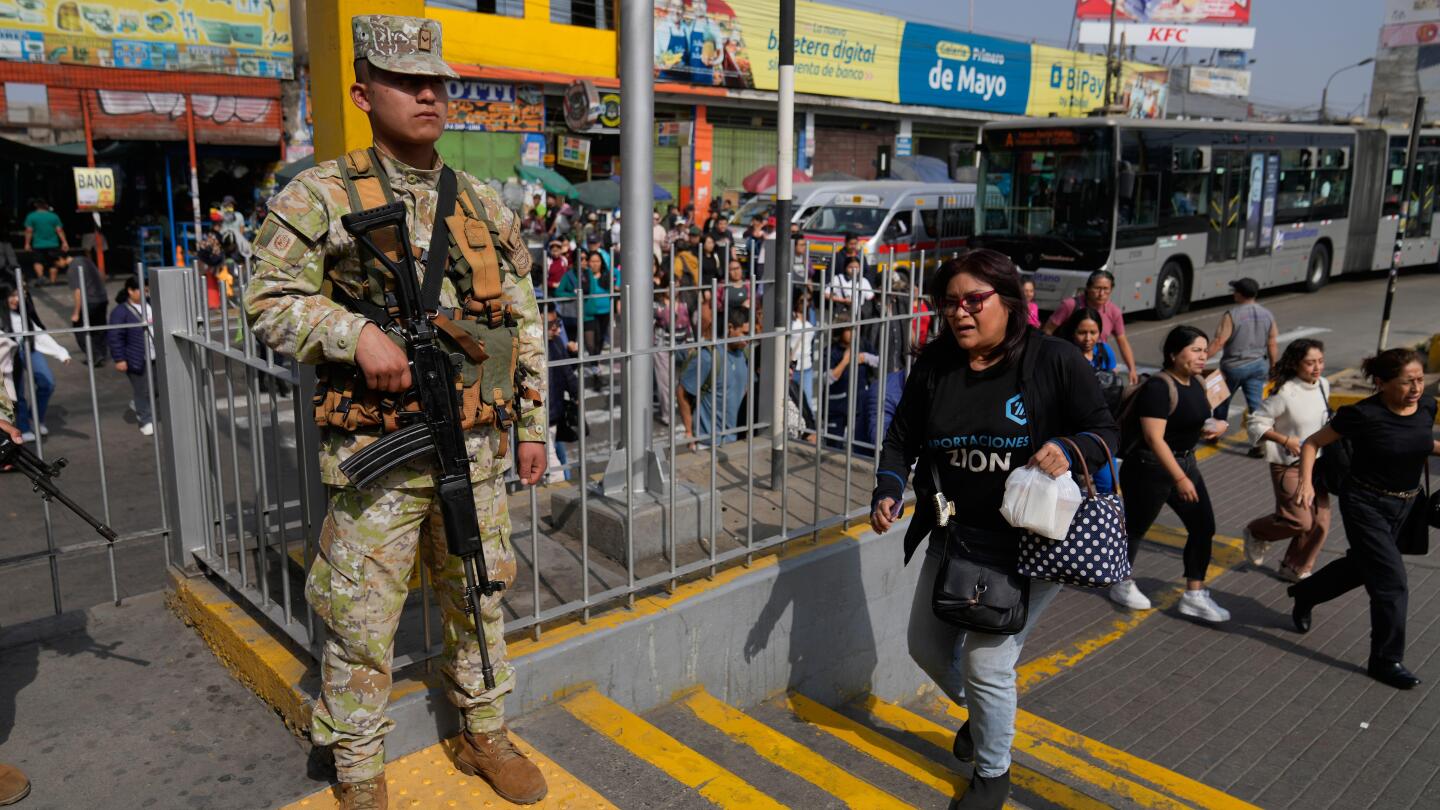
LIMA, Peru — In a bold move to combat escalating crime, Peru’s newly inaugurated President José Jerí declared a state of emergency, effective Wednesday. The decree, which suspends several constitutional rights including freedom of assembly and protest, also imposes restrictions on everyday activities such as motorcycle travel and prison visits. Additionally, it permits power cuts in prison cells, except for essential lighting. This decision comes in the wake of violent protests demanding Jerí’s resignation, which resulted in one fatality and severe injuries to another civilian. Jerí assumed office on October 10 after lawmakers ousted his predecessor, Dina Boluarte, citing her failure to address the country’s crime surge. However, many Peruvians remain skeptical of the measure, recalling the ineffectiveness of similar emergency declarations under Boluarte’s administration. Manuel Timoteo, a resident of northern Lima, expressed his doubts, stating, “The soldiers go out for a few days, stand with their rifles on a corner, leave and everything remains the same.” Crime statistics reveal a troubling trend, with homicides increasing from 676 cases in 2017 to 2,082 in 2024, and extortion complaints skyrocketing from 2,305 in 2020 to 21,746 last year. Most victims are from the working class, highlighting the pervasive impact of crime on everyday life in Peru.
Military and police patrol streets of Peru’s capital as state of emergency begins