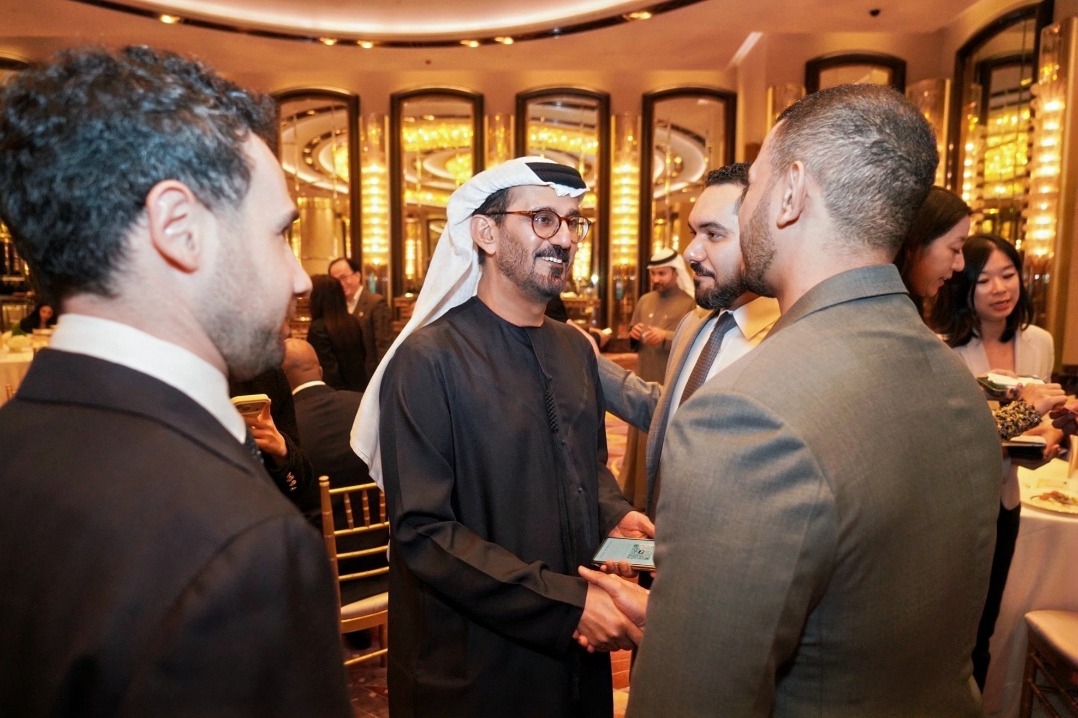
Middle Eastern investors actively courted Chinese partners at the recent Asian Financial Forum in Hong Kong, showcasing lucrative opportunities across real estate development, renewable energy, and corporate services. Representatives from the United Arab Emirates and Oman emphasized their nations’ political stability and business-friendly environments as key advantages for international collaboration.
Hussain bin Ibrahim Al Hammadi, UAE Ambassador to China, set the tone at the ‘Future Horizons: The UAE-Hong Kong Connect’ strategic dialogue, emphasizing his country’s commitment to “an open and predictable business environment” focused on “delivering clear outcomes.” The event, co-hosted by the UAE Consulate in Hong Kong and InvestHK, featured substantial delegations from the emirates of Ras Al Khaimah and Sharjah.
Ras Al Khaimah’s development authorities presented ambitious projects seeking foreign investment. Abdulla Al Abdouli, CEO of government master developer Marjan, highlighted the Wynn Al Marjan Island integrated resort scheduled to open in 2027, explicitly inviting Hong Kong developers and investors to participate in the emirate’s hospitality sector expansion.
Sameh Muhtadi, CEO of Abu Dhabi-listed RAK Properties, outlined plans to develop 50,000 units by 2030, expressing hope for strategic partnerships with Hong Kong entities. Meanwhile, Sandra Marie Louw of RAK International Corporate Centre highlighted their ecosystem serving over 40,000 corporations with cross-border operational support and tax optimization services.
From Sharjah, investment officials promoted the emirate’s three major ports—Khalid, Khorfakkan, and Hamriyah—as multimodal logistics hubs offering diverse investment systems and spaces.
Oman’s representatives extended invitations to the upcoming Suhar Investment Forum while detailing the nation’s renewable energy transition. Haitham Al Omairi of Sohar Port and Freezone outlined Oman’s net-zero 2050 goals, highlighting opportunities in solar energy value chains and green hydrogen production targeting 1.3 million tons by 2030 and 8 million metric tons by 2050.